


Excellent
27,200+ store ratings
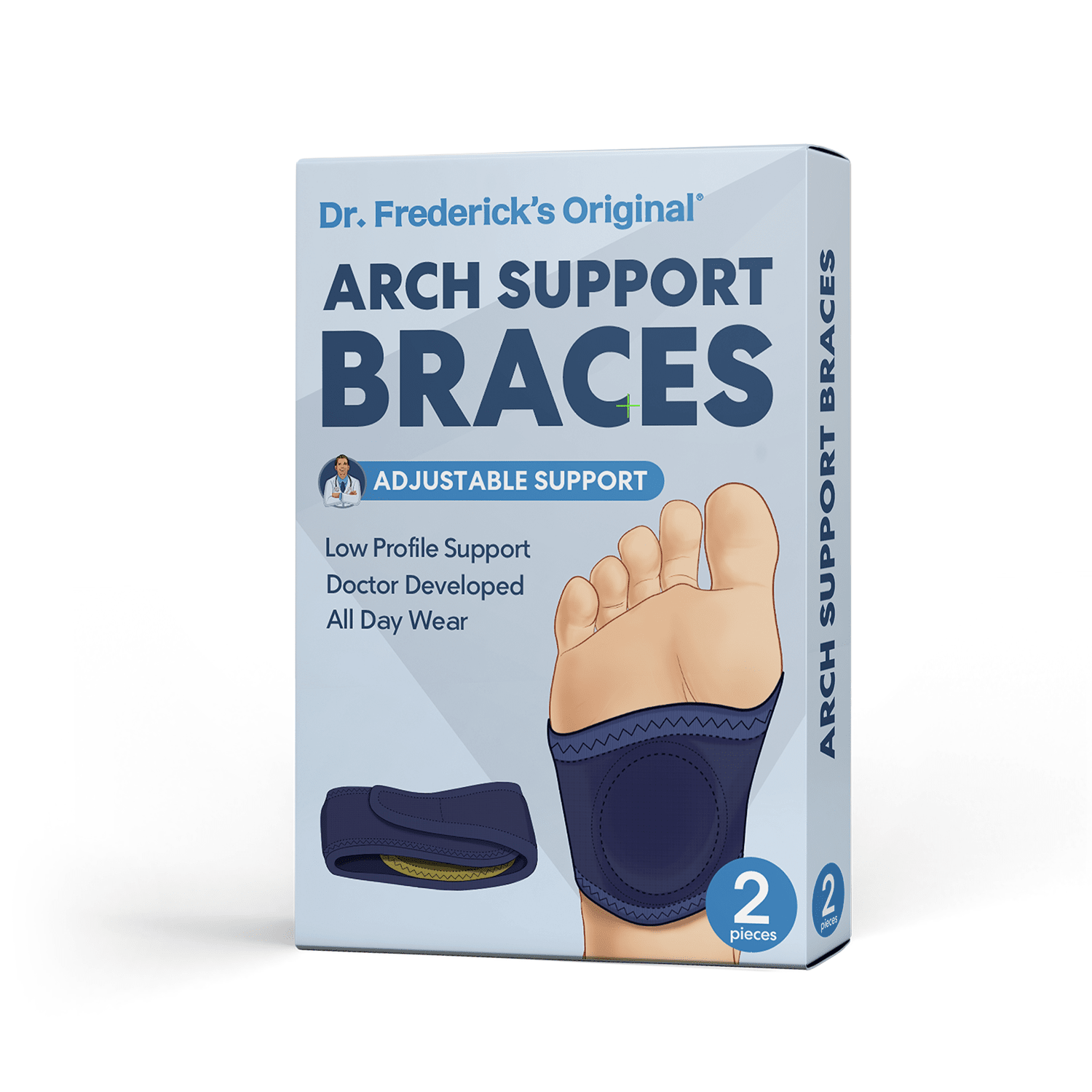
Our physician-designed arch braces deliver targeted compression and cushioning exactly where you need it most, helping you stay active and pain-free.
Couldn't load pickup availability
Excellent
27,200+ store ratings
Designed for the Unstoppable You
When foot pain tries to slow you down, our arch support braces step up to keep you moving. Born from the understanding that minor discomfort can become a major roadblock, these thoughtfully engineered braces wrap your arches in gentle, supportive compression that feels like a reassuring hug for your feet.
The Science of Smart Support
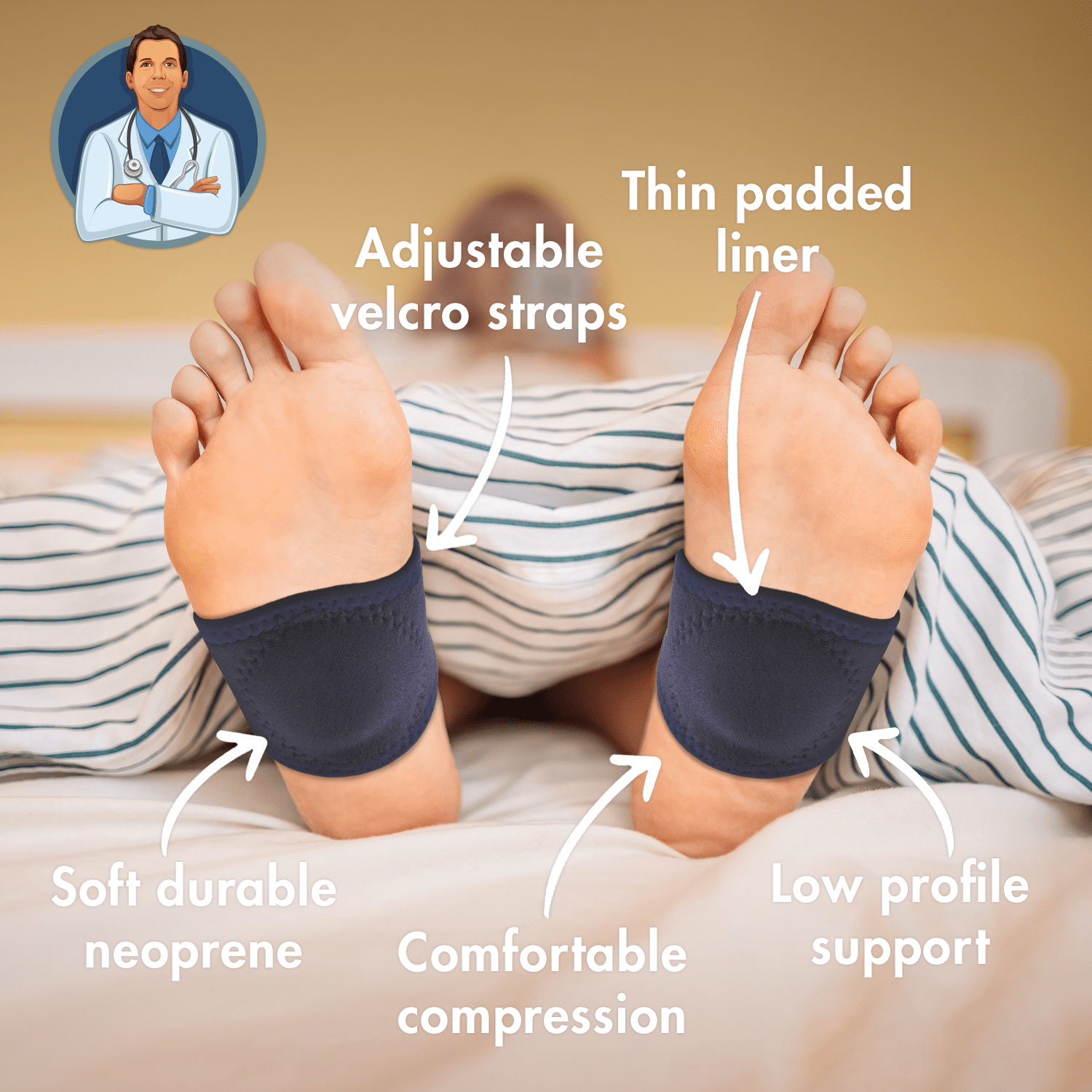
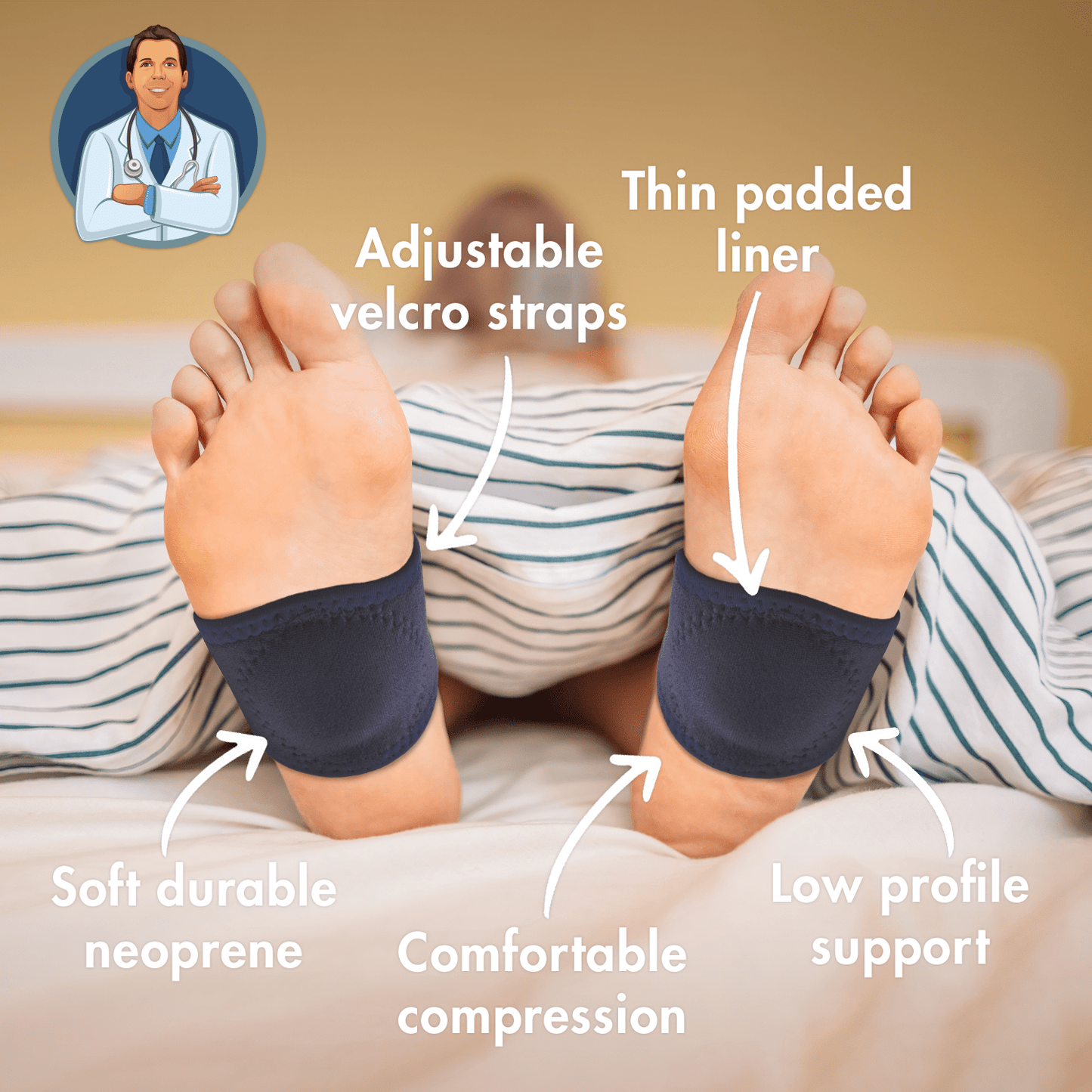
Each brace features a strategically placed cushioned pad that cradles your arch while adjustable straps let you dial in exactly the right amount of compression. The breathable neoprene material moves with you, never restricting your natural gait, while the low-profile design means you can wear them with any shoe—or even barefoot around the house.
Beyond Your Feet
Here's what many people don't realize: foot pain doesn't stay in your feet. When your arches lack support, your entire body compensates, leading to knee aches, hip tension, and back discomfort. Our braces help restore your natural alignment, so relief radiates up through your whole body.
Perfect for Active Lives
Whether you're a weekend warrior, a busy parent chasing little ones, or someone who stands all day at work, these braces adapt to your lifestyle. Dancers love them for morning warm-ups, runners appreciate the targeted compression, and people with desk jobs find they make standing meetings much more comfortable.
Simple Care, Lasting Relief
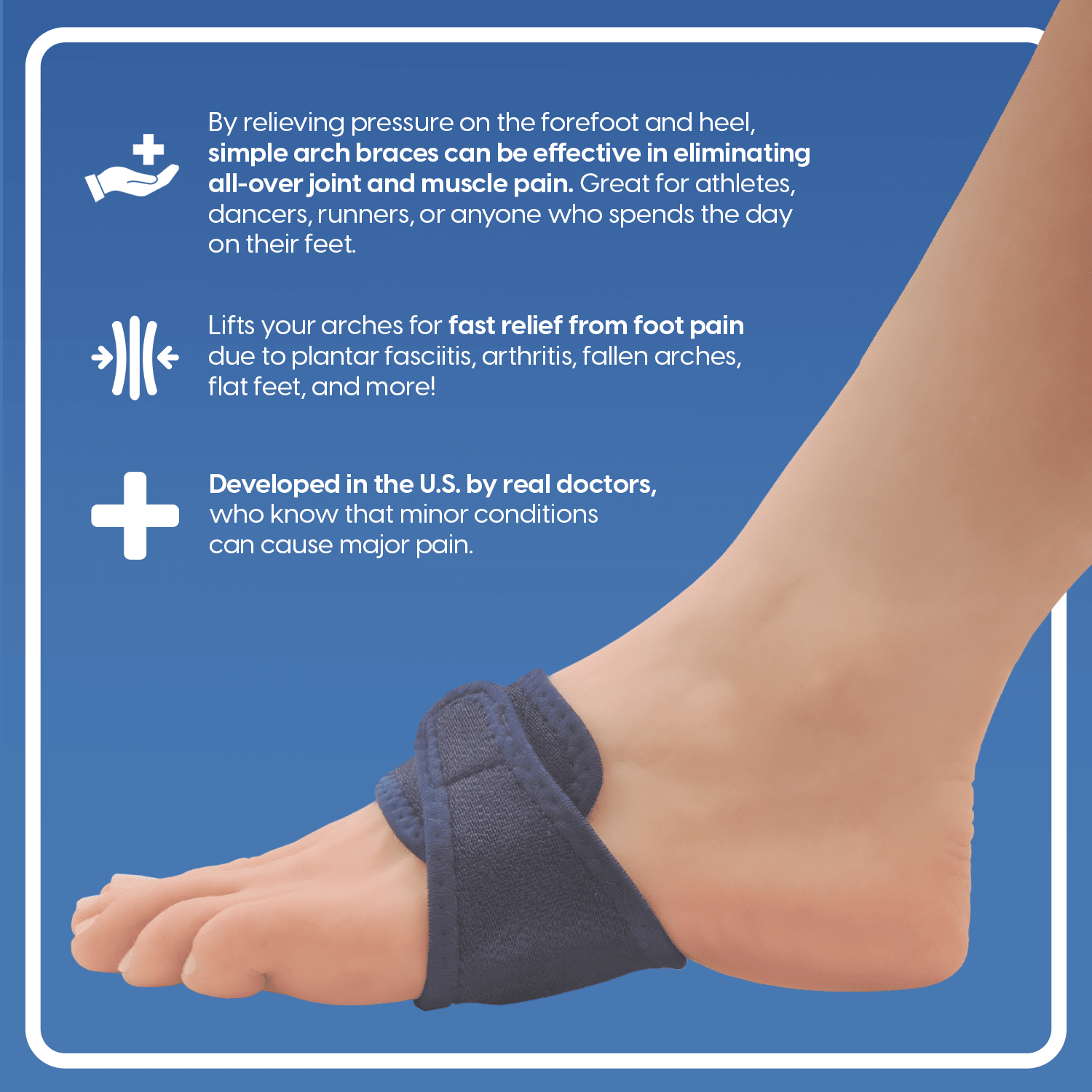
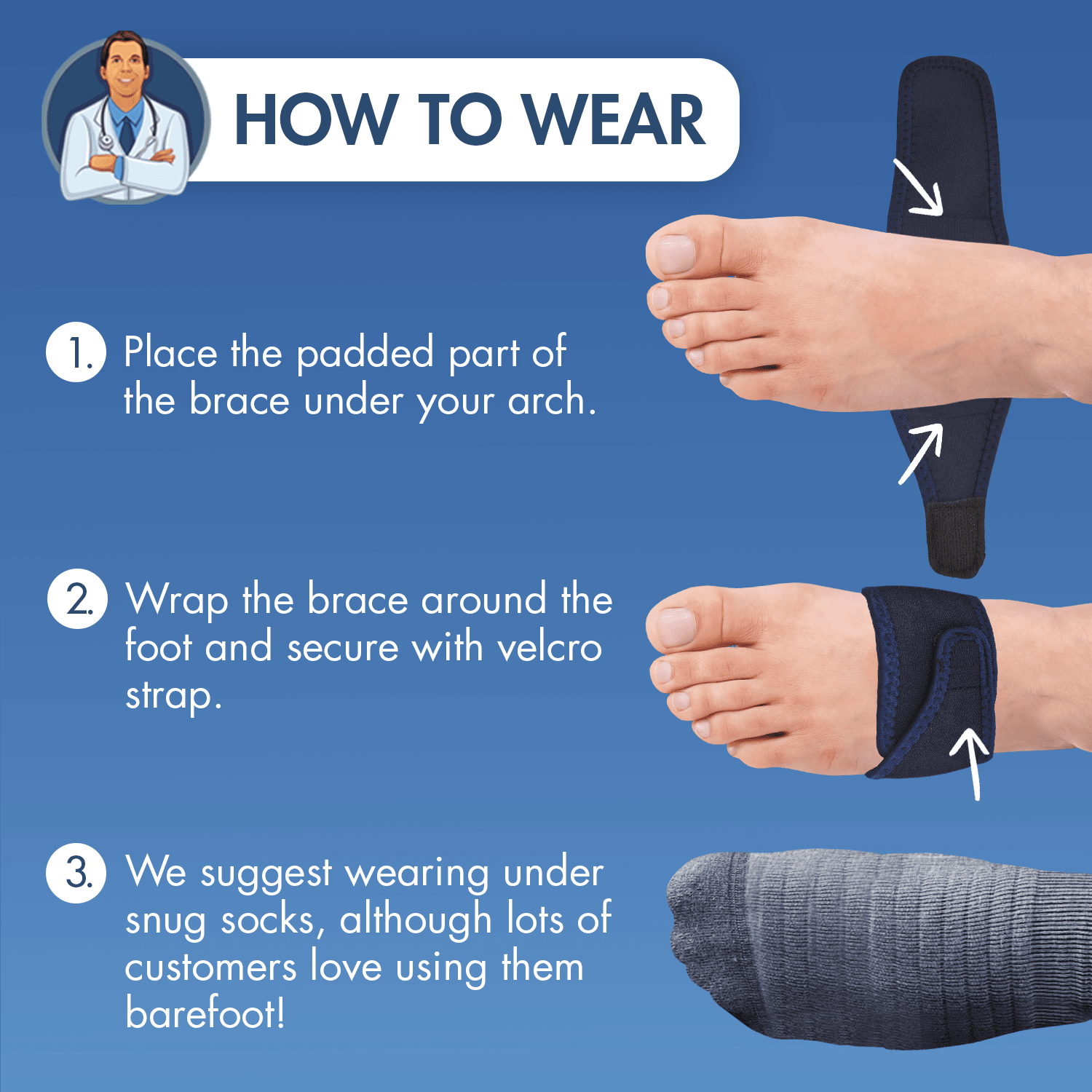
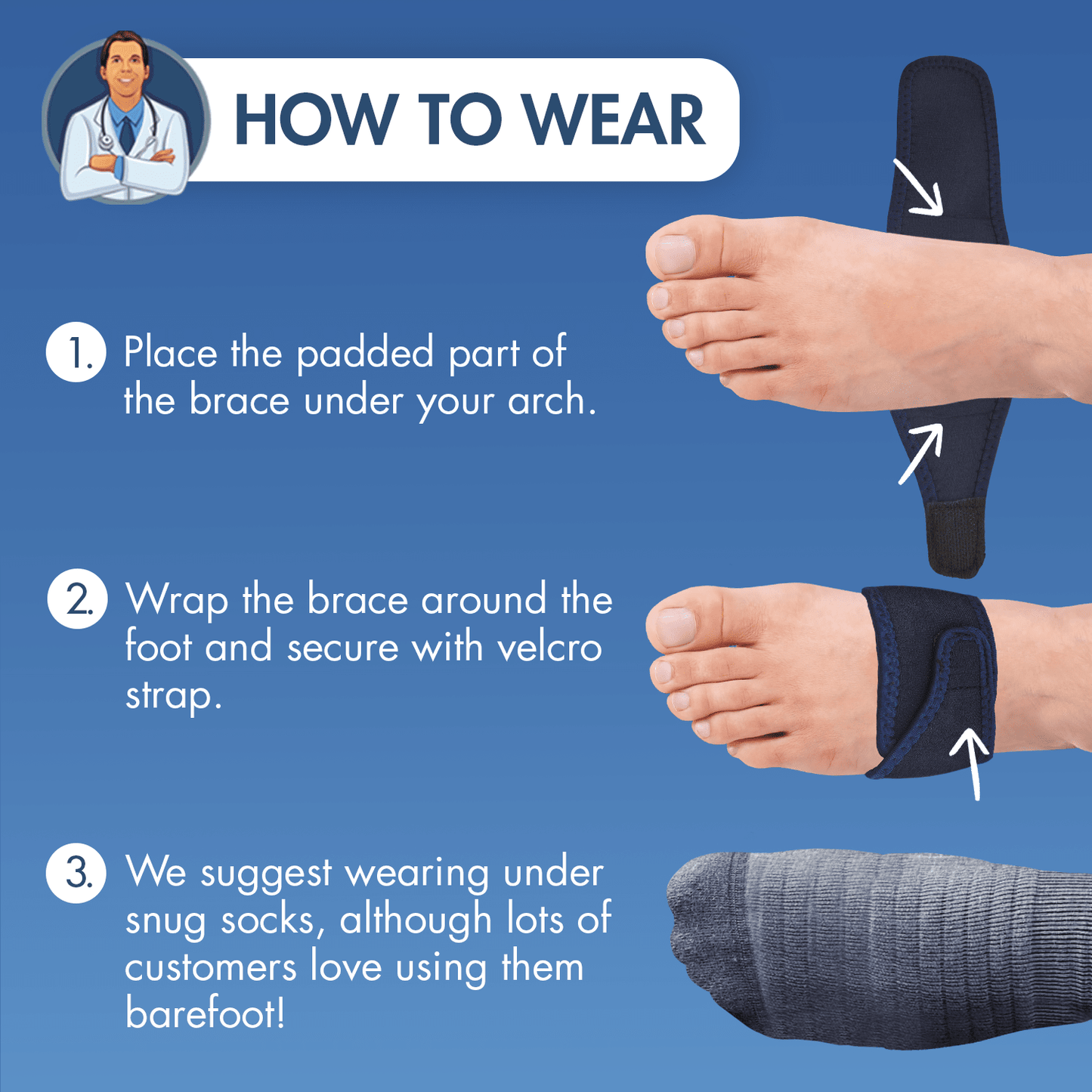
• How to Wear: Place the padded section under your arch, wrap around your foot, and adjust the velcro strap for your perfect compression level
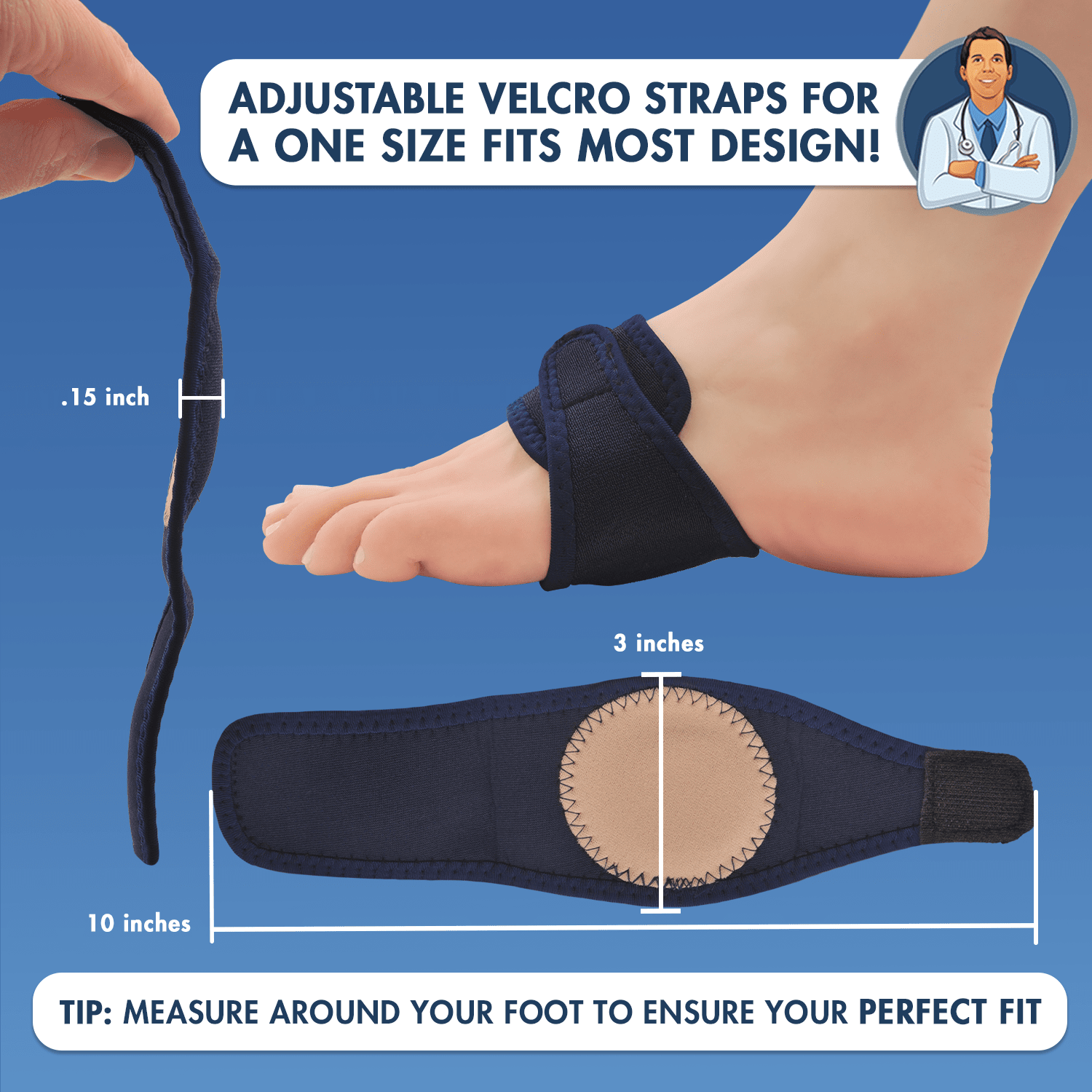
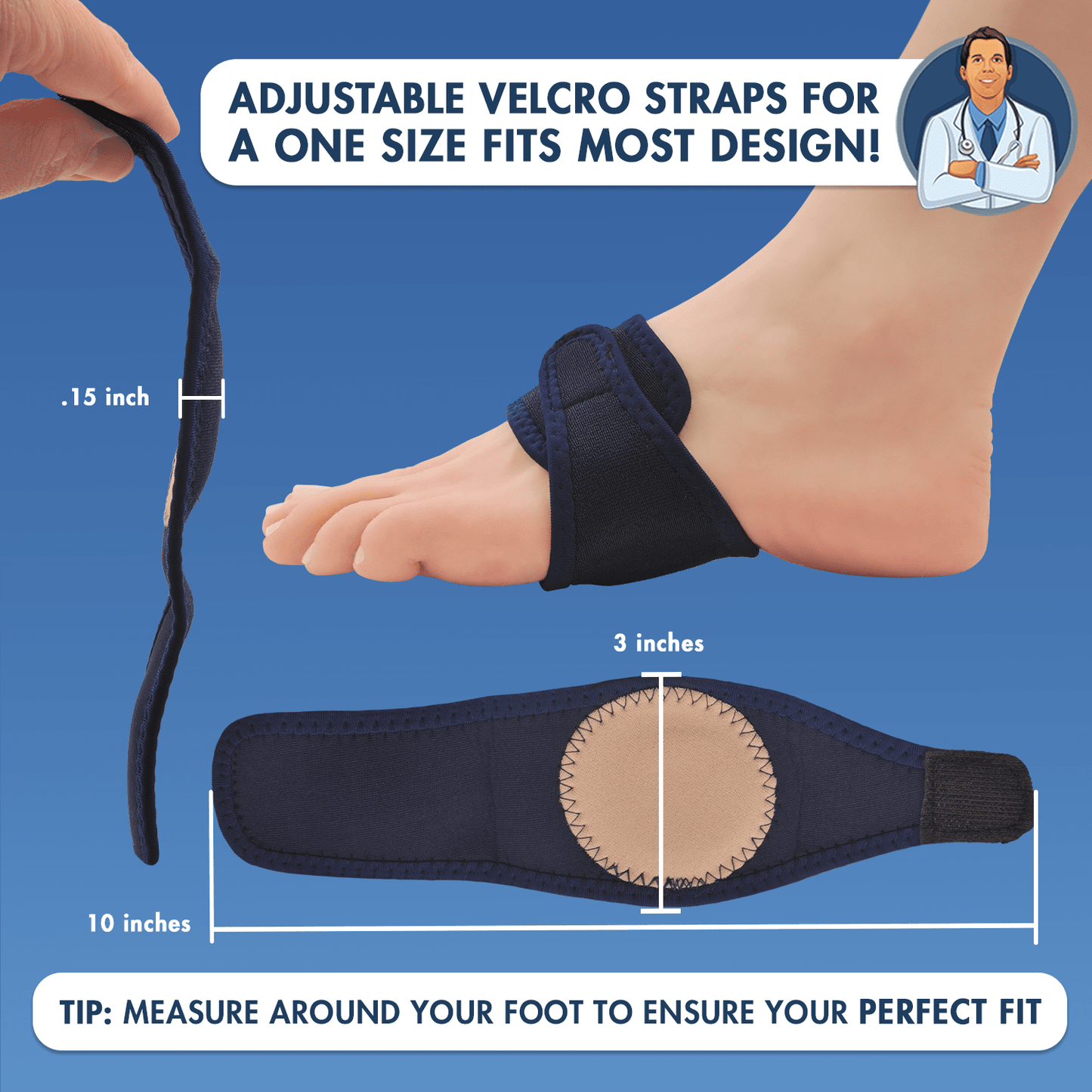
• Sizing: One size fits most adults with adjustable straps accommodating various foot shapes
• Care Instructions: Machine wash in cool water and air dry—the durable neoprene maintains its supportive properties wash after wash
• Versatile Use: Wear under socks, barefoot, or with your favorite shoes
Materials That Matter
Crafted from medical-grade neoprene that's both flexible and durable, with cushioned padding strategically placed to target pressure points. The moisture-wicking properties keep your feet comfortable even during extended wear, while the latex-free construction is gentle on sensitive skin.

The level of compression provided by arch support braces varies depending on the design and intended use of the brace, with three main categories: light, moderate, and firm compression. Light compression offers minimal pressure, designed to provide gentle support and enhance circulation without restricting movement. The level is ideal for everyday use, providing mild foot relief during short periods of standing or walking. Moderate compression provides a more substantial level of support, balancing comfort and stability. It reduces strain on the plantar fascia and improves foot alignment, making it suitable for individuals with moderate conditions such as mild plantar fasciitis or flat feet. The compression level is often used during daily activities or light athletic exercise. Firm compression, the highest level of support, is designed for individuals with more severe foot conditions. It offers maximum stabilization and relief, particularly for those dealing with advanced plantar fasciitis or chronic arch pain. The firm compression helps minimize foot fatigue during prolonged activity or high-impact movements, providing significant pain relief and improving overall foot function. Each level of compression in arch support braces plays a key role in reducing foot strain, redistributing pressure, and enhancing comfort, ultimately supporting better foot health.
Yes, arch support braces offer firmer support than basic elastic bands, because they provide structural reinforcement targeting the foot’s arch and plantar fascia. Basic elastic bands provide mild compression but lack the targeted stabilization that arch support braces offer. Arch support braces incorporate elements like semi-rigid cores, contoured support zones, and multi-layered materials to maintain the arch’s position, reduce strain, and promote proper alignment. Evidence from podiatric studies indicates that braces with gel inserts, such as those incorporating Metatarsal and Arch Gel, outperform basic elastic bands in stabilizing the foot, helping reduce fatigue, and relieving conditions like plantar fasciitis or metatarsalgia.
Yes, arch support braces are more stabilizing than flat insoles because they can support the medial arch and control foot motion rather than simply providing a flat surface under the foot. Flat insoles offer basic cushioning but do not influence the foot’s biomechanics they lie uniformly under the sole without lifting or aligning the arch. Arch support braces with structural elements (contoured arch shapes, semi‑rigid cores, and compression zones) that maintain proper foot alignment and resist excessive pronation or flattening during movement. Peer‑reviewed research in orthopedics and podiatry demonstrates that targeted arch support improves load distribution, reduces tension on the plantar fascia, and enhances gait stability. Flat insoles primarily offer passive comfort without addressing biomechanical dysfunction. The presence of features like metatarsal and arch gel pads within some braces further enhances stabilization by adding localized cushioning and pressure redistribution, supporting both the arch and forefoot in a way that flat insoles cannot achieve.
Yes, arch support braces use targeted compression zones for arch lift because the design places gentle pressure under the arch instead of spreading equal pressure across the entire foot. The focused compression supports the arch during walking or standing, helping the foot maintain a more natural position. Arch support braces reduce strain on the plantar fascia while supporting better foot alignment during daily movement. Biomechanics research and podiatry practice explain that focused compression improves foot awareness and stability, while general compression only adds pressure without supporting the arch structure. Braces also include High Arch Support Gels, which combine soft gel cushioning with reinforced compression areas to both absorb shock and maintain arch lift. The gel inserts enhance comfort while reinforcing the targeted compression zones, making the support more effective for individuals with high arches or conditions such as plantar fasciitis.
Yes, arch support braces are suitable for high‑impact activities because they can provide structural support that helps stabilize the foot during movements like walking, running, and jumping, rather than only offering passive cushioning. The braces reduce excessive motion in the arch and control pronation by maintaining proper alignment through semi‑rigid support cores and targeted compression zones. Evidence from sports medicine and podiatric studies shows that improved foot stability decreases strain on the plantar fascia, Achilles tendon, and surrounding soft tissues during high‑impact forces, which in turn lowers the risk of injury and foot fatigue. Braces that combine reinforced compression with energy‑absorbing materials, for example, contoured support zones or integrated gel padding, help absorb impact while still maintaining arch lift and balance. The structural combination differentiates arch support braces from basic insoles or elastic bands, making it more effective for individuals who engage in prolonged walking, high‑intensity workouts, or repetitive foot loading.
Yes, arch support braces are suitable for runners because they can provide targeted stabilization, pressure redistribution, and improved foot alignment that help protect the arch and plantar fascia during repetitive impact. Running subjects the feet to high loads with each stride, placing strain on connective tissues and joints, arch support braces counteract excessive pronation and flattening of the arch by reinforcing medial support and maintaining biomechanical alignment. Research in sports medicine and biomechanics shows that structured support reduces abnormal foot motion, lowers the risk of overuse injuries, and decreases tension on the plantar fascia and Achilles tendon during repetitive loading phases like heel strike and toe‑off. Braces designed with semi‑rigid support elements and contoured compression zones also help distribute force more evenly across the foot, which reduces localized fatigue and improves comfort on long runs.
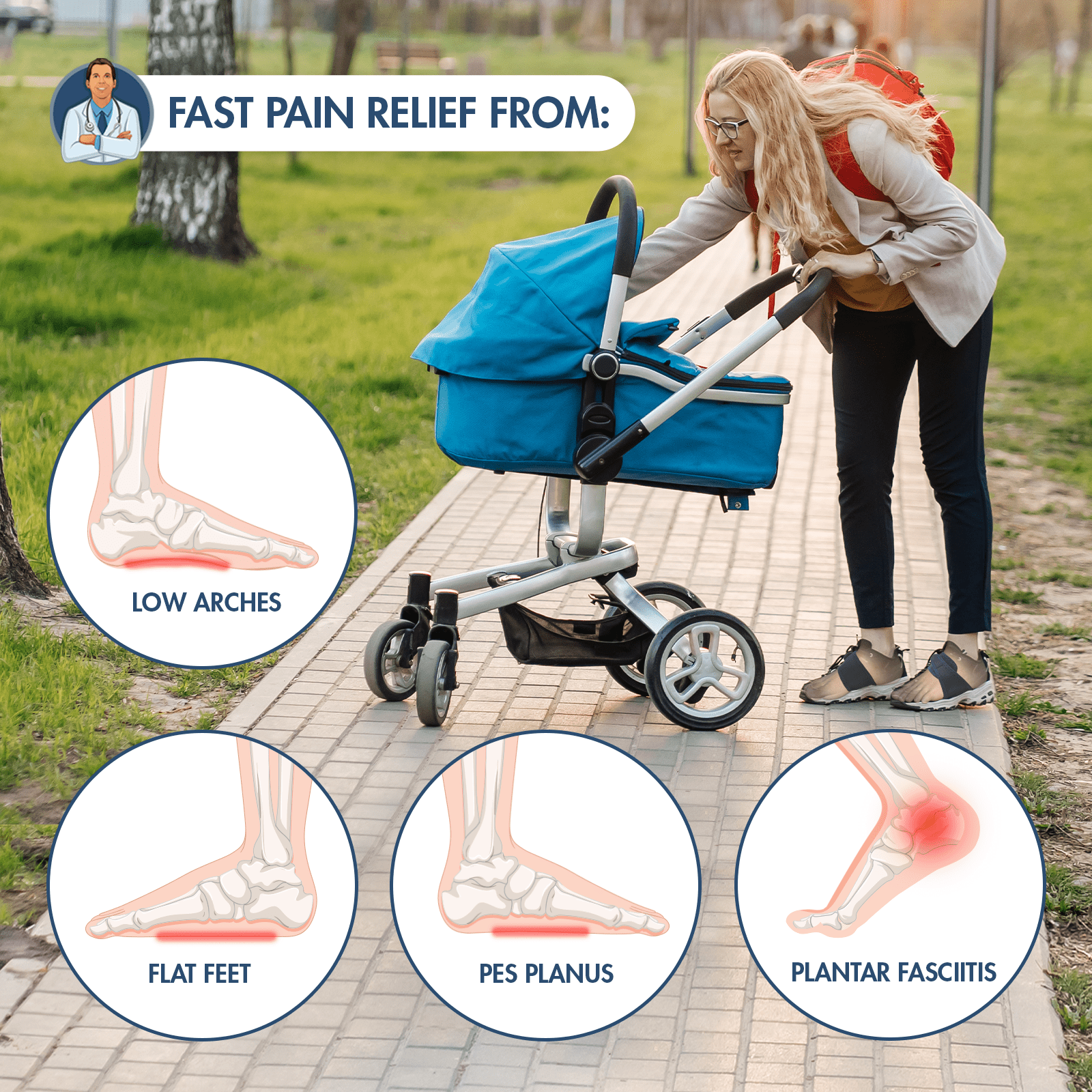
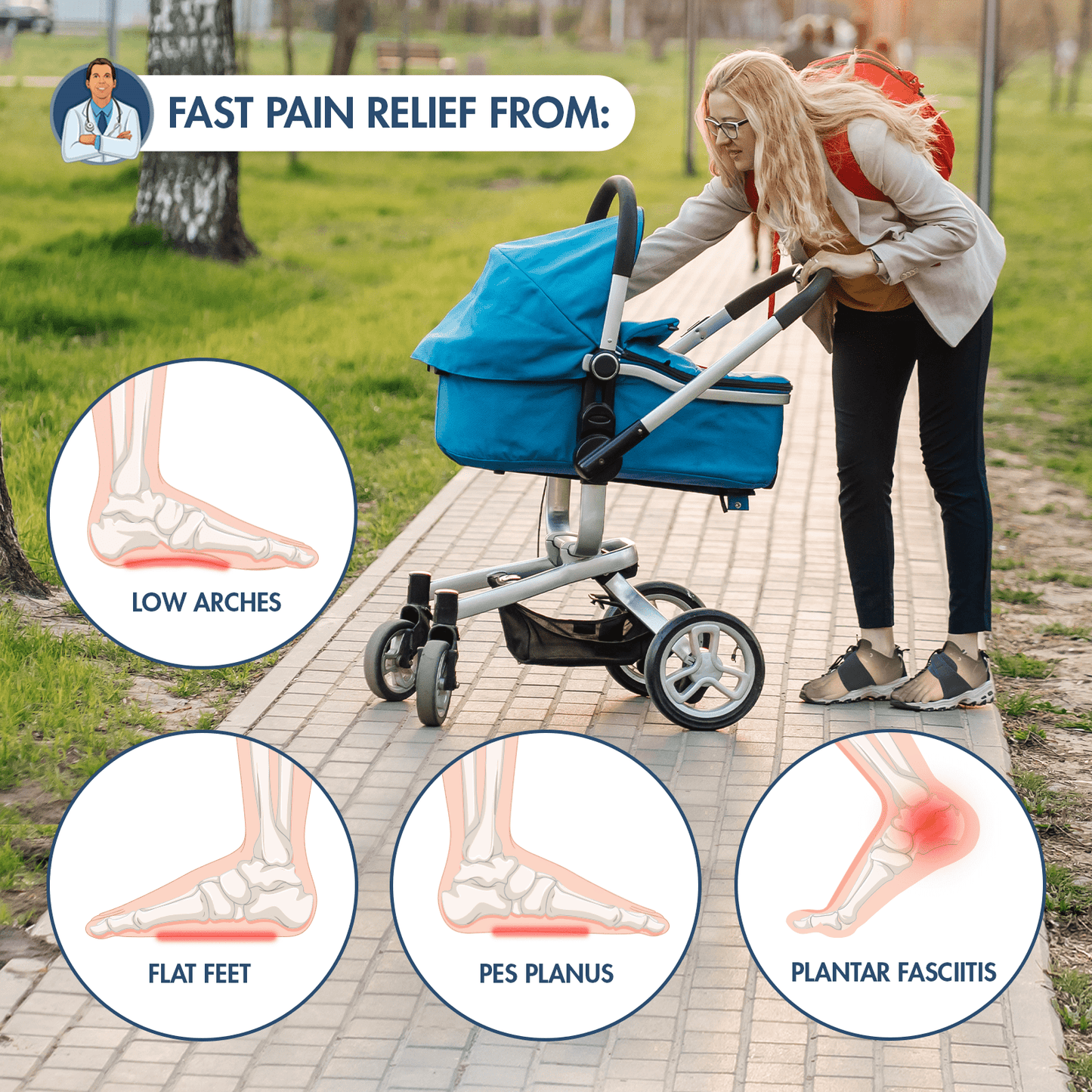
The conditions for Arch Support Braces to help relieve are listed below.
Yes, arch support braces are designed for flat feet and fallen arches because they can provide the structural reinforcement and alignment correction that these conditions require, rather than merely cushioning the foot. Flat feet and fallen arches occur when the medial arch of the foot collapses or does not sufficiently form, leading to overpronation, strain on soft tissues, plantar fascia, and discomfort during standing or movement. Arch support braces counteract this by incorporating contoured support structures, semi‑rigid cores, and targeted compression zones that help lift and maintain the arch’s natural position. Biomechanical evidence shows that supporting the arch reduces overpronation, redistributes pressure along the foot, and improves gait mechanics, which in turn lowers the risk of pain and injury associated with fallen arches. The features differentiate arch support braces from flat insoles or basic cushioning, making them effective for addressing both flat feet and related symptoms.
Arch support braces improve arch alignment and stability by providing structured reinforcement that maintains the medial arch in its optimal position, redistributes pressure across the foot, and controls excessive motion during movement. The braces use contoured support elements and compression zones to lift and support the arch, helping reduce it from collapsing under load. Evidence from biomechanics and podiatric studies shows that maintaining arch alignment reduces strain on soft tissues such as the plantar fascia and improves force distribution during the gait cycle, which decreases pain and fatigue. Structural features like a semi‑rigid core or integrated support panels help resist pronation and keep the foot stable through heel strike and toe‑off. Cushioned zones absorb shock and enhance comfort without compromising alignment. Research demonstrates that targeted support enhances proprioception and promotes better foot mechanics, leading to improved stability and reduced risk of foot‑related injuries.
Arch support braces differ from arch support sleeves in the level of structural support they can provide. Arch support braces are designed with semi‑rigid materials and contoured support zones that offer targeted stabilization to the foot’s arch, helping to control excessive motion, alleviate pressure, and maintain proper alignment. The braces are particularly beneficial for conditions such as plantar fasciitis, flat feet, and fallen arches, as they provide firm support to help support the arch and improve foot function during high‑impact activities or long periods of standing.
Arch support sleeves from elastic materials that offer mild compression and improve circulation. It can help reduce foot fatigue by providing gentle support, but it lacks the structural reinforcement needed for serious alignment correction. Sleeves are often more flexible inside a variety of shoes, but do not offer the rigid support or targeted pressure relief that braces do, making them more suitable for mild discomfort or general use rather than addressing specific conditions that require more substantial support.
Arch support bands for plantar fasciitis that provide the best foot support arep the Arch Support Gel Sleeves for soft cushioning support, Soft Gel Heel Protectors described as vented gel cushions for plantar fasciitis and heel spur pain, and High Arch Support Gel Inserts ($11.99), which are peel-and-stick gel insoles measuring 1.10 cm thick designed for high arch and plantar fasciitis relief. The products reflect Dr. Frederick's Original's design philosophy of providing physician-developed, targeted relief through soft, flexible materials rather than rigid or semi-rigid support structures. The approach centers on gel-based cushioning that fits comfortably inside existing footwear, making relief accessible and practical for everyday use without requiring a separate brace or specialized shoe. This is consistent across their broader foot care line, which includes gel heel protectors, metatarsal pads, and toe cushions, all designed to work with the foot's natural movement rather than restrict it. Simple elastic bands or sleeves, while useful for mild discomfort, do not offer the structural support needed to address more severe cases of plantar fasciitis.
Arch support braces are different from Metatarsal Pads because they provide structural support to the foot’s arch and alignment, whereas Metatarsal Pads specifically cushion and redistribute pressure under the forefoot. Arch support braces stabilize the medial arch, control motion, and reduce strain on the plantar fascia, making them effective for conditions like plantar fasciitis, flat feet, or fallen arches. Metatarsal Pads target pressure relief at the metatarsal heads (the ball of the foot), helping alleviate pain from conditions (metatarsalgia, Morton’s neuroma, or forefoot discomfort).
Evidence from biomechanics and podiatric research shows that arch support braces alter foot mechanics by maintaining proper arch alignment and reducing excessive pronation during walking, running, or prolonged standing. The semi‑rigid cores, contoured support zones, and compression panels distribute load across the foot and help control motion through the gait cycle. Metatarsal Pads sit beneath the front of the foot and use cushioning material (often gel) to lift and separate the metatarsal heads, which redistributes pressure away from sensitive tissue and reduces localized pain. Metatarsal Pads address localized forefoot pressure relief without significantly changing arch biomechanics.
The materials used in Arch Support Braces construction are listed below.
Yes, arch support braces fit comfortably inside athletic and casual shoes due to the slim profile and flexible materials that adapt to the foot without altering shoe fit. Stretchable fabrics (spandex or breathable mesh) allow the braces to conform to the foot’s contours. Quality braces use stretchable fabrics (spandex or breathable mesh) and low‑profile cushioning that adapts to the contours of the foot, enabling them to sit comfortably between the foot and the shoe sole. Evidence from product design and user feedback shows that properly constructed arch support braces reduce discomfort during movement and enhance stability without creating pressure points or bulk, allowing runners, walkers, and everyday wearers to maintain natural gait mechanics. Compact braces maintain arch lift and targeted compression while still accommodating typical shoe shapes, making them suitable for long walks, workouts, and casual daily use.
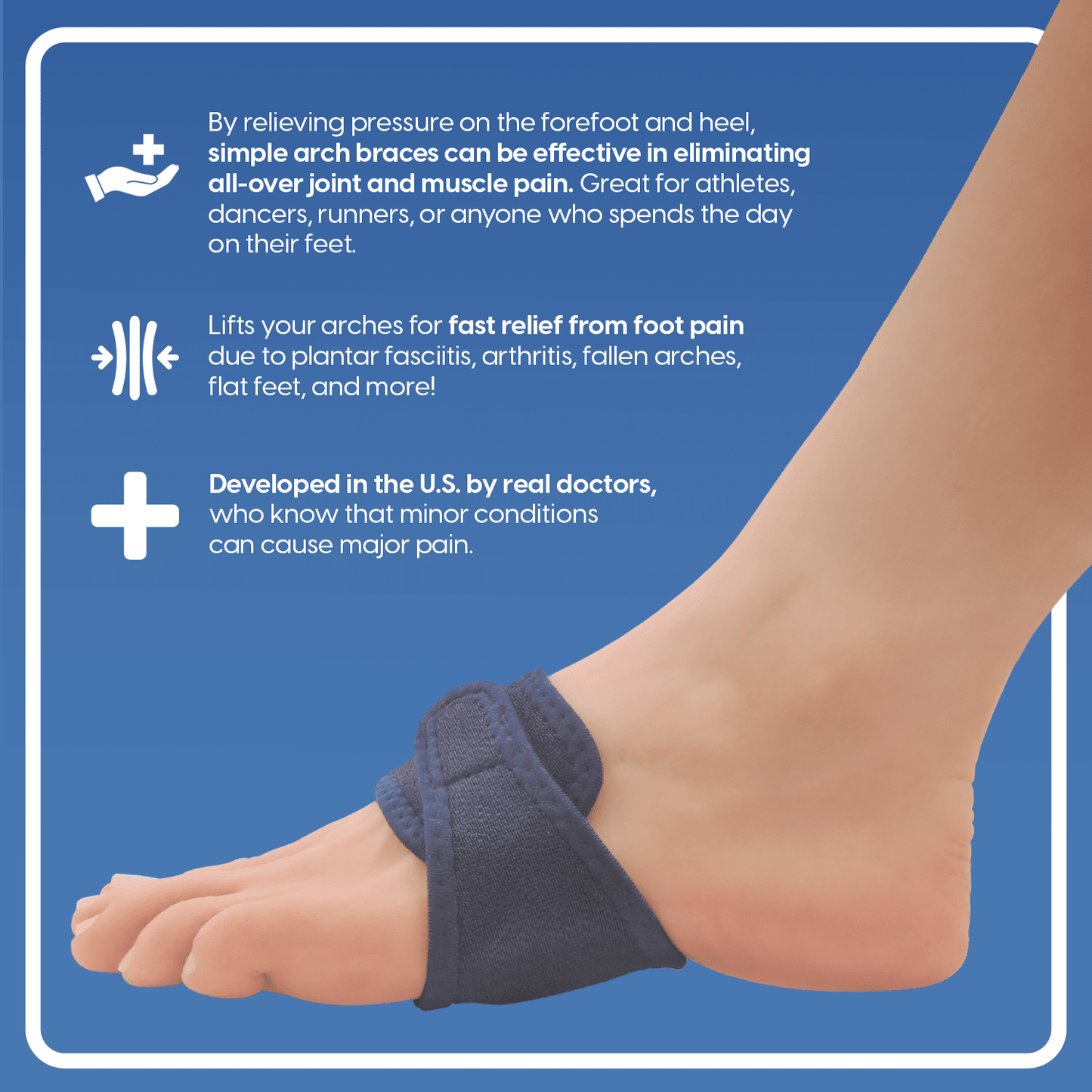
Arch Support Braces provide structural support to the foot’s medial arch, offering stability during standing, walking, and athletic activities. Arch Support Braces use structured bands that apply targeted pressure to the arch, maintaining proper alignment and reducing strain on the plantar fascia and other foot structures. Dr. Frederick's arch support braces use structured bands that apply targeted pressure to the arch, maintaining proper alignment and reducing strain on the plantar fascia and other foot structures. The primary purposes of arch braces are arch alignment support, pressure redistribution, and foot fatigue reduction. It helps redistribute pressure away from sensitive areas like the heel and ball of the foot, directing it across the arch, which alleviates discomfort and helps reduce injury. It improves foot alignment, making walking and running more efficient, and reducing the risk of long-term foot problems such as plantar fasciitis or flat feet.
Dr. Frederick's Arch band for feet offers gentle compression for added flexibility and comfort. The bands provide moderate support to the arch and relieve discomfort during light athletic activities or daily wear. Arch support bands are ideal for reducing foot fatigue and providing essential arch support, especially for individuals with foot discomfort caused by prolonged standing or walking. Arch support braces and Arch support bands are effective in supporting foot alignment, improving gait, and reducing pain, making them ideal for anyone seeking relief from arch-related discomfort.
To purchase Arch Support Braces from Dr. Frederick's Original, follow the six steps below.
Dr. Frederick’s comparison products based on price, return policy, and shipment duration are shown in the table below.
Price is influenced by production costs, quality of materials, and shipping fees. Discounts or taxes affect the final price.
A 30-day money-back guarantee is offered for unsatisfied customers. Refunds or replacements are available within 30 days of purchase.
Orders ship within one business day. Delivery time depends on the shipping method and location. International shipments take longer.
Learn
Checkout
