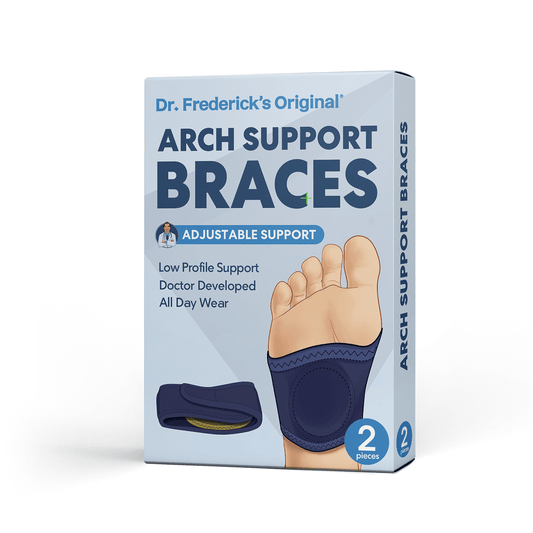
Arch Support Braces

1 product

GET 10% OFF YOUR FIRST ORDER

Get early access to new products, exclusive savings, and reminders about upcoming sales!

Product Overview
Arch Support Braces

Arch Support Braces provide structural support to the foot’s medial arch, offering stability during standing, walking, and athletic activities. Arch Support Braces use structured bands that apply targeted pressure to the arch, maintaining proper alignment and reducing strain on the plantar fascia and other foot structures. Dr. Frederick's Arch Support Braces use structured bands that apply targeted pressure to the arch, maintaining proper alignment and reducing strain on the plantar fascia and other foot structures. The primary purposes of arch braces are arch alignment support, pressure redistribution, and foot fatigue reduction. It helps redistribute pressure away from sensitive areas like the heel and ball of the foot, directing it across the arch, which alleviates discomfort and helps reduce injury. It improves foot alignment, making walking and running more efficient, and reducing the risk of long-term foot problems such as plantar fasciitis or flat feet.

Dr. Frederick's Arch band for feet offers gentle compression for added flexibility and comfort. The bands provide moderate support to the arch and relieve discomfort during light athletic activities or daily wear. Arch support bands are ideal for reducing foot fatigue and providing essential arch support, especially for individuals with foot discomfort caused by prolonged standing or walking. Arch support braces and Arch support bands are effective in supporting foot alignment, improving gait, and reducing pain, making them ideal for anyone seeking relief from arch-related discomfort.

Arch Support Braces Compression Level

Arch supports braces compression level of Dr. Frederick's Original, which can be customized by the user to directly influence support, plantar fascia stabilization, and comfort during movement. The adjustable velcro strap system allows wearers to dial in exactly the right amount of compression for the needs of the customer, ensuring optimal comfort while reducing foot strain and maintaining natural mobility. The low-profile design ensures the brace fits comfortably in any shoe, regardless of the chosen compression setting.

  • Lower Compression Setting: Loosening the velcro strap slightly provides a gentler level of support, ideal for daily wear, mild foot discomfort, or shorter periods of walking and standing. The setting offers basic arch support with a comfortable, less restrictive feel, suitable for those new to wearing braces or with minor arch sensitivity.
  • Moderate Compression Setting: A mid-range strap adjustment delivers a balanced level of support and comfort, appropriate for everyday activities and light physical use. This setting helps reduce strain on the plantar fascia and keeps the foot stable during routine movement without feeling overly tight.
  • Higher Compression Setting: Tightening the strap to its fuller range provides maximum arch support and stabilization, making it well-suited for prolonged standing, more active use, or managing conditions like plantar fasciitis and flat feet. This setting delivers more targeted pressure relief at the arch during demanding or extended activity.
Arch Support Braces Compression Level Set

(i) Different compression levels cater to varying foot support needs, with firm compression being best suited for high-impact activities or advanced foot pain. (Available in all sizes)

Arch Support Braces Plantar Fasciitis Relief Benefits

Arch support braces contribute to plantar fasciitis relief by lifting and stabilizing the medial arch, which reduces the tensile load placed on the plantar fascia band during movement. This structural support redistributes pressure more evenly across the entire foot rather than concentrating strain at the calcaneal insertion, the point where plantar fasciitis pain most commonly originates.

  • Heel strain reduction: Supporting the arch from below reduces the pulling force on the heel bone at the fascia's attachment point. Heel strain reduction is significant during the first steps after rest, when the fascia is least warmed up and most vulnerable to strain. Consistent heel strain reduction throughout the day also limits the cumulative tissue stress that drives chronic inflammation.
  • Arch tension control: The brace limits how far the arch flattens during midstance, the phase where fascial elongation peaks. Controlling this elongation helps help reduce the repetitive overstretching that aggravates inflamed tissue and slows the recovery process. Reducing peak fascial tension during each stride allows the tissue to recover between periods of activity.
  • Prolonged standing and walking support: During extended time on your feet, fatigue in the foot muscles causes the arch to collapse progressively, increasing fascial load with every additional step. The brace compensates for this by maintaining arch height mechanically, keeping pressure redistribution consistent throughout activity rather than only at the start.
Arch Support Braces Plantar Fasciitis Relief Set

(i) Arch support braces are an excellent solution for managing plantar fasciitis, offering varying levels of support to suit individual needs. (Small and Large Sizing)

Arch Support Braces Fabric and Elastic Support Composition

Arch support braces fabric and elastic support composition is constructed from a combination of stretch fabric, elastic fibers, and targeted compression panels that work together to create consistent supportive tension across the arch. The material structure determines how effectively the brace maintains its shape, delivers compression, and holds up through repeated daily wear. Arch support braces are designed to provide relief for individuals suffering from plantar fasciitis, a common condition characterized by heel pain and inflammation in the plantar fascia. The braces help stabilize the foot, reduce foot strain, and promote better alignment, all of which contribute to effective relief from plantar fasciitis symptoms during everyday activity. The inclusion of High Arch Support Gels further strengthens the comfort and effectiveness of the braces, providing a more customized fit for those who need extra support in the arch area.

  • Stretch fabric and compression panels: The outer layer uses a textile blend of nylon and spandex or polyester and elastane, which provides the base stretch and recovery needed to conform to the foot's natural contours. Compression panels are strategically positioned along the medial arch to concentrate supportive tension where it is most needed. The rest of the fabric maintains a lighter, flexible hold around the heel and forefoot.
  • Breathable textile blends: Moisture-wicking fibers are commonly integrated into the fabric blend to draw sweat away from the skin during extended wear. Open-knit or mesh construction zones are often placed across the top of the foot to promote airflow and reduce heat buildup, making the brace more comfortable during prolonged standing or physical activity.
  • Elastic recovery strength: The elastic fibers woven through the compression zones are responsible for the brace's ability to return to its original shape after each stretch cycle. High-quality elastic recovery ensures the brace maintains consistent compression throughout the day rather than loosening with movement and body heat. The recovery strength is a key durability factor, as elastic fibers that fatigue quickly result in reduced support over time.
  • Durability and repeated daily wear: Reinforced stitching along high-tension zones, particularly at the arch channel and heel cup edges, extends the lifespan of the brace under daily use. Fabric blends that resist pilling, moisture degradation, and fiber breakdown maintain both comfort and structural integrity across repeated wear and wash cycles.
Arch Support Braces Fabric and Elastic Support Set

(i) The Arch Support Braces are crafted for long-lasting relief, with a fabric and elastic support system designed to provide all-day comfort and foot stabilization. (One size fits all)

Arch Support Braces Fit and Sizing Factors

Arch support braces fit and sizing factors provide optimal comfort and support for individuals with conditions like plantar fasciitis and flat feet. Proper sizing directly affects how well an arch support brace maintains stability and delivers consistent compression during foot movement and weight-bearing activity. Achieving the right fit is crucial for maximizing the brace's effectiveness in reducing foot pain and improving foot function.

  • Foot circumference measurement: Sizing an arch support brace begins with measuring the circumference of the foot at its widest point across the ball of the foot. The measurement determines whether the brace fabric and compression panels will align correctly with the medial arch and heel. An accurate circumference measurement ensures the brace sits flush against the arch without gapping or bunching, which would compromise the evenness of supportive tension during movement.
  • Elasticity range: Each brace size corresponds to an elasticity range, the stretch capacity of the fabric at which the compression panels perform within their intended tension zone. Wearing a brace at the outer limit of its elasticity range reduces elastic recovery strength over time and may deliver inconsistent compression during activity. Selecting a size where the foot falls comfortably within the mid-range of the elasticity scale preserves both comfort and long-term structural performance.
  • Adjustable strap compatibility: Proper base sizing remains important even when compression can be fine-tuned, for braces with adjustable strap systems. The strap should function as a calibration tool for pressure rather than a compensator for incorrect sizing. The strap is adjusted to dial in the precise level of arch compression needed for different activity levels without placing uneven tension on the fabric or elastic fibers, when the base fit is correct.
Arch Support Braces Fit and Sizing Set

(i) A proper fit is key to ensuring long-lasting relief, with flexible sizing options designed to cater to various foot shapes and sizes. (One size fits all)

Arch Support Braces Arch Stabilization Structure

Arch support braces arch stabilization structures provide essential support to stabilize the foot's arch, redistribute pressure, and improve foot alignment. The braces are effective for individuals with conditions like plantar fasciitis or flat feet, as they help help support the arch and reduce strain during movement. Arch support braces feature a Cushioned Arch Pad, which adds targeted cushioning and pressure relief directly under the arch. The Arch Support gel pads are to enhance comfort and reduce impact, making the braces ideal for long periods of standing, walking, or physical activity. The combination of breathable neoprene construction and the Cushioned Arch Pad ensures that the foot remains aligned and supported, improving foot function while reducing discomfort caused by common foot conditions.

  • Reinforced arch bands: Positioned along the medial arch to provide the primary upward counterforce that holds the arch in a supported position during weight-bearing. These bands are constructed from denser elastic or semi-rigid material integrated directly into the brace fabric, creating a channel of concentrated support that resists arch collapse under load without restricting the natural flex of the foot during toe-off.
  • Compression zones and pressure distribution: Targeted compression zones surrounding the arch band work to distribute pressure evenly across the plantar fascia rather than concentrating load at a single point. This even distribution reduces localized strain at the heel insertion and metatarsal heads, allowing the foot to bear weight more comfortably across its full surface during prolonged standing or movement.
  • Flexibility for movement: Stabilization elements work with the foot's natural gait mechanics rather than against them. The reinforced arch structure provides resistance to excessive flattening during midstance while allowing the forefoot to flex freely during push-off and the heel to absorb impact during initial contact. The balance between support and flexibility ensures the brace remains effective and comfortable across a full range of daily movement and exercise.
Arch Support Braces Arch Stabilization Set

(I) The Arch Support Braces are designed to offer the right level of stabilization and support, catering to different foot types and activity levels. (One size fits all)

Arch Support Braces Set

(I) The highly rated Arch Support Braces offer exceptional stability and relief for individuals dealing with foot pain or discomfort. (One size fits all)

Arch Support Braces

(I) With a focus on advanced arch support and pain relief, these braces are praised for providing long-lasting comfort and foot alignment, even during high-impact daily use. (One size fits all)

“These braces provided immediate relief from heel pain during long shifts. The support is perfect for both walking and standing, and they fit comfortably in most shoes.”

“Great for daily use, but they’re slightly tight in the toe area when wearing sneakers. Still, they offer solid support and reduce foot fatigue.”

“Excellent support for my plantar fasciitis! These braces stay in place and provide cushioning throughout the day, making it easier to stay active.”

“Good support, but they feel a bit bulky in narrow shoes. They’re best for wearing with looser footwear or during more relaxed activities.”

“These Arch Support Braces have made a huge difference in my comfort level. Perfect for long days of standing, and they significantly reduce foot pain.”

We value your questions and comments! Use this section to ask any inquiries you have about our Arch Support Braces. Whether you need more information on fit, comfort, or how the braces can assist with specific foot conditions, feel free to submit your question. Your input is crucial in helping us refine our products and continue to provide top-quality foot care solutions.

Cushioning and Support Level
What Level of Compression do Arch Support Braces Provide?

The level of compression provided by Arch Support Braces varies depending on the design and intended use of the brace, with three main categories: light, moderate, and firm compression. Light compression offers minimal pressure, designed to provide gentle support and enhance circulation without restricting movement. The level is ideal for everyday use, providing mild foot relief during short periods of standing or walking. Moderate compression provides a more substantial level of support, balancing comfort and stability. It reduces strain on the plantar fascia and improves foot alignment, making it suitable for individuals with moderate conditions such as mild plantar fasciitis or flat feet. The compression level is often used during daily activities or light athletic exercise. Firm compression, the highest level of support, is designed for individuals with more severe foot conditions. It offers maximum stabilization and relief, particularly for those dealing with advanced plantar fasciitis or chronic arch pain. The firm compression helps minimize foot fatigue during prolonged activity or high-impact movements, providing significant pain relief and improving overall foot function. Each level of compression in Arch Support Braces plays a key role in reducing foot strain, redistributing pressure, and enhancing comfort, ultimately supporting better foot health.

Do Arch Support Braces Offer Firmer Support than Basic Elastic Bands?

Yes, Arch Support Braces offer firmer support than basic elastic bands, because they provide structural reinforcement targeting the foot’s arch and plantar fascia. Basic elastic bands provide mild compression but lack the targeted stabilization that Arch Support Braces offer. Arch support braces incorporate elements like semi-rigid cores, contoured support zones, and multi-layered materials to maintain the arch’s position, reduce strain, and promote proper alignment. Evidence from podiatric studies indicates that braces with gel inserts, such as those incorporating Metatarsal and Arch Gel, outperform basic elastic bands in stabilizing the foot, helping reduce fatigue, and relieving conditions like plantar fasciitis or metatarsalgia.

Are Arch Support Braces More Stabilizing than Flat Insoles?

Yes, Arch Support Braces are more stabilizing than flat insoles because they can support the medial arch and control foot motion rather than simply providing a flat surface under the foot. Flat insoles offer basic cushioning but do not influence the foot’s biomechanics they lie uniformly under the sole without lifting or aligning the arch. Arch support braces with structural elements (contoured arch shapes, semi‑rigid cores, and compression zones) that maintain proper foot alignment and resist excessive pronation or flattening during movement. Peer‑reviewed research in orthopedics and podiatry demonstrates that targeted arch support improves load distribution, reduces tension on the plantar fascia, and enhances gait stability. Flat insoles primarily offer passive comfort without addressing biomechanical dysfunction. The presence of features like metatarsal and arch gel pads within some braces further enhances stabilization by adding localized cushioning and pressure redistribution, supporting both the arch and forefoot in a way that flat insoles cannot achieve.

Do Arch Support Braces Use Targeted Compression Zones for Arch Lift?

Yes, Arch Support Braces use targeted compression zones for arch lift because the design places gentle pressure under the arch instead of spreading equal pressure across the entire foot. The focused compression supports the arch during walking or standing, helping the foot maintain a more natural position. Arch support braces reduce strain on the plantar fascia while supporting better foot alignment during daily movement. Biomechanics research and podiatry practice explain that focused compression improves foot awareness and stability, while general compression only adds pressure without supporting the arch structure. Braces also include High Arch Support Gels, which combine soft gel cushioning with reinforced compression areas to both absorb shock and maintain arch lift. The gel inserts enhance comfort while reinforcing the targeted compression zones, making the support more effective for individuals with high arches or conditions such as plantar fasciitis.

Are Arch Support Braces Suitable for High Impact Activities?

Yes, Arch Support Braces are suitable for high‑impact activities because they can provide structural support that helps stabilize the foot during movements like walking, running, and jumping, rather than only offering passive cushioning. The braces reduce excessive motion in the arch and control pronation by maintaining proper alignment through semi‑rigid support cores and targeted compression zones. Evidence from sports medicine and podiatric studies shows that improved foot stability decreases strain on the plantar fascia, Achilles tendon, and surrounding soft tissues during high‑impact forces, which in turn lowers the risk of injury and foot fatigue. Braces that combine reinforced compression with energy‑absorbing materials, for example, contoured support zones or integrated gel padding, help absorb impact while still maintaining arch lift and balance. The structural combination differentiates Arch Support Braces from basic insoles or elastic bands, making it more effective for individuals who engage in prolonged walking, high‑intensity workouts, or repetitive foot loading.

Are Arch Support Braces Suitable for Runners?

Yes, Arch Support Braces are suitable for runners because they can provide targeted stabilization, pressure redistribution, and improved foot alignment that help protect the arch and plantar fascia during repetitive impact. Running subjects the feet to high loads with each stride, placing strain on connective tissues and joints, Arch Support Braces counteract excessive pronation and flattening of the arch by reinforcing medial support and maintaining biomechanical alignment. Research in sports medicine and biomechanics shows that structured support reduces abnormal foot motion, lowers the risk of overuse injuries, and decreases tension on the plantar fascia and Achilles tendon during repetitive loading phases like heel strike and toe‑off. Braces designed with semi‑rigid support elements and contoured compression zones also help distribute force more evenly across the foot, which reduces localized fatigue and improves comfort on long runs.

Pain Relief and Foot Conditions
What Conditions do Arch Support Braces Help Relieve?

The conditions for Arch Support Braces to help relieve are listed below.

  • Plantar Fasciitis: Arch support braces help alleviate the heel pain caused by irritation around the plantar fascia, providing stability and relieving stress on the affected area.
  • Flat Feet: The braces support the arch, helping to help reduce the foot from over-pronating and reducing the strain on the ligaments and muscles in the foot.
  • High Arches: Arch support braces provide extra cushioning and structure for individuals with high arches, helping to redistribute pressure and help reduce foot fatigue.
  • Heel Spurs: By offering additional support to the arch and heel, Arch Support Braces help reduce pressure on heel spurs, promoting relief from associated pain.
  • Metatarsalgia Relief: Arch support braces relieve pain in the ball of the foot caused by metatarsalgia by redistributing pressure away from the metatarsal heads and improving foot alignment. The reduction in pressure helps ease discomfort during walking or standing.
  • Achilles Tendonitis: Arch support braces can reduce strain on the Achilles tendon by stabilizing the foot and maintaining proper alignment, supporting comfort around irritated areas.
  • Bunions: Braces help reduce the stress on the foot, helping reduce the worsening of bunions and alleviating associated pain during movement.
  • Morton’s Neuroma: Arch support braces reduce pressure on the forefoot, which can help relieve pain caused by Morton’s neuroma by redistributing foot load and offering better alignment. Metatarsalgia Relief is an Arch support braces that offer comprehensive foot stabilization and pain relief for various conditions, by improving foot biomechanics, alignment, and pressure distribution.
Are Arch Support Braces Designed for Flat Feet and Fallen Arches?

Yes, Arch Support Braces are designed for flat feet and fallen arches because they can provide the structural reinforcement and alignment correction that these conditions require, rather than merely cushioning the foot. Flat feet and fallen arches occur when the medial arch of the foot collapses or does not sufficiently form, leading to overpronation, strain on soft tissues, plantar fascia, and discomfort during standing or movement. Arch support braces counteract this by incorporating contoured support structures, semi‑rigid cores, and targeted compression zones that help lift and maintain the arch’s natural position. Biomechanical evidence shows that supporting the arch reduces overpronation, redistributes pressure along the foot, and improves gait mechanics, which in turn lowers the risk of pain and injury associated with fallen arches. The features differentiate Arch Support Braces from flat insoles or basic cushioning, making them effective for addressing both flat feet and related symptoms.

Design and Functional Benefits
How do Arch Support Braces Improve Arch Alignment and Stability?

Arch support braces improve arch alignment and stability by providing structured reinforcement that maintains the medial arch in its optimal position, redistributes pressure across the foot, and controls excessive motion during movement. The braces use contoured support elements and compression zones to lift and support the arch, helping reduce it from collapsing under load. Evidence from biomechanics and podiatric studies shows that maintaining arch alignment reduces strain on soft tissues such as the plantar fascia and improves force distribution during the gait cycle, which decreases pain and fatigue. Structural features like a semi‑rigid core or integrated support panels help resist pronation and keep the foot stable through heel strike and toe‑off. Cushioned zones absorb shock and enhance comfort without compromising alignment. Research demonstrates that targeted support enhances proprioception and promotes better foot mechanics, leading to improved stability and reduced risk of foot‑related injuries.

What Makes Arch Support Braces Different from Arch Support Sleeves?

Arch support braces differ from arch support sleeves in the level of structural support they can provide. Arch support braces are designed with semi‑rigid materials and contoured support zones that offer targeted stabilization to the foot’s arch, helping to control excessive motion, alleviate pressure, and maintain proper alignment. The braces are particularly beneficial for conditions such as plantar fasciitis, flat feet, and fallen arches, as they provide firm support to help support the arch and improve foot function during high‑impact activities or long periods of standing.

Arch support sleeves from elastic materials that offer mild compression and improve circulation. It can help reduce foot fatigue by providing gentle support, but it lacks the structural reinforcement needed for serious alignment correction. Sleeves are often more flexible inside a variety of shoes, but do not offer the rigid support or targeted pressure relief that braces do, making them more suitable for mild discomfort or general use rather than addressing specific conditions that require more substantial support.

Which Arch Support Bands for Plantar Fasciitis provide the Best Foot Support?

Arch support bands for plantar fasciitis that provide the best foot support arep the Arch Support Gel Sleeves for soft cushioning support, Soft Gel Heel Protectors described as vented gel cushions for plantar fasciitis and heel spur pain, and High Arch Support Gel Inserts ($11.99), which are peel-and-stick gel insoles measuring 1.10 cm thick designed for high arch and plantar fasciitis relief. The products reflect Dr. Frederick's Original's design philosophy of providing physician-developed, targeted relief through soft, flexible materials rather than rigid or semi-rigid support structures. The approach centers on gel-based cushioning that fits comfortably inside existing footwear, making relief accessible and practical for everyday use without requiring a separate brace or specialized shoe. This is consistent across their broader foot care line, which includes gel heel protectors, metatarsal pads, and toe cushions, all designed to work with the foot's natural movement rather than restrict it. Simple elastic bands or sleeves, while useful for mild discomfort, do not offer the structural support needed to address more severe cases of plantar fasciitis.

What Makes Arch Support Braces Different from Metatarsal Pads?

Arch support braces are different from Metatarsal Pads because they provide structural support to the foot’s arch and alignment, whereas Metatarsal Pads specifically cushion and redistribute pressure under the forefoot. Arch support braces stabilize the medial arch, control motion, and reduce strain on the plantar fascia, making them effective for conditions like plantar fasciitis, flat feet, or fallen arches. Metatarsal Pads target pressure relief at the metatarsal heads (the ball of the foot), helping alleviate pain from conditions (metatarsalgia, Morton’s neuroma, or forefoot discomfort).

Evidence from biomechanics and podiatric research shows that Arch Support Braces alter foot mechanics by maintaining proper arch alignment and reducing excessive pronation during walking, running, or prolonged standing. The semi‑rigid cores, contoured support zones, and compression panels distribute load across the foot and help control motion through the gait cycle. Metatarsal Pads sit beneath the front of the foot and use cushioning material (often gel) to lift and separate the metatarsal heads, which redistributes pressure away from sensitive tissue and reduces localized pain. Metatarsal Pads address localized forefoot pressure relief without significantly changing arch biomechanics.

What Materials are Used in Arch Support Braces Construction?

The materials used in Arch Support Braces construction are listed below.

  • Semi-Rigid Materials: The materials, thermoplastic elastomers (TPE), are used in the core of the brace to provide firm support and maintain the arch’s alignment. It helps help support the arch and control foot motion.
  • Elastic Fabrics: (Spandex, nylon, and polyester) are used for their stretchability and ability to provide compression. The fabrics offer flexible support that adapts to foot contours, improving overall comfort without restricting movement.
  • Cushioning Materials: Foam, gel, and memory foam are integrated into Arch Support Braces to enhance comfort and shock absorption. The materials reduce impact on the foot and provide additional padding where needed, especially in high-pressure zones.
  • Breathable Mesh: Mesh fabrics are incorporated to allow for air circulation, reducing overheating and moisture buildup during prolonged wear. It helps keep the foot dry and comfortable, reducing the risk of irritation.
  • Gel Inserts: Arch support braces include gel pads or inserts that provide pressure relief and cushioning under the arch or heel. Gel material absorbs impact during walking or standing and helps reduce stress on sensitive areas of the foot.
  • Velcro Straps: Adjustable Velcro or hook-and-loop fasteners are commonly used in Arch Support Braces to provide a customizable fit. The straps ensure the brace stays sesupportly in place while allowing for easy adjustment during wear.
Do Arch Support Braces Fit Comfortably Inside Athletic and Casual Shoes?

Yes, Arch Support Braces fit comfortably inside athletic and casual shoes due to the slim profile and flexible materials that adapt to the foot without altering shoe fit. Stretchable fabrics (spandex or breathable mesh) allow the braces to conform to the foot’s contours. Quality braces use stretchable fabrics (spandex or breathable mesh) and low‑profile cushioning that adapts to the contours of the foot, enabling them to sit comfortably between the foot and the shoe sole. Evidence from product design and user feedback shows that properly constructed Arch Support Braces reduce discomfort during movement and enhance stability without creating pressure points or bulk, allowing runners, walkers, and everyday wearers to maintain natural gait mechanics. Compact braces maintain arch lift and targeted compression while still accommodating typical shoe shapes, making them suitable for long walks, workouts, and casual daily use.

How to Purchase Arch Support Braces from Dr. Frederick's Original?

To purchase Arch Support Braces from Dr. Frederick's Original, follow the six steps below.

Dr. Frederick’s comparison products based on price, return policy, and shipment duration are shown in the table below.

Price is influenced by production costs, quality of materials, and shipping fees. Discounts or taxes affect the final price.

A 30-day money-back guarantee is offered for unsatisfied customers. Refunds or replacements are available within 30 days of purchase.

Orders ship within one business day. Delivery time depends on the shipping method and location. International shipments take longer.