

Foot Care Solutions
Comprehensive foot care solutions for every problem—from bunion relief and arch support to blister prevention and heel cushioning. Dr. Frederick's physician-designed foot care products help you walk, work, and play comfortably, no matter what challenges your feet face.
-
Complete Solution

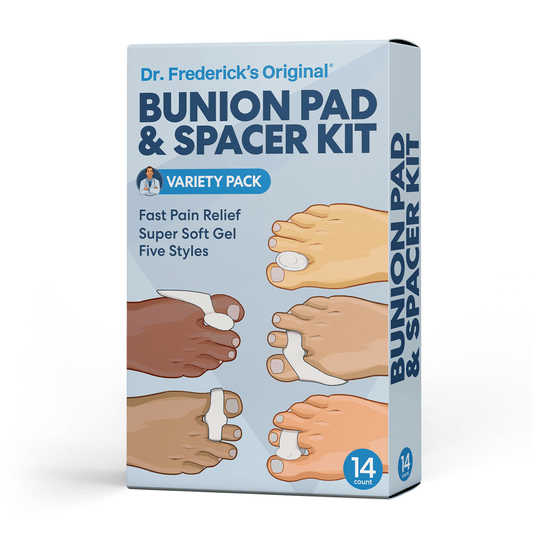
Complete Bunion Corrector Kit 14-Piece Variety
14 soft gel pieces to cushion bunions and gently realign overlapping toes -
Full-Foot Coverage


Moisturizing Gel Socks HealSoft Plus™
Plush fuzzy socks with full-foot gel lining that hydrates dry, cracked feet overnight -
Breathable Design

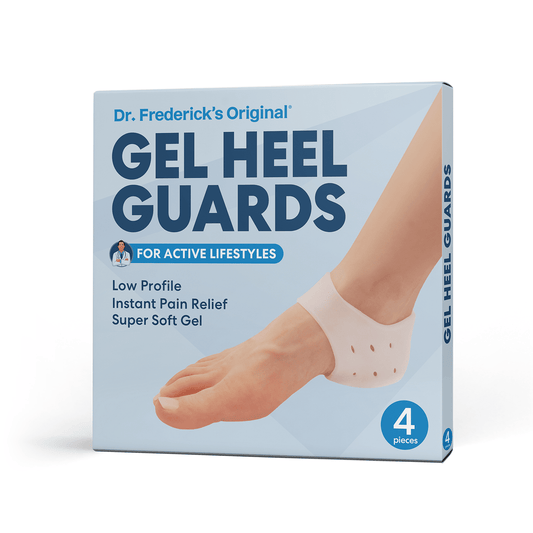
Soft Gel Heel Protectors
Vented gel heel protectors designed to cushion and support sore heels -
-
2.5 M Sold

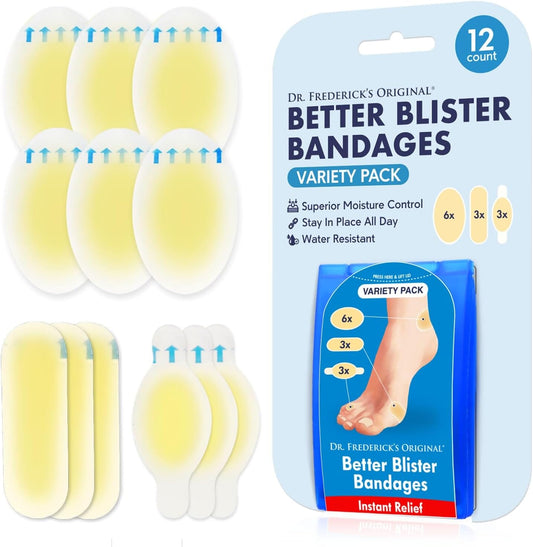
Better Blister™ Bandages Variety
Superior cushioning blister protection for heels, toes & trouble spots -
Best Seller

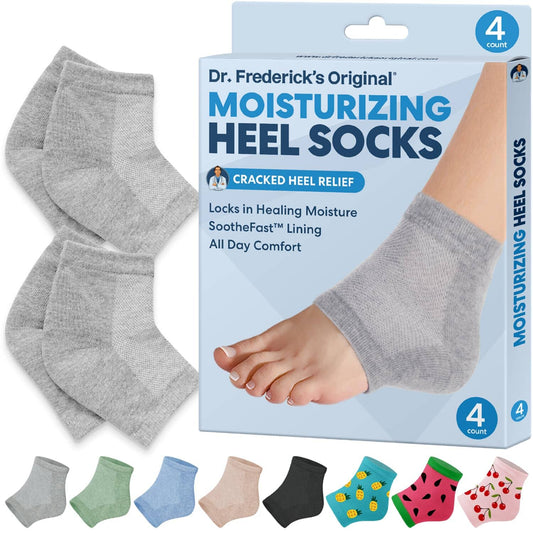
Moisturizing Heel Socks Soothefast™ Gel
Gel-lined socks that lock in moisture to repair cracked heels overnight -
All-Day Comfort


Hammer Toe Relief Gels Triple Loop
Soft gel toe spacers with triple-loop design for secure hammer toe relief -
Doctor Designed

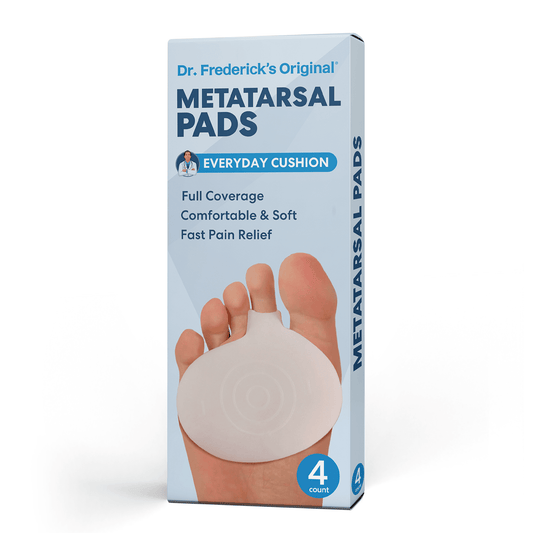
Metatarsal Gel Pads
Gel cushions that target ball-of-foot pain for instant, all-day relief -
Premium Relief

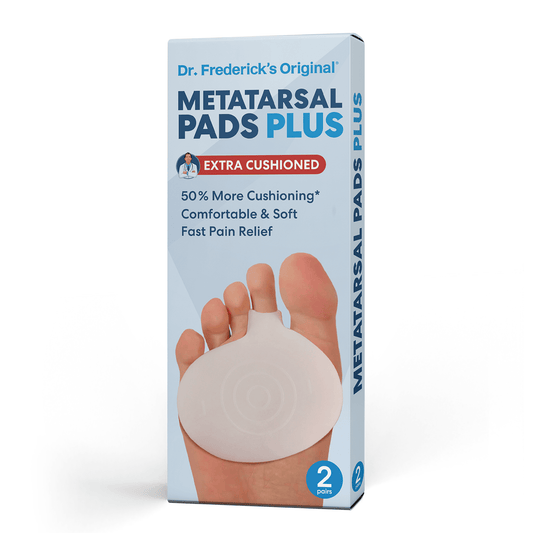
Metatarsal Pads Plus Extra Cushioned
Extra-cushioned gel pads that eliminate ball-of-foot pain instantly -
Flexible Support

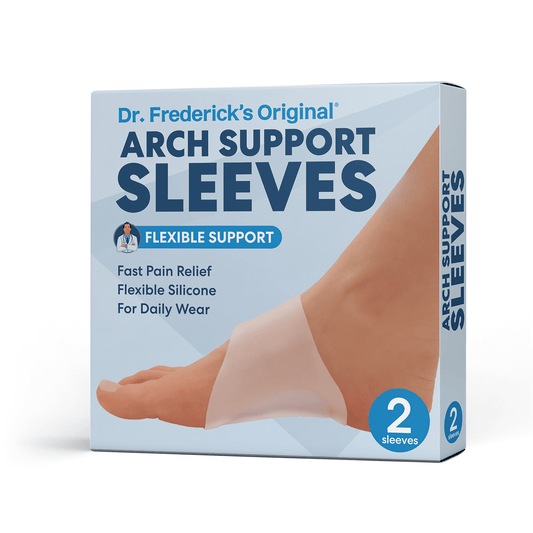
Arch Support Gel Sleeves
Transparent gel arch supports that cushion and relieve foot pain -
Multiple Colors & Sizes!

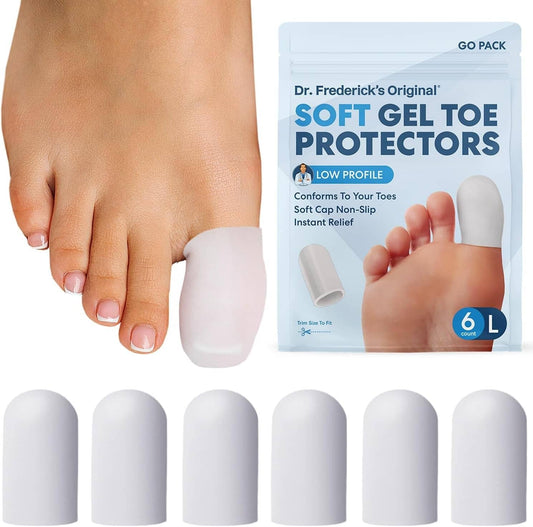
Soft Gel Toe Protectors Large
Soft gel caps that prevent toe pain from rubbing and friction -
Doctor Developed

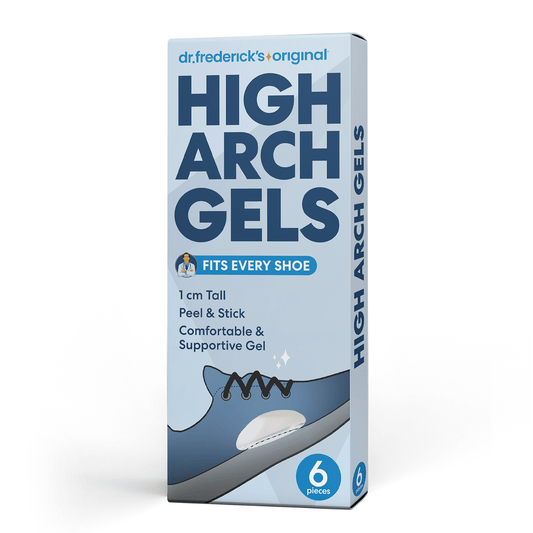
High Arch Support Gels
Doctor-designed gel pads that provide instant high arch support and pain relief -
Doctor Developed


Bunion Toe Spacers Sport
Low-profile gel toe spacers designed to stay put during sports and active movement -
All-Day Comfort


Flared Gel Toe Separators
Flared gel toe separators that stay in place for all-day bunion relief -
Pain Relief

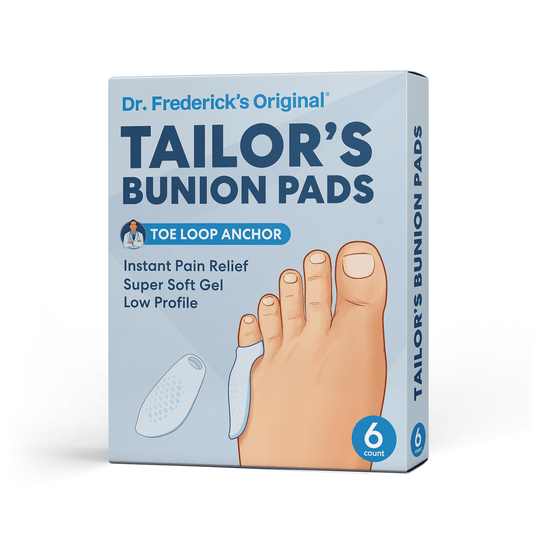
Tailor's Bunion Pads Low-profile
Soft gel spacers that cushion tailor's bunions for pain-free movement -
Best Value


Toe Tube Sleeves Variety Pack
Medical-grade gel tubes that cushion and protect toes from friction -
-
Doctor Developed


Open Toe Cushion Sleeves
Soft gel cushions that protect and support the ball of your foot -
Bunion Pain Relief

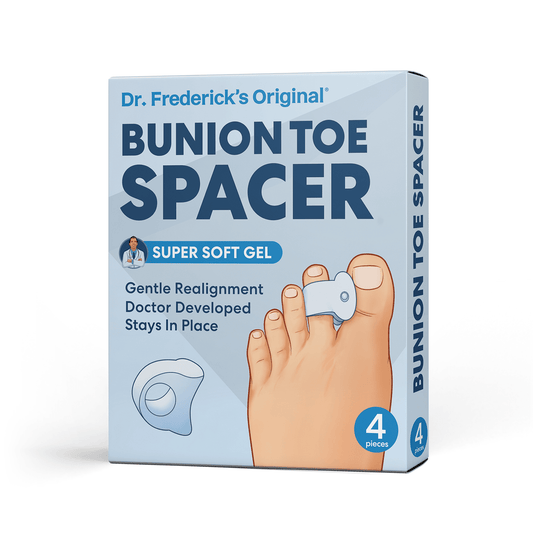
Gel Bunion Toe Spacer
Soft gel toe separators designed for active lifestyles and all shoe types -
Active Support

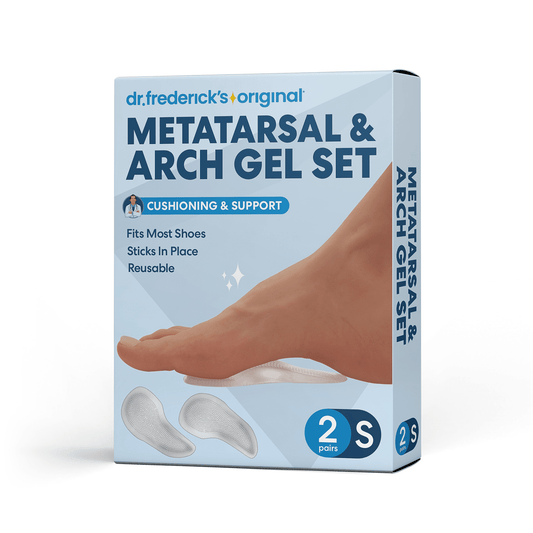
Gel Metatarsal & Arch Pads
Self-stick gel pads that provide targeted arch and metatarsal support




GET 10% OFF YOUR FIRST ORDER
Get early access to new products, exclusive savings, and reminders about upcoming sales!
Best Foot Care Products
The best foot care products address a wide range of foot conditions, from blisters and cracked heels to arch pain, metatarsal pressure, and toe misalignment. Dr. Frederick's Original best foot care product carries a physician-designed lineup that covers all of the above, with products priced from $10.99 to $19.99. The hydrocolloid bandages, moisturizing heel socks, gel arch inserts, heel protectors, metatarsal pads, toe spacers, toe separators, hammer toe gels, toe protectors, gel toe tubes, tailor's bunion pads, and a complete bunion corrector kit each target a specific area of the foot with medical-grade materials.
The best foot care products are built around three principles (the material, the design, and the intended use). Medical-grade gel (thermoplastic elastomer and silicone), SootheFast™ gel, HexFlex™ hydrocolloid, and breathable neoprene are the key materials across the lineup. The best foot care products are designed to stay low-profile inside shoes, conform to the foot's shape, and remain washable and reusable for extended wear. The products range from overnight moisture therapy and blister prevention to structural arch support and temporary toe realignment, making the line a comprehensive solution for everyday foot discomfort.
The best food care products are listed below.
- Better Blister™ Bandages
Material: Better Blister™ Bandages use HexFlex™ hydrocolloid gel with a water-resistant outer layer. The core delivers 40% more cushioning than standard bandages. The hydrocolloid absorbs wound fluid, creating a moist healing environment over the blister.
Design: The 12-count variety pack includes 3 shapes, heel, toe, and spot. Each shape conforms to a specific high-friction zone of the foot. The HexFlex™ construction flexes with foot movement to prevent edge peeling during activity.
Use Purpose: The bandages are applied over blisters or pre-blister friction areas. Target zones include the heel, toe, and general trouble spots.
- Better Blister™ Blocker
Material: Better Blister™ Blocker is a solid balm-based anti-chafe formula. Each stick weighs 0.90 oz. The 2-stick set creates an invisible protective barrier on skin contact with no greasy residue.
Design: The stick applicator allows targeted, mess-free application to friction zones (heels, toes, and the sides of the feet). The compact 0.90 oz size fits in travel bags, hiking packs, and pockets for on-the-go use.
Use Purpose: Better Blister™ Blocker is applied to bare skin before putting on shoes. It creates a friction-reducing barrier that stops chafing before it starts. It functions as prevention, not post-blister treatment.
- Moisturizing Heel Socks
Material: Moisturizing Heel Socks feature a breathable fabric exterior with a SootheFast™ gel lining. The lining is infused with Vitamin E, olive oil, and essential botanical oils. The formula is latex-free and available in 5 color-and-ingredient variants.
Design: The toeless cut allows free toe movement and prevents overheating. The gel lining is embedded in the heel zone. It retains its therapeutic properties through repeated machine washes.
Use Purpose: Moisturizing Heel Socks are worn overnight to repair dry, cracked heels. Results appear in as few as 3 to 7 days.
- Moisturizing Heel Socks (4 count)
Material: Moisturizing Heel Socks (4-Count) are made from 100% hypoallergenic medical-grade silicone. The sock body features over 100 ventilation holes. The translucent white silicone is free of irritants, making it suitable for sensitive skin. Design: The toeless open-toe design pairs with 100+ vent holes for consistent airflow. The 4-piece set (2 complete pairs) fits women's sizes 4 to 10 and men's sizes 5 to 8. A flexible stretch fit conforms to the foot without bunching.
Use Purpose: The Moisturizing Heel Socks (4-Count) work overnight or during daytime rest. The silicone locks in moisture and prevents water loss from cracked heel skin.
- Arch Support Gel Inserts
Material: Arch Support Gel Inserts use SuperComfort Gel at 1.10 cm thickness. The adhesive backing is 14% more adhesive than the previous formula. The clear gel is reusable and washable.
Design: The low-profile, transparent insert fits invisibly inside any shoe color or insole. The peel-and-stick backing holds the pad in place and releases cleanly without residue. The 6-piece set allows rotation across multiple footwear pairs.
Use Purpose: Arch Support Gel Inserts are placed on the shoe insole for targeted high-arch cushioning. The inserts address conditions (plantar fasciitis, PES cavus, and flat feet).
- Arch Support Gel Sleeves
Material: Arch Support Gel Sleeves are made from transparent thermoplastic elastomer (TPE) gel with a spandex midfoot band. The TPE is soft, flexible, and durable through extended daily use.
Design: A low-profile TPE gel pad sits under the arch. A spandex band wraps the midfoot to secure the sleeve without adhesive. The large size fits women's 8 to 14 and men's 6 to 13.
Use Purpose: Arch Support Gel Sleeves cushion the arch for flat feet and plantar fasciitis without modifying the shoe.
- High Arch Support Gel
Material: High Arch Support Gels use SuperComfort Gel at 1.10 cm thickness. The high-adhesion peel-and-stick backing maintains stickiness through repeated wash-and-restick cycles. The clear gel is hypoallergenic.
Design: The doctor-designed pad shape positions precisely under the arch's peak. Pressure is distributed across the arch. The clear color integrates invisibly into dress shoes, sandals, jazz shoes, and hiking boots.
Use Purpose: High Arch Support Gels cushion the arch during standing and walking. The inserts address pain from high arches (PES cavus) and plantar fasciitis.
- Soft Gel Heel Protectors
Material: Soft Gel Heel Protectors are made from medical-grade gel with BreathEase™ venting technology. The gel resists bacteria and odor naturally, maintaining hygiene through extended wear without chemical treatments.
Design: The 4-count protectors feature ventilation cutouts for airflow. The cutouts prevent the sweaty discomfort of solid gel heel cups. The design accommodates layering and stacking multiple guards for severe pain episodes.
Use Purpose: Soft Gel Heel Protectors are worn inside any shoe or barefoot overnight. The protectors address plantar fasciitis, heel spurs, cracked heels, and gout-related heel soreness.
- Heel Guards
Material: Heel Guards are made from soft neoprene, the same material used in wetsuits. The neoprene is moisture-wicking, flexible, and structured enough to hold its shape through repeated use and washing.
Design: The neoprene wrap pulls on around the heel like a shoe. The 2-count set stays in place during jogging and all-day standing. Moisture-wicking properties prevent sweat buildup inside the heel cup.
Use Purpose: Heel Guards provide cushioned support during active movement. The guards address plantar fasciitis, heel spurs, and cracked heel pain.
- Metatarsal Pads
Material: Metatarsal Pads are made from clear medical-grade gel with a self-adhesive peel-and-stick backing. The gel is washable and reusable across multiple shoe types.
Design: The 4-piece set targets the ball-of-foot area just behind the toes. The low-profile shape distributes forefoot weight evenly. The pad fits inside high heels, sneakers, hiking boots, and work shoes without raising the foot.
Use Purpose: Metatarsal Pads cushion the metatarsal heads during standing and walking. The pads relieve pain from metatarsalgia, Morton's neuroma, and calluses.
- Metatarsal Pads (Extra Cushioned)
Material: Metatarsal Pads Plus use a thicker, denser gel compound with 50% more cushioning volume per pad than the standard version. The gel retains its self-adhesive, washable, and reusable properties.
Design: The elevated gel profile absorbs higher forefoot impact. The 4-piece set suits individuals with advanced metatarsalgia or extended hours on hard floors. The footprint matches the standard pad but carries added gel height.
Use Purpose: Metatarsal Pads (Extra Cushioned) target acute ball-of-foot pain from conditions (metatarsalgia, Morton's neuroma, and forefoot calluses) that need more substantial shock absorption.
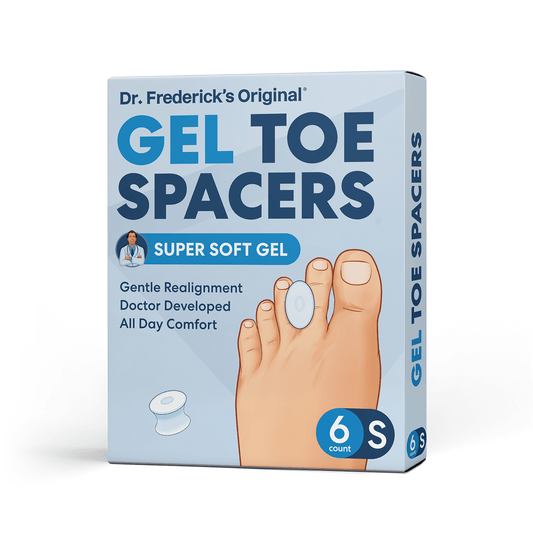
- Gel Toe Spacers
Material: Gel Toe Spacers are made from super-soft, latex-free medical-grade gel. Available in small, medium, and large sizes, the gel is washable and holds its shape through regular daily use.
Design: The 6-piece set slides between the first and second toes. The gel conforms to the natural gap without applying rigid pressure. The low-profile fits inside socks and closed-toe shoes without noticeable bulk.
Use Purpose: Gel Toe Spacers provide gentle toe realignment for bunions, overlapping toes, and hallux valgus. The spacer reduces pressure at the big toe joint during daily wear.
- Flared Gel Toe Separators
Material: Flared Gel Toe Separators are made from soft, latex-free medical-grade gel in a one-size-fits-most format. The gel is washable and holds its shape through active daily use.
Design: The flared base anchors the separator between the toes. The wider base prevents slipping and bunching during walking. The 6-piece set stays positioned inside socks and shoes without adhesive throughout the day.
Use Purpose: Flared Gel Toe Separators address bunion pain, overlapping toes, and toe misalignment during daily wear. The flared base keeps the separator stable in active footwear.
- Hammer Toe Relief Gels (Triple Loop)
Material: Hammer Toe Relief Gels (Triple Loop) are made from soft, white medical-grade gel in a triple-loop structure. The gel is flexible, washable, and reusable for repeated daily use.
Design: The triple-loop wraps around and under 3 adjacent toes at once. Corrective support is distributed across multiple toe joints. The 2-pair (4-piece) set anchors under the metatarsal area while the 3 loops hold toes straighter inside the shoe.
Use Purpose: Hammer Toe Relief Gels (Triple Loop) provide symptomatic support and temporary realignment for crooked, overlapping, and contracted hammer toes during closed-toe shoe wear.
- Soft Gel Toe Protectors
Material: Soft Gel Toe Protectors are made from soft, flexible, hypoallergenic, latex-free medical-grade gel in a toe-cap format. Available in small and large sizes, the white gel features a trim-to-fit design for custom length adjustment.
Design: The cap slides over the toe tip and conforms to its shape. A non-slip grip holds the cap in position without adhesive. The design accommodates ingrown toenails, corns, calluses, and blisters.
Use Purpose: Soft Gel Toe Protectors shield toes from friction and impact during shoe wear.
- Gel Toe Tubes
Material: Gel Toe Tubes are made from medical-grade gel in a tubular sleeve format. The 12-piece variety pack includes small, medium, and large sizes. The gel is soft, washable, and reusable.
Design: The tube encases the toe from tip to base, providing 360-degree cushioning along the full toe length. The 12-piece pack contains 4 pieces per size. The variety covers different toes on the same foot or across users with varying toe dimensions.
Use Purpose: Gel Toe Tubes protect individual toes from friction, corns, calluses, and blisters. The tubes cushion the full circumference of high-contact-pressure toes during shoe wear.
- Tailor's Bunion Pads
Material: Tailors Bunion Pads are made from soft, latex-free medical-grade gel in a low-profile shield format. The gel is reinforced to resist tearing and deformation through prolonged daily use.
Design: The low-profile shield sits against the outer side of the fifth toe and bunionette joint. The slim 6-count design fits inside narrow footwear (sneakers, work boots, and heels) without adding bulk to the outer foot profile.
Use Purpose: Tailors Bunion Pads reduce pressure and friction on the bunionette, the bony protrusion on the outer fifth metatarsal head, during daily wear.
- Complete Bunion Corrector Kit (14-Piece)
Material: All 14 pieces are made from soft, washable, reusable medical-grade gel. The gel is latex-free and flexible. Cushioning properties hold through multiple wash cycles.
Design: The kit includes Standard Shield Spacers (2), Sport Shield Spacers (2), Gel Toe Separators in small, medium, and large, 2 of each size for 6 total, and Sport Toe Separators (2). The variety covers different activity levels and bunion severity degrees, from rest to high-impact walking and running.
Use Purpose: The Complete Bunion Corrector Kit targets hallux valgus, overlapping toes, and toe misalignment. Soft gel correctors are worn across daily activities and exercise without requiring surgery.
- Better Blister™ Bandages
Better Blister™ Bandages from Dr. Frederick’s Original are designed to prevent and heal foot blisters by providing a cushioning effect. The price for the bandages ranges from $18 to $38 for multi‑count packs, with smaller packs (10 count) costing closer to the lower end of the spectrum, while larger packs (24 count) are priced near the higher end. Better Blister™ Bandages are made with a hydrocolloid-based material that absorbs friction and moisture, reducing the chances of blister formation and promoting quicker healing for existing blisters. Apply the bandage to clean, dry skin, ensuring that it sticks and smooths out any wrinkles. The hydrocolloid surface forms a protective barrier, reducing irritation and protecting sensitive areas from further rubbing.
Better Blister™ Bandages are useful for clients who experience frequent blisters due to new shoes, long physical activities, or sensitive skin. Ideal for those participating in outdoor activities like hiking, running, or sports where blistering is common. Apply the bandages as soon as blisters begin to form or as a preventive measure before prolonged activity for optimal results. Replace the bandage after heavy sweat or water exposure to ensure continued protection. The bandages are water-resistant, making them suitable for use in challenging environments, including during rain or after intense exercise.
The bandages can be applied to various areas of the feet, including the heels, toes, the ball of the foot, or along the sides of the feet for best results. Heel blisters can be avoided by placing the bandage just above the area where the shoe rubs against the skin. The bandage should cover the tips and sides, while the ball of the foot should be protected where forefoot pressure builds up for the toes. The bandages are versatile, adapting to flat and curved foot surfaces for a secure, comfortable fit. Better Blister™ Bandages provide protection exactly where needed.
- Better Blister™ Blocker
Better Blister™ Blocker from Dr. Frederick’s Original ranges $10 to $13 for a two‑stick pack. Glide the stick over clean, dry skin on blister‑prone areas before activity. Spread an invisible layer until the balm disappears. The applied barrier reduces friction and irritation between skin and footwear or fabric. Reapply when heavy sweat or moisture exposure lessens the protective layer.
Better Blister™ Blocker is ideal for clients who experience rubbing discomfort during long walks, runs, hikes, theme park visits, or with new or snug footwear. Those with sensitive skin or past blister issues benefit most when applying before prolonged movement. Use on feet, toes, heels, or any friction‑prone spot to reduce the risk of blister formation. Apply around the tips and sides of the toes. Cover the area where the shoe back contacts skin, for heels. Coat where pressure and rubbing occur, for the ball of the foot or arch areas. Better Blister™ Blocker protects where friction arises.
- Moisturizing Heel Socks
Moisturizing Heel Socks are sold in a price range of $15 to $25 per pair. Slip the socks onto clean feet before bedtime or wear them during rest periods. Ensure skin and heel areas are dry before putting on socks. The built‑in moisturizing lining delivers hydration throughout wear, helping soften rough skin and cracked heels. Use for several nights to improve texture and comfort.
Moisturizing Heel Socks are ideal for clients who have dry, rough, or cracked heels and seek deep hydration without creams throughout the day. Moisturizing Heel Socks are useful after long periods of standing or walking in harsh environments where dryness worsens. Choose the socks when hydration and skin renewal are priorities, for feet that lack moisture or show visible cracking. Place Moisturizing Heel Socks over heels, ankles, and lower foot areas where dryness or cracking is most severe. Adjust socks so that the heel pad of the lining sits over the affected area to maximize moisture delivery. Wear them overnight or during rest for the best results. Moisturizing Heel Socks keep areas that need hydration covered and protected.
- Moisturizing Heel Socks (4-Count)
Dr. Frederick’s Original Moisturizing Heel Socks Cracked Heel (4‑Count) are priced in the range $11 to $22 depending on retailer and variant (gel‑lined, full foot socks that hydrate dry, cracked heels). Slip the socks onto clean, dry feet before rest or bedtime and leave them on for at least one hour so the built‑in moisture lining delivers sustained hydration and softens rough skin. Continue consistent use over several nights for the best results in reducing heel dryness and cracking. Soft fabric offers comfort during wear and helps hold the conditioning gel against the skin.
Better suited for clients experiencing dry, rough, or cracked heels who seek deep moisturizing while at rest or overnight. Choose when dryness leads to discomfort or visible cracking despite the use of basic lotions. Clients with tight footwear that worsens heel dryness, or preparing feet for sandal seasons, benefit from sustained hydration provided by the socks. Apply Moisturizing Heel Socks over heels and ankle‑to‑heel junctions where cracking and rough patches occur. Place the gel‑lined area along the sides of the heel and under the arch for fuller coverage, for broader foot dryness. Ensure the sock’s moisture lining is centered on those areas to maximize hydration for intense dry spots. Moisturizing Heel Socks (4‑Count) deliver targeted nourishment and protection where it is needed.
- Arch Support Gel Inserts
Dr. Frederick’s Original Arch Support Gel Inserts are priced in the range $18 to $28 for a 6‑piece peel‑and‑stick set when bought from online sellers, offering accessible arch support without bulky insoles. Clean the inside of your shoe and remove the backing, then press the gel inserts into place under the arch so the adhesive side grips the insole. Ensure they sit where your foot’s arch curves to deliver cushioning and stability with each step. Reposition before final placement for tailored comfort.
The arch support gel inserts are ideal for consumers who experience foot fatigue, lack of arch cushioning, or strain from long hours on their feet. Choose when basic shoe insoles fail to provide sufficient support or when flat arches, high arches, or plantar discomfort require a subtle yet effective lift. They benefit gym goers, office walkers, and anyone who wants better alignment for everyday footwear. Place the gel inserts along the arch area inside shoes, under the curve where your foot bends upward, to support overall foot structure. Center the pad under the high point of your arch to reduce pressure for high‑arch needs. Place the insert inward so it fills the slope and improves alignment under the foot for flat feet. Arch Support Gel Inserts deliver cushioning and alignment where arch pressure occurs.
- Arch Support Gel Sleeves
Dr. Frederick’s Original Arch Support Gel Sleeves are priced in the range $10 to $18 for a 2‑piece set of flexible gel arch supports. Slide the sleeves over clean feet and position the gel pad under the arch so the soft silicone stays in place inside any shoe. Ensure correct placement by flexing the foot after sliding it on so the gel pad sits where your arch curves. Wear them during daily activities or at rest to help relieve pressure and improve comfort throughout the day. Regular use sustains gentle support and cushioning for strained arches.
Choose the sleeves when clients experience arch discomfort, plantar fasciitis symptoms, flat feet, fallen arches, or foot fatigue from long walks, standing jobs, or regular exercise. Seeking discreet support that fits inside sneakers, boots, or dress shoes benefits most. Gel sleeves help reduce strain by cushioning the arch while still allowing natural foot movement. Place the supports under the arch area of each foot where pressure and strain are greatest. Position the gel pad beneath the middle section of the arch to lift and cushion the foot for clients with low arches. Orient the pad higher so it fills and supports the curve for those with mild high‑arch discomfort. Wear Arch Support Gel Sleeves where stability and cushioning are needed most during walking or standing.
- High Arch Support Gels
Dr. Frederick’s Original Arch Support Gel Inserts are sold in the approximate price range $10 to $35 for a 6‑piece set of high‑arch, SuperComfort gel pads designed by physicians to relieve discomfort from high arches and plantar fasciitis. Clean the inside of your shoe, peel the backing off each gel pad, and press them into place under the arch so the adhesive sticks. Hold each pad in position before walking so the gel mold adjusts to your individual arch shape and provides cushioning where needed. The pads are reusable and washable, so you can reposition them or reuse them as needed for lasting comfort.
Choose the high‑arch gels when consumers experience high arch pain, strain under the arch, or discomfort during daily movement, when typical insoles fall short in providing support. They help reduce pressure on the arches, improve foot alignment, and relieve pain related to plantar fasciitis, flat feet, or unsupported arches in regular shoes. The gels benefit those who spend long periods on their feet, hike, run, stand at work, or simply want better cushioning during normal activity. Place the high arch support gels inside footwear under where the foot’s arch naturally curves to absorb shock and improve alignment. Position them along the mid‑sole arch to support dynamic movement, for sneakers or athletic shoes. Center the gels under the arch where rigid soles provide little cushioning in dress shoes or flats. Affix the adhesive pads under the arch before slipping them on so they stay in place during walking in sandals or open designs. High Arch Support Gels deliver comfort where arch strain and pressure occur.
- Soft Gel Heel Protectors
Dr. Frederick’s Original Gel Heel Guards-Soft Gel Heel Protectors are priced in the range $15 to $25 for a 4‑piece set of soft gel heel protectors that cushion and support the heel area. Apply by slipping over clean feet or placing them inside shoes so the soft gel cups cradle the heels with every step. Position so they sit against the back of the heel and under the heel bone to absorb impact and reduce pressure. Wear them during daily activity or long periods of standing to maintain comfort and support. The protectors are washable and reusable, making them versatile for repeated use.
Choose the soft gel heel protectors when consumers experience heel pain, plantar fascia discomfort, heel spurs, or cracked heels that cause irritation during walking or standing. Useful for clients who spend extensive time on their feet, those with foot pain after exercise, or anyone seeking added cushioning without bulky inserts. The flexible gel material adapts to most footwear, including sneakers, dress shoes, and boots, while BreathEase vents help keep feet dry and comfortable throughout the day. Place the gel cushioning at the back of the heel where pressure and friction are highest. Ensure the gel pad sits under the heel bone to absorb impact for flare‑ups at the heel bottom. Adjust the pad so it wraps gently around the heel contour to reduce rubbing and irritation along the sides of the heel. Soft Gel Heel Protectors deliver support and cushioning where heel stress occurs
- Heel Guards
Dr. Frederick’s Original Gel Heel Guards and Dr. Frederick’s Original Neoprene Heel Guard Set fall under the general category of Heel Guards from Dr. Frederick’s Original. Provide targeted heel pain relief with soft gel or neoprene cushioning that absorbs impact and reduces pressure on heel pain caused by plantar fasciitis, heel spurs, cracked heels, gout, and general heel discomfort. Physician‑designed cushioning grips the heel and keeps irritation low during daily wear. The guards are washable and reusable for ongoing use. Expect Heel Guards in a price range of $15 to $35 depending on material and count, with gel versions toward the lower to mid end and neoprene wraps slightly more. Place the product over the heel after slipping feet into shoes or boots. Ensure the guard sits snug against the back of the heel and under the heel bone so the soft cushioning disperses pressure with every step. Adjust placement inside footwear or under socks for a secure fit before longer wear.
Choose Heel Guards when foot discomfort stems from heel pain, plantar fasciitis symptoms, heel spurs, cracked heels, or pressure from prolonged standing, walking, or activity. They suit consumers who want added cushioning without bulky orthotic inserts and who need heel‑specific relief while wearing most shoe types, including sneakers, dress shoes, or casual footwear. Place heel guards at the back of the heel where rubbing or pressure occurs. Ensure the guard’s pad sits under the heel bone to absorb impact, for deeper pain at the heel bottom. Adjust so the guard wraps gently around those areas to reduce friction and irritation at the sides of the heel. Heel Guards deliver cushioning where heel stress and pain are greatest.
- Metatarsal Pads
Metatarsal Pads from Dr. Frederick’s Original come in gel pad formats that cushion and support the ball of the foot to relieve pressure and discomfort. The price range is $15.99 to $18.99 for the standard 4‑piece metatarsal pad set that redistributes pressure away from the ball of the foot for quick relief. The pads are physician‑designed gel cushions that work inside shoes to ease metatarsalgia, Morton's neuroma, and callus pain while you walk or stand.
Clean and dry the area of the foot where the pain occurs, and position the gel pad just behind the ball of the foot so the soft cushioning sits under the metatarsal heads. Ensure the pad adheres before wearing socks or shoes so it stays in place throughout the day. Designs feature a toe‑loop or adhesive backing that keeps the pad positioned where needed.
Choose metatarsal pads when consumers suffer from ball‑of‑foot pain, pressure build‑up from prolonged walking or standing, neuroma irritation, or callus discomfort that basic insoles do not address. The pads suit anyone seeking targeted forefoot relief in heels, sneakers, flats, or casual shoes without adding bulk. Place the pads just behind the ball of the foot, directly under the metatarsal heads, where pressure and pain are greatest. Center the gel cushion across the entire metatarsal region so it evenly redistributes weight for broader forefoot discomfort. Adjust the pad toward the inside edge where stress is concentrated for pressure in narrower shoe styles. Metatarsal Pads deliver cushioning and pressure relief where forefoot stress occurs.
- Metatarsal Pads (Extra Cushioned)
Metatarsal Pads (Extra Cushioned) from Dr. Frederick’s Original are priced around $13.99 for a 4‑piece set, offering enhanced gel cushioning with about 25 % more padding than standard metatarsal pads for superior relief at the ball of the foot. Apply them by placing the soft gel pad just behind the ball of the foot so the extra‑cushioned area sits under the metatarsal heads. Slip socks or shoes over the pads after placement, ensuring they stay snug and secure throughout activity. Wear them during daily walking, standing, or exercise, and replace them when cushioning or adhesion lessens.
Choose the extra‑cushioned pads when clients experience forefoot pain, metatarsalgia, Morton's neuroma discomfort, or pressure buildup that regular pads do not sufficiently relieve. They suit those who spend long hours on their feet, walk extensively, or engage in active days where forefoot pressure inhibits comfort. The added padding redistributes weight and absorbs shock more effectively than thinner pads. Place the extra‑cushioned pads under the ball of the foot where pressure and pain peak. Adjust the pad toward the inside edge where stress concentrates in narrow‑toed shoes. Center the gel cushion across the entire metatarsal region for broader forefoot discomfort.
- Gel Toe Spacers
Gel Toe Spacers from Dr. Frederick’s Original are priced around $10.99 to $12.99 for a set of soft gel spacers designed to gently separate and realign toes during wear. To use, slide or place the gel spacers between toes, especially between the big toe and second toe, so that the soft gel material creates space and reduces rubbing. Ensure skin is clean and dry before placement so the gel stays comfortable under socks or inside shoes throughout the day. Wear during walking, standing, or rest to ease tension and pressure. Reposition as needed for fit and comfort.
Choose Gel Toe Spacers when consumers experience toe crowding, rubbing, irritation from overlapping toes, or bunion discomfort that ordinary cushioning does not relieve. They benefit clients who want gentle alignment support during daily activity, exercise, or extended wear in shoes with limited toe room. The spacers help reduce friction, support natural toe positioning, and improve overall forefoot comfort. Place gel spacers between the toes where overlap or pressure occurs, such as between the big and second toe for bunion or overlap relief. Insert spacers between any adjacent toes that rub or feel crowded for general toe spacing needs. Position spacers so they separate the bent toe from its neighbor to reduce friction and pressure for hammer toe discomfort. Gel Toe Spacers deliver gentle alignment and cushioning where toe stress arises.
- Flared Gel Toe Separators
Flared Gel Toe Separators from Dr. Frederick’s Original are priced around $12.99 for a 6‑piece set designed to stay securely between toes and provide gentle spacing and realignment. The soft proprietary gel fits comfortably between the toes and stays in place under socks or inside shoes throughout the day. Slide a separator between the big toe and second toe or any adjacent toes that overlap or rub, ensuring the flared section nestles snugly so pressure is relieved and rubbing is reduced. Wash with mild soap and water to keep them clean and reusable.
Choose Flared Gel Toe Separators when clients experience bunion pain, overlapping toes, toe friction, or irritation that causes discomfort during walking, standing, or activity. The separators suit those seeking gentle realignment and cushioning throughout the day without bulky orthotic devices. The flared design helps prevent slippage and keeps toes spaced gently, reducing pressure on irritated skin and allowing for comfortable movement in sneakers, sandals, or casual shoes. Place the separators between toes where contact or pressure occurs, between the big toe and second toe, to relieve bunion and overlap discomfort. Position them between any adjacent toes that rub or feel crowded, for general toe separation needs. Adjust the flared gel so it fills the spacing evenly and reduces friction from shoe contact, for hammer toe or overlapping smaller toes. Flared Gel Toe Separators deliver gentle relief where toe stress and pressure arise.
- Hammer Toe Relief Gels (Triple Loop)
Hammer Toe Relief Gels (Triple Loop) from Dr. Frederick’s Original are priced around $13.99 for a 2‑pair set of soft gel toe splints designed to cushion, support, and realign crooked, overlapping toes. The triple‑loop design holds the gel pads securely in place during daily activity, so pressure points stay cushioned. Slide each gel loop onto the affected toe(s) so the soft gel sits between and around the bent or overlapping toes; adjust for comfort before slipping on socks or shoes. Wash with mild soap and water after wear so the pads stay clean and reusable.
Choose Hammer Toe Relief Gels when clients experience hammer toe discomfort, overlapping or crooked toes, friction inside shoes, or pressure‑induced irritation that reduces walking or standing comfort. The gels help reduce rubbing and callus formation while gently encouraging toe alignment during normal daily activities or light exercise inside most shoe types.
Place the triple‑loop gels around and between the affected toes, where a bent or curled toe rubs against adjacent toes or shoe material. Thread the gel loops over the toe joints so cushioning surrounds the impacted areas, for hammer toes. Position the loops to separate the toes gently and relieve pressure on overlapping toes. Position the Hammer Toe Relief Gels (Triple Loop) so it cushions at those contact points to reduce friction, for toes with corn or callus irritation.
- Soft Gel Toe Protectors
Soft Gel Toe Protectors from Dr. Frederick’s Original are priced in the range $13.99 to $16.99 for packs of soft gel toe caps (6‑piece or 12‑piece varieties) that cushion and shield toes from friction, blisters, corns, calluses, and ingrown toenails. Slip a gel protector over the affected toe, ensuring the soft gel covers areas where rubbing or pressure occurs. Trim the protector to fit if needed, so it sits comfortably under socks or inside shoes throughout daily activity. Wash with mild soap and water to reuse and maintain cushioning over time.
Choose Soft Gel Toe Protectors when clients experience toe irritation, painful friction, blisters, corns, calluses, or discomfort from ingrown toenails that ordinary cushioning does not relieve. The protectors work well for long walks, exercise, dress shoe wear, or everyday movement where toes rub against the shoe material. Place the protectors over the tip and top of the toe where shoe contact causes irritation. Orient the gel so it wraps gently around the outer edge to reduce rubbing, for irritated side‑of‑toe areas. Position the protector so the gel cushions the nail bed and relieves pressure from shoes, for ingrown toenail discomfort. Soft Gel Toe Protectors provide targeted cushioning and friction relief where toe stress and irritation occur.
- Gel Toe Tubes
________________
Gel Toe Tubes from Dr. Frederick’s Original are priced around $12.99 for a 12‑piece variety pack, which includes small, medium, and large gel sleeves to fit all toes comfortably and provide reusable cushioning and protection. The tubes are made from medical‑grade gel that reduces friction and guards against blisters, calluses, corns, and general toe irritation. Select the size that best fits a specific toe and slide the gel tube over it so the soft gel surrounds and cushions the toe before slipping on socks or shoes. Clean them with mild soap and warm water after use to keep them washable and reusable.
Choose Gel Toe Tubes when consumers experience toe rubbing, blistering, callus formation, corns, overlapping toes, or irritation inside footwear that limits comfort during daily walking, activity, or exercise. The tubes work well for those who want gentle toe protection without adhesive pads, especially in athletic shoes, boots, or casual footwear. Place the gel tubes over the entire toe that needs protection so the soft gel cushions areas of rubbing. For toes with callus or corn irritation, ensure the tube covers the sensitive spot fully. For overlapping or closely spaced toes, slide the tube so it separates and shields adjacent toes from contact. For hammer or mallet toe discomfort, position the tube so the gel surrounds the toe joint to reduce pressure. Gel Toe Tubes deliver cushioning and friction relief where toe stress arises.
- Tailors Bunion Pads
Tailor’s Bunion Pads from Dr. Frederick’s Original are priced around $13.95 for a 6‑piece set of soft gel bunionette cushions that ease pressure on the outer edge of the foot near the pinky toe. These pads use a low‑profile, flexible gel with dual toe‑loop hold to cushion and protect the tailor’s bunion area, reducing friction inside shoes without bulk. To use, position a pad so the soft gel sits directly over the bunionette and wraps around the pinky toe; slip your sock or shoe on afterward to keep it securely in place throughout the day. Wash with mild soap and water to keep them clean and reusable.
Choose Tailor’s Bunion Pads when clients experience tailor’s bunion pain, pain on the outer side of the foot, pressure from tight footwear, or irritation from long walks or standing that ordinary cushioning does not relieve. The gel pads fit discreetly in sneakers, dress shoes, boots, or casual footwear so clients can stay active comfortably. Place the pads along the outer edge of the foot where the tailor’s bunion protrudes, ensuring the gel cushion covers the bony area that rubs against shoes. Adjust so the gel shield cradles the bunionette and the toe to relieve pressure for discomfort near the pinky toe joint. Position the Tailor’s Bunion Pads so it prevents friction against the shoe sidewall, for irritation in tighter shoe styles.
- Complete Bunion Corrector Kit (14-piece)
Complete Bunion Corrector Kit (14‑Piece) from Dr. Frederick’s Original is priced around $19.99 for the 14‑piece variety pack of soft gel pads, spacers, and toe separators that cushion bunions and gently help realign overlapping toes. The kit’s components are washable and reusable and fit discreetly under socks or inside most shoe types, making it a versatile at‑home bunion relief solution. Choose the gel piece that best matches the area of concern (pad, spacer, or separator) and place it where discomfort, rubbing, or toe misalignment occurs. Press the gel piece gently into contact with the skin or inside the shoe so it sits snugly against the bunion or between toes. Wear during activity or rest, clean with mild soap and water after use to maintain hygiene and cushioning performance.
Choose the Complete Bunion Corrector Kit when consumers experience bunion pain (hallux valgus), overlapping toes, pressure from tight footwear, or forefoot irritation that simple padding alone does not relieve. The variety of styles in the kit helps clients find the most comfortable gel solution for their foot shape and pain pattern, especially when pain occurs throughout daily walking, standing, or light activity. Complete Bunion Corrector Kit delivers cushioning, spacing, and pressure relief exactly where bunion and toe stress arise.
Blister Bandages
Blister bandages provide essential protection and promote healing by using medical-grade hydrocolloid technology. Blister bandages create a moist environment that supports the skin's natural healing. A single blister bandage pad features 40% extra cushioning to absorb impact and reduce painful friction during movement. A physician-designed structure ensures reliable protection against dirt and external contaminants. The water-resistant seal keeps the bandage securely in place, even during physical activity or exposure to moisture. Blister bandages are used for toe blisters, heel blisters, and targeted treatment on the side of the foot.
Athletes rely on blister bandages to maintain performance during long-distance running or intense training sessions. Travelers benefit from blister bandages when walking long distances in new shoes or visiting theme parks, where prolonged walking causes discomfort. The break-in period for new shoes leads to painful rubbing and skin damage, but blister bandages help prevent painful rubbing and skin damage. Users improve foot health. Blister bandages offer a simple yet effective solution for anyone seeking relief from blister-related discomfort. Prices for blister bandages start around $24.99, depending on the pack size and brand. Choosing the best blister bandages ensures maximum comfort and protection for your feet.
Blister Bandages by Product Type
Blister bandages by product type vary based on material composition and physical thickness. Every category serves a specific purpose for injury prevention or recovery in different areas of the foot. Products utilize hydrocolloid layers to maintain skin moisture levels and speed up recovery. Specific versions provide extra cushioning for high-impact zones (the heels or the balls of the feet). Advanced adhesive technologies ensure the bandage stays attached to the skin for multiple days. Prices for the various product types remain within the $24.99 range. Choosing the right category depends on the activity level and the specific location of the friction. Targeted products offer better results than generic alternatives for active users.
Blister bandages designed for athletes feature thicker padding and stronger adhesives to withstand long hours of activity. Some specialized blister bandages are designed to fit snugly around specific areas of the foot, offering focused protection. Others provide extra protection for sensitive skin areas (the edges of the feet or the arch). Customers optimize comfort and minimize discomfort during physical activities by selecting the right blister bandage for specific needs.
Ultra Sport Better Blister Bandages Heel
Ultra Sport Better Blister Bandages Heel provides a robust shield for the posterior foot area during intense activities. The design focuses on extreme durability for athletes and users with high movement demands. Hydrocolloid technology absorbs fluid from the wound while providing a protective gel layer. Thick padding reduces the pressure from tight footwear or athletic cleats. The strong adhesive resists sweat and moisture during exercise. Users apply the bandage by pressing the edges firmly onto clean and dry skin. Each pack sells for $24.99. Athletic performance remains high when the feet stay protected from constant rubbing.
Ultra Sport Better blister bandages heel offer long-lasting protection for active users, making the bandages ideal for users engaging in sports, running, or other high-impact activities. The bandages maintain their adhesive strength even during prolonged physical activity, preventing slippage. Use Ultra Sport Better blister bandages Heel to lessen the need for frequent reapplication because Ultra Sport Better Blister Bandages Heel remain in place for several days. The extra cushioning in the heel area helps to alleviate discomfort from repetitive motion, ensuring that users focus on their performance without distraction.
Better Blister Bandages
Better blister bandages offer long-lasting protection for active users, making the bandage ideal for users engaging in sports, running, or other high-impact activities. The bandages maintain their adhesive strength even during prolonged physical activity, preventing slippage. The bandages reduce the need for constant reapplication, with the ability to stay in place for multiple days. The extra cushioning in the heel area helps to alleviate discomfort from repetitive motion, ensuring that users can focus on their performance without distraction. Reliable protection defines the Ultra Sport Better Blister Bandages Heel.
Ultra Sport Better Blister Bandages Heel waterproof design ensures that the bandages stay effective even in wet conditions, providing peace of mind during outdoor activities. The bandages are made with breathable materials, allowing the skin to stay cool and dry throughout use. The bandages’ easy application process makes them convenient for users on the go. Offering a comfortable, durable solution, Better blister bandages are an essential item for anyone needing reliable foot protection, making Better Blister Bandages a top choice.
Blister Bandages by Placement
Blister bandages, by placement, are designed to target and protect high-friction areas of the body (the heels, toes, and balls of the feet). Blister bandages, by placement shapes, provide an anatomical fit, ensuring that the bandage contours to the natural curves of the foot or other areas, reducing discomfort. The fit helps the bandage stay securely in place, even during movement, preventing premature peeling. Anatomical fit is essential for minimizing further friction and pressure on the blistered area, which aids in faster healing.
Placement-specific bandages are useful for users engaging in physical activities, as placement-specific bandages provide protection exactly where needed. The designs help prevent additional irritation and offer long-lasting comfort. The price per pack varies by the number of bandages and the complexity of the design, with packs for specialized placements priced higher due to additional design features. Blister bandages, by placement, offer targeted relief, making the bandages a valuable tool for foot care and recovery.
Heel Blister Bandages
Heel blister bandages are specialized dressings designed to protect and soothe blisters that form on the heel area. Heel blister bandages are shaped to fit the contours of the heel, providing targeted coverage and reducing friction, which is the primary cause of blister formation in contours of the heel area. The adhesive is strong enough to hold the bandage in place, even during physical activity, while the material is designed to absorb moisture and create a cushioning effect. Heel blister bandages work by creating a barrier between the blistered skin and the surrounding environment, promoting faster healing and minimizing irritation.
Using heel blister bandages offers several benefits. Heel blister bandages help prevent the blister from worsening by reducing friction from shoes or other surfaces, which is important for active users. The cushioning provides relief from the pain associated with blisters, allowing users to continue walking or running without discomfort. The bandages are designed to stay in place for extended periods, reducing the need for constant reapplication. The bandages are ideal for use during long outings or while engaging in physical activities (hiking or running).
Apply the heel blister bandage to clean, dry skin for optimal use. Ensure that the edges are securely pressed down to avoid lifting. The price range for heel blister bandages falls between $5 and $15 per pack, depending on the brand, pack size, and specific features (waterproofing or advanced adhesive technology).
Toe Blister Bandages
Toe blister bandages are designed to provide protection and relief for blisters that form on the toes. Toe blister bandages have a compact, anatomical shape that fits the contours of the toe, ensuring precise coverage and minimizing friction that could worsen the blister. The adhesive is designed to hold the bandage securely in place, even during movement, and the material is absorbent, allowing the bandage to create a protective barrier between the blistered area and shoes or socks. Toe blister bandages work by reducing friction, absorbing moisture, and promoting a healing environment for the affected skin.
Using toe blister bandages offers multiple benefits. Toe blister bandages help prevent the blister from expanding or getting infected by reducing external irritation from footwear. The cushioning effect provides pain relief, allowing users to walk or run without further discomfort. Toe blister bandages are designed to stay in place, making the bandage convenient for continuous use without frequent reapplication during activities that require long periods of foot movement.
Clean and dry the affected area before applying the bandage. Gently press the edges down to ensure a secure fit and avoid excessive pressure on the blister. The price range for toe blister bandages generally falls between $4-$12 per pack, depending on factors like brand, pack size, and additional features (waterproof or extra adhesive strength).
Spot Blister Bandages
Spot blister bandages are small, targeted dressings designed to treat individual blisters, providing protection and promoting healing. Spot blister bandages are circular or oval, making them ideal for covering smaller, localized blisters on various parts of the body (the hands, feet, or fingers). The adhesive is strong enough to keep the bandage in place, and the material absorbs moisture from the blister while creating a cushion that reduces friction. Spot blister bandages work by isolating the blister from further irritation, allowing it to heal without being disturbed by movement or pressure.
Using spot blister bandages offers several benefits. Spot blister bandages provide quick and effective protection for small blisters, reducing the risk of infection or further damage. The discreet, small size makes the bandages suitable for areas where larger bandages are uncomfortable or impractical. The bandage's easy application and long-lasting adhesive help maintain consistent protection, making it convenient to use throughout the day.
Clean and dry the blistered area before applying the bandage for optimal use. Press firmly around the edges to ensure the bandage adheres well, and avoid peeling the bandage off until the blister has healed. The price range for spot blister bandages ranges from $3-$10 per pack, depending on the number of bandages, the brand, and any added features (waterproofing or advanced materials).
Variety Pack Blister Bandages
Variety pack blister bandages are multipack sets that include a range of bandage sizes and shapes designed to treat different types of blisters. Variety pack blister bandage packs feature various shapes (larger bandages for the heels and smaller ones for toes or fingers), allowing for targeted care depending on the location of the blister. The adhesive is designed to hold the bandages securely in place, while the materials used absorb moisture and reduce friction, helping the blister heal effectively. Variety pack blister bandages offer a versatile set of solutions for different blister types, ensuring an appropriate option for every situation.
Using a variety pack blister bandage offers numerous benefits. Variety pack blister bandages offer a cost-effective solution for users who need different sizes for various body areas. The pack’s assortment allows users to select the suitable bandage for each blister, making the bandage easier to address multiple blisters with one purchase. The versatility of having several sizes ensures that all blister types are protected, whether on the toes, heels, or other parts of the body, without needing to buy separate packs. Select the appropriate bandage size for the blistered area for optimal use. Clean and dry the skin before applying, ensuring that the bandage adheres securely. The price range for a variety pack of blister bandages falls between $5 to $15 per pack, depending on the number of bandages included and the specific features of the pack (waterproof or extra-strong adhesive qualities).
Blister Bandages by Technology
"Blister bandages by technology" refer to advanced blister bandages designed with specialized materials and features that improve performance. Blister bandages incorporate technologies (hydrocolloid, gel pads, or antimicrobial layers) to provide superior protection and support for healing. The technology works by creating a barrier that absorbs moisture from the blister while forming a gel-like cushion around the area, reducing friction and accelerating the healing process. Blister bandages by technology adapt to their size and shape, offering a customized fit that promotes long-lasting comfort and effective recovery.
Using blister bandages with advanced technology offers several benefits. They provide improved protection against infection through antimicrobial properties, ensuring the wound stays clean. The moisture-absorbing and cushioning properties help reduce pain and discomfort, allowing users to continue the activities without further irritation. The self-adhesive, flexible nature of blister bandages ensures they stay in place, even during movement or physical activity, reducing the need for frequent reapplication.
Clean and dry the blistered area before applying the bandage for optimal use. Press the edges firmly to ensure proper adhesion and wear until the blister has healed. The price range for blister bandages with advanced technology falls between $6 and $20 per pack, depending on the brand, technology, and pack size.
Hydrocolloid blister bandages
Hydrocolloid blister bandages utilize specialized polymers to create an optimal healing environment for skin injuries. The material reacts with the fluid from the blister to form a protective gel layer. The process maintains a moist wound bed, which accelerates the natural recovery of the skin. Pressure and friction decrease significantly because of the thick cushioning provided by the dressing. The adhesive edges create a waterproof seal that prevents bacteria from entering the wound site. Users apply the product to clean skin and leave the dressing in place for several days. Retail prices for the technology fall within the $24.99 range. Foot comfort returns quickly when the nerves stay shielded from external irritation. Proper care involves selecting effective hydrocolloid blister bandages.
Hydrocolloid blister bandages offer long-lasting protection, reducing the frequency of changes. The cushioning effect helps prevent further skin damage, allowing the blister to heal undisturbed. Users enjoy improved comfort and faster recovery while maintaining their daily activities.
SoftStick blister bandages
SoftStick blister bandages employ a unique adhesive technology that remains secure while being gentle on the skin. The material conforms to the irregular shapes of the foot for a personalized fit. Hydrocolloid pads integrated into the dressing provide the necessary moisture for rapid healing. The cushioning layer reduces the pain associated with walking on a fresh blister. The application involves peeling the backing and pressing the soft edges onto the affected area. Prices for SoftStick blister bandages range between $24.99 and $34.99. Removal remains painless, as the adhesive stays flexible throughout use. The gentle adhesive minimizes the risk of skin irritation, making it suitable for prolonged use. SoftStick blister bandages' flexible nature ensures that they move with the skin, preventing discomfort during daily activities. The combination of secure adhesion and comfort makes SoftStick blister bandages an ideal choice for users seeking reliable, long-lasting protection. Sensitive skin types benefit from the gentle yet firm grip of SoftStick blister bandages.
Ultra Sport blister bandages
Ultra Sport blister bandages are engineered for the highest level of physical activity and durability. The design features a reinforced outer layer that resists the intense friction of running and jumping. Hydrocolloid technology inside the bandage absorbs sweat and wound fluid to maintain a stable environment. Thick padding provides 40% cushioning than standard dressings to protect the foot during sports. Users apply the bandage to dry skin before beginning athletic sessions for maximum prevention. Prices for the sport-specific packs fall between 24.99 and 49.99. The waterproof seal ensures the bandage stays attached through heavy perspiration or rain.
The strong adhesive keeps the bandage secure even during intense movements, providing reliable protection. The strong, breathable adhesive design reduces moisture build-up, keeping the blistered area dry and preventing irritation. Ultra Sport blister bandages' features make them an essential item for athletes, ensuring foot comfort and blister prevention throughout physical activity. Athletes maintain their training schedules with Ultra Sport blister bandages.
Blister Bandages by Pack Size
Blister bandages are available in various pack sizes, offering flexibility based on user needs. Smaller packs are perfect for individuals who need a quick, one-time solution, offering portability and convenience for on-the-go use. Larger packs provide better value, offering bandages at a lower cost per unit, ideal for frequent users or households with multiple members. Stocking up on larger packs ensures that bandages are readily available when needed, a practical choice for users who engage in regular physical activity or have a higher likelihood of blisters. Grab-and-go packs are compact, easy to carry, and best suited for travelers or casual users who prefer not to carry bulk. Blister bandages by pack size help balance the trade-off between convenience and cost-effectiveness.
Larger packs require more storage space, but they offer greater savings in the long term. Buying in bulk provides peace of mind knowing that there’s a sufficient supply at hand for users with active lifestyles or specific foot care needs. Grab-and-go options, while offering fewer bandages, provide a level of convenience that is unmatched in situations where only a few are needed. The choice of pack size depends on the user's lifestyle, frequency of use, and preference for value over portability.
10-count blister bandage packs
10-count blister bandage packs offer a compact and focused solution for single-placement needs. Each box contains ten high-quality bandages designed for a specific area (the heel or toes). The small size makes the pack an ideal choice for short trips or occasional use. Users benefit from the lower entry price of $11.95 for targeted protection. Compact packaging fits into small storage spaces or first aid kits.
10-count blister bandage packs provide a cost-effective option for users who need a quick solution without purchasing larger, multi-pack boxes. The bandages are easy to carry and offer a convenient, portable option for travelers or athletes. The targeted coverage ensures that specific blister-prone areas are well protected. 10-count blister bandage packs are perfect for anyone needing reliable blister care on the go with a straightforward application process. The specific count ensures that users have enough for a single recovery cycle. Reliable results come from using 10 count blister bandage packs.
12-count variety blister bandage packs
12-count variety blister bandage packs provide a diverse selection of shapes for all-around foot care. Each pack includes a mix of heel, toe, and spot bandages to cover any situation. The assortment offers great value for users who experience blisters in different locations. Users find the variety useful for breaking in various types of footwear. Prices for the variety selection start from $24.99. The mix of sizes ensures that the correct fit is always at hand.
The variety pack is ideal for households that need flexibility in their blister treatment. The variety pack eliminates the need to buy multiple packs, offering a one-stop solution for various blister types. The assortment allows quick selection by blister location, ensuring targeted protection. The diverse pack is convenient for travelers or active users who need reliable blister care in different environments. Versatile protection is the hallmark of 12-count variety blister bandage packs.
What are Callus Pads?
Callus Pads are important footcare items designed to protect against thickened skin and discomfort. Callus pads offer cushioning that helps reduce friction against footwear, preventing irritation and alleviating pain. The range of products ( gel toe protectors and metatarsal pads) targets forefoot pressure, offering relief to users suffering from foot discomfort. Other foot care solutions (toe sleeves and heel care products) complement the collection to cater to diverse anatomical needs. Other foot care solutions contribute to overall foot health by ensuring proper support, which is crucial during movement to avoid unnecessary strain on the feet. Investing in Other foot care solutions improves comfort and mobility, allowing for better daily function. The pricing for the other foot care solutions collection begins at $16.99, a reasonable option for users seeking effective relief. Callus pads and related products help maintain healthy feet by addressing the root causes of skin irritation and discomfort. whether dealing with calluses or other foot-related issues. Regular use of callus pads and related products ensures ongoing protection and comfort, enabling pain-free movement throughout the day. Incorporating callus pads and related products into a daily routine prevents the buildup of calluses and promotes smoother skin. Callus pads are designed to stay in place throughout the day, providing consistent protection without slipping. Callus pads and foot care solutions are an affordable way to prioritize foot health without compromising on quality.
Callus Pads by Product Type
The callus pads collection offers a variety of products designed to address specific foot care needs, including toe protectors, metatarsal pads, cushion sleeves, and heel-care products. Toe protectors are made of soft gel and fit over the toes to create a barrier against pressure and friction, relieving discomfort from calluses or blisters. The callus pads are chosen by shoppers who experience irritation between their toes during long hours of walking or standing. Metatarsal pads are positioned under the ball of the foot to relieve pressure in the forefoot area. Metatarsal pads distribute body weight and are ideal for users who experience pain or discomfort in the forefoot from tight shoes or high heels. Cushion sleeves provide extra padding and cover the toes and the ball of the foot, offering comfort during movement. Cushion sleeves are selected by users who need additional cushioning during activities that require prolonged foot movement, such as walking or exercising. Heel-care products (heel pads or cups) focus on reducing pressure and alleviating pain in the heel. Cushion sleeves are useful for users suffering from heel spurs or calluses, and they provide much-needed support for users who stand or walk for extended periods. Each product is designed to deliver comfort, minimize irritation, and promote foot health, allowing shoppers to choose the right solution based on their specific needs.
Metatarsal Pads Plus Extra Cushioned
Metatarsal pads plus extra cushioning are designed to provide targeted relief for the ball of the foot, addressing discomfort caused by pressure points. Metatarsal pads work by redistributing pressure from the forefoot, reducing strain during prolonged walking or standing. Metatarsal pads alleviate discomfort from calluses, bunions, or other foot issues that lead to foot pain by cushioning the area beneath the toes. The added cushioning provides a layer of comfort, making shoes more enjoyable to wear for users who experience discomfort from tight-fitting footwear. The key benefits of these pads include substantial relief for forefoot discomfort, pressure reduction, and improved comfort throughout the day. Metatarsal pads offer an affordable solution for those seeking effective foot care and long-lasting relief, with a price point of $13.99. Metatarsal pads are helpful for users who spend significant time on their feet and need extra cushioning to ensure their comfort and mobility. Reliable relief comes from using Metatarsal Pads Plus Extra Cushioned.
Soft Gel Toe Protectors
Soft gel toe protectors are designed to slip comfortably over the toes, offering an effective solution to reduce rubbing and friction caused by footwear. The gel material provides cushioning, ensuring that the toes are shielded from discomfort due to calluses, corns, or blisters. Soft gel toe protectors act as a barrier between the skin and shoes, preventing irritation and promoting daily comfort. Soft gel toe protectors are useful for users who experience pain from constant rubbing, as the gel offers a soft, protective layer that absorbs pressure. One of the key advantages is their trim-to-fit feature, allowing users to adjust the protectors to their specific toe size for a more customized fit. Soft gel toe protectors deliver all-day comfort, making them an ideal choice for anyone seeking relief from foot friction and discomfort during daily activities. Soft gel toe protectors are discreet and easy to use, fitting snugly inside shoes without altering their appearance. The soft gel protectors are washable and reusable, offering a long-lasting solution for toe protection. Regular use prevents further irritation and contributes to healthy, comfortable feet. Durable relief is provided by Soft Gel Toe Protectors.
Soft Gel Toe Protectors Large
Soft gel toe protectors function largely the same way as the standard version but are designed to offer a roomier fit for those who need extra space. Soft gel toe protectors slip over the toes, providing effective friction reduction and toe cushioning to help prevent discomfort from rubbing against footwear. The gel material absorbs pressure, offering comfort for users dealing with calluses, corns, or blisters. The larger soft gel toe protectors provide tailored comfort with their size-specific design, ensuring that users with larger feet or wider toes experience optimal protection without feeling cramped. The benefits include improved cushioning, reduced friction, and improved toe comfort, making the protectors a perfect choice for users looking for additional space and support. Larger Soft gel toe protectors provide a customizable fit for users in need of extra room while delivering the same reliable, long-lasting relief from foot irritation. The larger design ensures a secure, slip-resistant fit, making the softgel toe protector suitable for daily use. The large gel protectors are easy to wear inside various types of shoes, offering discreet protection. Regular use helps prevent further irritation and keeps the toes comfortable throughout the day. Optimal comfort is achieved using Soft Gel Toe Protectors Large.
Soft Gel Toe Protectors Small
Soft gel toe protectors, small, offer the same gel-cap protection as the standard version but in a smaller fit designed for those with petite toes. Soft gel toe protectors slip snugly over the toes, providing effective friction reduction and cushioning to prevent discomfort from rubbing against shoes. The soft gel material absorbs pressure, offering relief for users dealing with calluses, corns, or blisters. The smaller size ensures a better fit for smaller toes, allowing for comfortable and secure wear. The benefits include reduced rubbing, improved comfort, and a custom fit that helps prevent irritation throughout the day. The small soft gel toe protectors are ideal for users who need a precise, size-specific solution for protecting their toes without excess material. The compact design provides discreet protection inside shoes, ensuring comfort without altering the fit or appearance of footwear. The small soft gel toe protectors are lightweight and easy to use, making the gel a convenient addition to any daily foot care routine. The small version keeps the toes protected without feeling bulky or restrictive. The small soft gel toe protectors promote healthier, more comfortable feet by reducing irritation from constant friction. Secure fitting is found in Soft Gel Toe Protectors Small.
Toe Tube Sleeves Variety Pack
The Toe Tube Sleeves Variety Pack features medical-grade gel tubes designed to cushion and protect toes from friction. The Toe Tube sleeves slip comfortably over the toes, providing a protective barrier between the skin and footwear. The medical-grade gel absorbs pressure and prevents irritation, offering relief for users with calluses, blisters, or other toe discomfort. The variety pack offers multiple sizes, ensuring flexible sizing that fits different toe shapes and sizes, making them suitable for a wide range of users. The Toe Tube can be worn daily to alleviate friction with multi-use convenience, whether you're walking, running, or standing for long periods. The pack provides coverage for different toe trouble spots, ensuring that each toe gets the protection it needs. The toe sleeves are designed for long-lasting comfort, providing all-day relief from rubbing and irritation while remaining discreet inside most shoes. The variety pack is ideal for users who experience discomfort in multiple areas of the foot (the tips, sides, or joints of the toes). The variety pack is easily washed and reused, offering a cost-effective solution for ongoing foot care. The Toe Tube Sleeves Variety Pack delivers reliable protection and comfort, whether for everyday wear or special activities. Versatile protection is found in the Toe Tube Sleeves Variety Pack.
Open-Toe Cushion Sleeves
Open-toe cushion sleeves are designed to provide targeted cushioning and support for the ball of the foot while leaving the toes free for added comfort. Open-toe cushion sleeves fit over the forefoot, offering forefoot protection by reducing friction and absorbing pressure from shoes, preventing discomfort caused by calluses or blisters. The soft, padded material supports the area beneath the toes, ensuring comfort while walking and promoting better foot alignment during movement. The open-toe design allows for natural toe movement while still offering pressure-point support for those suffering from discomfort in the ball of the foot. Open-toe cushion sleeves are beneficial for users who experience pain or irritation from tight shoes, high heels, or prolonged walking. The open-toe cushion is worn throughout the day, providing a discreet and effective solution for forefoot discomfort, ensuring lasting relief without compromising mobility or fit. The breathable fabric keeps the foot cool and dry, preventing sweat buildup during extended wear. Open-toe cushion sleeves are easy to use and are worn with various shoe types (heels, flats, and sneakers). Open-toe cushion sleeves help improve foot comfort and reduce the risk of developing more serious foot conditions with regular use. Reliable forefoot support is delivered by Open Toe Cushion Sleeves.
Open-Toe Sleeves Plus Extra Cushion
Open-toe sleeves plus extra cushion are an upgraded version of the standard open-toe sleeves, designed to offer additional cushioning and enhanced comfort. Open-toe sleeves feature a thicker layer of padding to provide extra forefoot comfort, absorbing pressure and reducing discomfort from tight or ill-fitting shoes. The added cushioning ensures better, longer-wear support, making it ideal for users who are on their feet for extended periods. Open-toe sleeves feature cooling vents for improved breathability, keeping feet cool and dry throughout the day. The combination of extra padding and ventilation helps to prevent overheating and moisture buildup, ensuring a comfortable experience even during long hours of wear. The extra cushioning provides superior pressure relief, reducing strain on the ball of the foot and alleviating discomfort from calluses, bunions, or other foot conditions. The open-toe sleeves are perfect for users seeking added foot protection, comfort, and support, making the cushion a great choice for everyday use and demanding activities. The breathable design reduces sweating, helping prevent irritation from damp skin. Open-toe sleeves are suitable with various footwear, offering flexibility for casual and formal occasions. Open-toe sleeves and extra cushioning improve foot health by providing long-term relief from ongoing foot discomfort with regular use. Breathability is a feature of Open Toe Sleeves Plus Extra Cushion.
Covered Toe Sleeves
Covered toe sleeves combine soft gel coverage with metatarsal pad support to provide a comprehensive solution for foot discomfort. The soft gel material covers the entire toe area, cushioning and protecting against friction, while the built-in metatarsal pad offers additional support beneath the ball of the foot. The combination ensures all-day comfort, providing relief from pressure and irritation caused by footwear. The design offers broader toe coverage, shielding the toes from rubbing and reducing the risk of blisters or calluses. Covered toe sleeves help alleviate discomfort in the toes and the ball of the foot, making them ideal for users who experience pain or irritation from extended walking or standing, with the added forefoot cushioning. The durable gel provides consistent protection and support throughout the day, ensuring long-lasting comfort in various shoe types. Covered toe sleeves are perfect for users seeking reliable foot care that combines comprehensive toe protection with improved forefoot cushioning. The snug fit keeps the sleeves in place, even during physical activity, providing continuous support. The snug fit is suitable for a variety of shoe styles (heels and sneakers), making it versatile for everyday use. Covered toe sleeves help promote healthier feet by reducing friction and preventing the buildup of painful pressure points with regular use. Comprehensive relief comes from Covered Toe Sleeves.
Moisturizing Heel Socks Soothefast™ Gel
Moisturizing Heel Socks Soothefast™ Gel is designed to provide targeted support and moisture retention for the heel area, promoting comfort while you sleep. The gel lining inside the socks helps to lock in moisture, allowing the skin to stay hydrated throughout the night. Moisturizing Heel Socks Soothefast™ Gel is beneficial for users suffering from cracked heels or rough, thickened skin, as the gel helps soften the skin and improve its texture. The Moisturizing Heel socks offer cracked-heel support, providing a barrier that reduces friction and protects the skin from further damage. The socks are perfect for users seeking heel-area comfort, ensuring that the skin remains smooth and nourished without feeling greasy. Users wake up to softer skin with a noticeable reduction in dryness and discomfort by using the Moisturizing Heel socks overnight. The gel lining delivers moisture, making Moisturizing Heel socks an ideal solution for users with persistent heel issues or for users looking to maintain overall foot health. Moisturizing Heel socks help prevent further cracking and thickening, ensuring long-term heel care with consistent use. Moisturizing Heel socks are easy to wear and fit comfortably under blankets or inside bed socks. The moisturizing heel socks are a simple, effective addition to any nighttime foot care routine. Nighttime care is easy with Moisturizing Heel Socks Soothefast™ Gel.
Callus Pads by Placement
Callus pads by placement are designed to target specific areas of the foot where calluses, pressure points, or rubbing occur. The collection offers products tailored for the toe, heel, and forefoot, each addressing unique foot concerns. Toe pads are designed to fit comfortably over the toes, providing cushioning where calluses commonly form from constant friction with footwear. Toe pads help alleviate pressure and reduce irritation from repeated rubbing, which is common for users wearing tight or pointed shoes. Heel pads target the area prone to cracking and discomfort. Toe pads help prevent further friction-related irritation when walking or standing by providing extra cushioning and protection. Forefoot pads are placed to relieve pressure on the ball of the foot, a common problem for users who wear high heels or shoes that concentrate weight on the forefoot. Anatomical fit is crucial for Callus pads, as proper placement ensures targeted support and comfort. Callus pads help distribute pressure, reducing the risk of developing new calluses or worsening existing ones when positioned according to foot anatomy. Callus pads by placement-specific products are essential for managing foot health and ensuring comfort during daily activities.
Toe Callus Pads
Toe callus pads are specifically designed to cushion and protect the toes from friction and rubbing caused by footwear. Toe callus pads provide a soft barrier between the toes and shoes, reducing pressure and helping prevent calluses, blisters, and other skin irritations. Soft Gel Toe Protectors are ideal for this purpose, as they slip over the toes and offer targeted cushioning, reducing friction during movement. The Soft Gel Toe Protectors Large version provides a roomier fit for those with larger feet or wider toes, ensuring that the toes are protected without feeling cramped. For individuals with smaller toes, the Soft Gel Toe Protectors Small offer a snug fit, providing the same friction reduction and comfort but are tailored for a more compact foot structure. The Toe Tube Sleeves Variety Pack comprises multiple sizes, allowing for flexible use depending on the foot's specific needs. The toe-focused products offer versatile, effective protection, keeping toes comfortable, irritation-free, and well-supported throughout the day. Toe Callus pads provide a reliable solution for maintaining healthy feet, whether dealing with calluses, blisters, or general toe discomfort. Effective cushioning is provided by Soft Gel Toe Protectors.
Heel Callus Pads
Heel callus pads are designed to provide targeted relief for the heel area, offering essential cushioning and support for individuals with rough or pressure-prone heels. Heel callus pads help alleviate discomfort caused by constant rubbing or pressure from footwear, providing a protective barrier that absorbs shock and reduces friction. One product in the collection that addresses heel-specific concerns is the heel-care pads, which offer extra cushioning to support the heel’s natural contours. The soft, gel-like material helps keep the skin moisturized while cushioning the skin from pressure, promoting healing, and preventing further irritation. Heel callus pads are ideal for users with cracked heels, calluses, or discomfort from prolonged standing or walking. Heel callus pads help restore skin softness and prevent new calluses from forming by providing a layer of comfort and protection. The combination of cushioning, skin comfort, and support ensures that the heels remain protected and free from further damage, promoting overall foot health. Intensive hydration is provided by Moisturizing Heel Socks Soothefast™ Gel.
Ball-of-Foot Callus Pads
Ball-of-foot callus pads are designed to provide targeted cushioning and reduce pressure on the forefoot, the ball of the foot, which bears the brunt of pressure during standing or walking. Ball-of-foot callus pads help alleviate discomfort caused by calluses, bunions, or general forefoot fatigue. Metatarsal Pads Plus Extra Cushioned are a prime example, offering added padding and support beneath the ball of the foot. Metatarsal pads absorb pressure, helping evenly distribute weight and reduce strain, making them ideal for users who experience discomfort from tight shoes or prolonged standing. Open-Toe Cushion Sleeves provide comfort and relief by cushioning the ball of the foot while leaving the toes free for natural movement. Open-toe cushion sleeves reduce friction, protect against calluses, and offer a comfortable fit, ensuring that the forefoot is protected from repetitive pressure and irritation. Products work to provide forefoot cushioning, reduce discomfort, and improve overall foot health, making the pads essential for anyone experiencing pain or pressure in the ball of the foot. Forefoot comfort is maintained by Open Toe Cushion Sleeves.
Callus Pads by Material and Design
The callus pads collection is thoughtfully designed around soft gel, sleeves, protectors, and cushioned inserts, offering a unique approach to foot care that focuses on comfort and pressure reduction. The callus pad collection uses materials tailored for cushioning and protection, primarily for healing open wounds. Soft gel products (toe protectors and metatarsal pads) offer flexible and breathable coverage that molds to the shape of the foot, providing targeted pressure relief where calluses commonly form, unlike hydrocolloid wound dressings. Toe sleeves and protectors help cushion the toes from friction and rubbing, reducing discomfort during daily activities while maintaining mobility. The cushioned inserts are designed to fit seamlessly inside shoes, providing extra padding and support for areas (the ball of the foot or heel), further reducing the risk of callus formation. The design of each product affects its fit and comfort, ensuring that it conforms to the foot's natural contours for optimal support. The chosen materials improve fit and comfort while ensuring even pressure distribution across the foot. The callus pad products are ideal for users looking for long-lasting foot protection without the added moisture retention or bandaging associated with hydrocolloid dressings.
Soft gel callus pads
Soft gel callus pads are designed to cushion the skin, conform to the toe or foot area, and reduce friction, providing targeted relief for foot discomfort. Soft gel callus pads are made from soft, flexible gel that molds to the contours of the foot, ensuring a snug fit that absorbs pressure and protects against rubbing. A key example of the design is the Soft Gel Toe Protectors line, which slips over the toes to cushion and shield them from friction caused by shoes. The gel material provides an effective barrier that helps to minimize irritation, making the soft gel an excellent choice for users dealing with calluses, corns, or blisters. Soft gel callus pads are ideal for reducing friction between the toes and footwear, offering both comfort and protection throughout the day. The soft-gel design is comfortable yet durable, providing long-lasting support without compromising mobility. Soft gel callus pads help maintain healthy skin, prevent further irritation, and promote overall foot comfort by providing targeted cushioning and conforming to the foot’s natural shape. Constant protection for the toes is available through the use of Soft Gel Toe Protectors.
Cushion Sleeve Callus Pads
Cushion sleeve callus pads are wearable gel supports designed to add comfort while covering the affected area of the foot. Cushion sleeve callus pads help reduce friction, absorb pressure, and provide a protective layer to areas vulnerable to calluses, blisters, or general discomfort. Open-Toe Cushion Sleeves offer soft gel cushioning to the forefoot, providing relief without covering the toes, making them ideal for users who need extra padding in the ball of the foot while still allowing for natural toe movement. The Open Toe Sleeves Plus Extra Cushion offer thicker padding and improved cushioning with added cooling vents. They are perfect for users who spend long hours on their feet and need more support in the forefoot area. These sleeves are also ideal for users seeking additional comfort.
Covered Toe Sleeves provide full coverage, offering cushioning for the toes and the ball of the foot. Covered Toe sleeves are designed to protect and comfort the toes while reducing pressure from footwear. Each of the Covered Toe cushion sleeves works to provide targeted comfort and pressure relief, ensuring that the foot remains protected, comfortable, and pain-free throughout the day. Superior comfort for the forefoot is provided by Metatarsal Pads Plus Extra Cushioned.
Extra Cushioned Callus Pads
Extra-cushioned callus pads are specifically designed for higher-pressure areas and prolonged wear, offering enhanced support and comfort. Extra-cushioned callus pads provide additional padding to relieve pressure from areas that endure the stress (the ball of the foot or forefoot). Metatarsal Pads Plus Extra Cushioned are an excellent example, designed to target the ball of the foot by offering thicker cushioning that absorbs pressure and reduces discomfort during extended standing or walking. Extra-cushioned callus pads help to evenly distribute weight, alleviating stress from the forefoot and providing lasting comfort throughout the day. Open Toe Sleeves Plus Extra Cushion provide an upgraded version of the standard open-toe sleeves by adding padding in the forefoot area, perfect for users seeking relief from constant pressure. The extra cushion has cooling vents, making it ideal for long-term wear and keeping the feet comfortable and breathable. Products are designed for users who require longer wear support and extra protection against pressure, ensuring the feet remain comfortable even after hours of use.
Callus Pads by Pack Style
The callus pads collection focuses on pack style and product format, offering customers flexibility and variety rather than strict count-based merchandising. The approach of focusing on pack style and product format in the callus pads collection allows users to select products that cater to their specific foot care needs without being limited by the number of items in a pack. Variety-style options (the Toe Tube Sleeves Variety Pack) offer multiple sizes or designs in one package, allowing users to choose the best fit for their individual foot shape or the areas of discomfort they wish to address. The variety of options makes the pack easy for customers to find a solution for different problem spots on the feet, whether calluses on the toes, heels, or forefoot. Single-style targeted products (the Metatarsal Pads or Soft Gel Toe Protectors) focus on specific areas of the foot, providing concentrated relief for particular issues like forefoot pressure or toe friction, in contrast. Single-style targeted products are ideal for users who know exactly which area of the foot needs attention. The collection ensures that foot care solutions are accessible, customizable, and suited to a wide range of needs by offering both variety packs and single-style options.
Variety Pack Callus Pads
Variety pack callus pads are designed to support multiple fit needs or toe areas by offering different sizes, styles, or designs in a single package. Variety pack callus pads offer flexibility, allowing users to choose the right option for different parts of the foot (toes, forefoot, or heels). The Toe Tube Sleeves Variety Pack, for example, includes multiple sizes, making the pads easier for users to find the perfect fit for their specific toe shape or problem area. The main benefits of variety packs include flexibility, as variety packs cater to various foot shapes and sizes, convenience, since customers try different pads without purchasing separate products, and broader usability, as the different styles address a range of foot care needs, from callus prevention to friction reduction. Variety packs offer a comprehensive solution for users seeking versatile foot care options without having to buy multiple types of products. The variety pack structure makes it easy to experiment with different products to determine which provide the best relief for specific areas of discomfort. Multi-size options are included in the Toe Tube Sleeves Variety Pack.
Single-Style Callus Pads
Single-style callus pads are designed to target one specific, recurring problem area on the foot (the toes, heel, or forefoot). Single-style callus pads provide concentrated relief by addressing particular areas of discomfort or irritation caused by calluses, friction, or pressure points. Soft Gel Toe Protectors are focused solely on protecting the toes from friction, while heel pads target the heel area to prevent cracks or thickened skin, for example. The primary benefits of single-style products are precise placement, ensuring the foot care solution is directed exactly where it's needed. Single-style callus pads simplify repeat purchasing, as users easily reorder the same product once they've determined it meets their needs.
Single-style callus pads are ideal for users who experience consistent discomfort in a specific area and prefer a straightforward, effective solution. The straightforward design and targeted focus of single-style callus pads make it easy for users to rely on them for ongoing foot care. Callus pad products ensure consistent and reliable results without the need to switch between different solutions since pads are designed for a single problem area. Single-style callus pads deliver faster relief for targeted foot issues by offering a focused approach. Consistent sizing is found in packs of Soft Gel Toe Protectors Large.
What are the Essential Foot Care Products Everyone Should Have?
The essential foot care products everyone should have are listed below.
- Foot Creams: Hydrate and soften dry, cracked feet. Look for creams with ingredients like shea butter or urea for deep moisture and skin repair.
- Arch Support Insoles: Provide cushioning and support for those with flat feet or high arches. They help alleviate foot pain and improve overall foot alignment.
- Gel Toe Protectors: Protect toes from friction, blisters, and calluses. Gel toe protectors help relieve discomfort from shoes that rub or cause irritation.
- Blister Bandages: Designed to prevent and treat blisters. The bandages reduce friction and promote faster healing, offering protection from further damage.
- Foot Scrubs: Exfoliate dead skin cells, leaving feet soft and smooth. Regular use helps prevent calluses and promotes healthy skin.
- Moisturizing Heel Socks: Provide targeted moisture to dry and cracked heels. The socks are designed to hydrate and soften the skin, reducing heel pain and discomfort.
How do I Choose the Right Foot Care Products for my Foot Type?
Choosing the right foot care products for your foot type involves understanding your specific foot needs and selecting products that target those areas effectively. Foot creams are essential for dry or cracked feet, especially for those with rough skin or conditions like eczema or psoriasis. Products like arch support insoles are crucial to provide the necessary cushioning and improve foot alignment, reducing strain and discomfort, for flat feet or those with low arches. If you experience frequent blisters or friction, blister bandages and gel toe protectors offer protection and prevent further irritation, especially for those who engage in activities like running or hiking. Matching your foot type to the appropriate products ensures comfort, reduces the risk of foot conditions like calluses or blisters, and promotes better foot health over time. Tailoring your foot care to your specific needs helps prevent long-term damage and provides immediate relief.
What are the Benefits of Using Specialized Foot Care Products Regularly?
The benefits of using specialized foot care products regularly are listed below.
- Improved Comfort: Foot care products like insoles, pads, and toe protectors provide added cushioning, reducing pressure and discomfort during daily activities. Regular use of the products helps prevent pain caused by foot conditions like plantar fasciitis or bunions.
- Improved Skin Health: Moisturizing creams, foot scrubs, and heel socks hydrate and exfoliate, preventing cracked heels, calluses, and dry skin. It promotes smoother, healthier feet and reduces the risk of skin infections.
- Friction and Blister Prevention: Specialized products like blister bandages and gel toe protectors help prevent rubbing and irritation caused by shoes. The products provide a barrier that reduces friction, promoting faster healing and preventing new blisters.
- Long-Term Foot Health: Regular use of arch supports, foot creams, and toe spacers can help maintain foot alignment, improve circulation, and prevent conditions like hammertoes and bunions from worsening over time.
- Increased Mobility and Performance: Alleviating pain and discomfort, specialized foot care products allow individuals to move more freely, whether during exercise, work, or leisure activities. It leads to improved performance in physical activities and better mobility.
What are Blister Bandages?
The kinds of blister bandages are listed below.
- Hydrocolloid: The material absorbs moisture to form a protective gel over the wound. A moist environment facilitates faster skin cell regeneration.
- Protective layer: The external surface shields the sensitive area from further friction and impact. Durable materials ensure the bandage remains intact during physical movement.
- Adhesive seal: Strong medical glue keeps the bandage securely in place for multiple days. The seal prevents dirt and water from contaminating the blister.
How do Blister Band Aids Work?
Blister bandages work by creating a moist and sterile environment directly over the injured skin. The hydrocolloid material reacts with the blister's natural fluid to form a soft gel. The gel layer acts as a second skin, reducing pressure on the exposed nerves. Healing accelerates because the wound remains hydrated and protected from the outside air. The thick padding of the bandage absorbs the friction that caused the injury in the first place. The mechanical barrier stops the blister from rupturing or tearing further. Pain levels drop immediately once the sensitive area is sealed and cushioned. Long-lasting adhesion ensures that the recovery process continues undisturbed for several days.
The bandage’s ability to stay securely in place for an extended period means fewer changes, making it convenient. The waterproof feature protects the blister from dirt and moisture, reducing the risk of infection. Blister bandages contribute to faster, more efficient healing by maintaining a stable environment.
What is the Difference Between Blister Band Aids and Regular Bandages?
The difference between blister bandages and regular bandages lies in the materials and their healing mechanisms. Regular bandages use a simple gauze pad to absorb blood and a basic adhesive to hold it in place. Blister bandages utilize hydrocolloid technology to create a gel-covered environment for the wound. Standard dressings are designed for dry healing, whereas blister pads promote moist healing. Regular bandages offer very little cushioning against impact and friction. Blister bandages provide a thick physical barrier that absorbs pressure from footwear. The adhesive on a blister pad is much stronger and waterproof compared to traditional plastic or fabric strips. A blister bandage stays on the skin for many days, while a regular bandage requires frequent changes.
Blister bandages offer superior comfort by minimizing pain and reducing pressure on the affected area. The gel layer in blister pads helps to speed up the healing process by keeping the wound moist, unlike regular bandages that dry out. The moisture-retention properties protect the blister and reduce the likelihood of scarring, making blister bandages an effective choice for long-term healing.
How to Use a Blister Bandage?
To use a blister bandage, follow the five steps below.
- Clean. Wash the affected area with mild soap and water. Proper hygiene prevents bacteria from being trapped under the adhesive.
- Dry. Pat the skin completely dry with a clean towel. Adhesive performance decreases when moisture remains on the surface.
- Apply. Place the hydrocolloid pad directly over the center of the blister. Centering the bandage ensures maximum cushioning and protection.
- Press. Smooth the edges firmly against the skin to create a seal. Proper adhesion prevents the dressing from peeling off during daily activities.
- Leave. Keep the bandage on the skin until the edges begin to lift naturally. Removing the dressing too early disrupts the healing process.
How Long to Leave a Blister Band Aid On?
A blister bandage should remain on the skin until it begins to detach naturally. The remainder of the bandage on the skin takes between three and seven days, depending on the location and activity level. The strong adhesion is necessary to protect the new skin forming underneath the hydrocolloid layer. Removing the bandage too soon can tear the fragile skin and reset the healing timeline. The dressing acts as a scab and provides a constant barrier against bacteria and friction. Leaving it on is the best practice. Natural loosening indicates that the healing process is nearing completion if the bandage remains secure and the wound is not showing signs of infection.
Gently peel it off once the bandage begins to loosen, ensuring no discomfort or disruption to the healing skin. The wound is best treated with a fresh bandage for ongoing protection. The wound is critical to keep an eye out for any indications of infection (redness, swelling, or pus) if it continues to feel painful or sensitive, and needs to be treated by a medical professional.
Can I Put a Band Aid on an Open Blister?
Yes, a blister bandage is designed for use on open or popped blisters. The hydrocolloid material provides a sterile cover that replaces the lost skin and protects the raw area. The gel formed by the bandage keeps the open wound moist to prevent the formation of a hard scab. A moist environment allows new skin cells to migrate more easily across the surface. The seal prevents bacteria from entering the open wound and causing a painful infection. The pad's cushioning reduces the sting and discomfort associated with exposed nerves. Users must ensure the area is clean before applying the dressing to prevent trapping debris. The bandage provides the necessary protection for the open skin to regenerate safely.
What are Callus Pads?
Callus pads are cushioning materials designed for areas of thickened or hardened skin on the feet. They reduce pressure on specific points by redistributing body weight across a broader surface. By limiting friction during walking or standing, callus pads help reduce discomfort in high-pressure zones. These pads also protect sensitive skin and slow the further buildup of hardened tissue, supporting overall foot comfort.
Types of Callus pads are listed below.
- Toe protectors: Cushion the toes and reduce rubbing, preventing irritation from footwear.
- Metatarsal pads: Help relieve pressure under the ball of the foot, reducing discomfort during extended standing or walking.
- Cushion sleeves: Add soft coverage and comfort around pressure points, providing extra relief in areas prone to friction.
- Heel care: Support rough or pressure-prone heel areas to prevent cracks and thickened skin from forming under constant pressure.
How do Callus Pads Work?
Callus pads work by cushioning the affected area, reducing friction, and spreading pressure away from sore or thickened spots. The primary function of Callus pads is to create a protective barrier between the skin and footwear, preventing further irritation. Callus pads absorb pressure, helping alleviate pain and discomfort in areas prone to calluses, corns, or blisters by providing soft cushioning. Soft gel protectors in the collection provide flexible cushioning that molds to the foot's natural shape, ensuring a snug, supportive fit. Soft gel pads reduce friction between the skin and shoes, making them ideal for areas (such as the toes) that experience repeated rubbing. Forefoot cushions are designed to target the ball of the foot, where pressure tends to accumulate, and help redistribute the weight evenly, reducing discomfort from prolonged standing or walking. Callus pads provide effective relief and improve overall foot comfort, allowing users to go about their daily activities without the pain caused by calluses or thickened skin.
What is the Difference Between Callus Pads and Blister Bandages?
The primary difference between callus pads and blister bandages lies in their function and intended use. Callus pads in this collection are primarily designed for pressure relief and friction reduction. Callus pads cushion areas of the foot that are prone to calluses, helping to reduce pressure and prevent irritation caused by footwear. Callus pads are used to manage thickened skin and discomfort from ongoing friction. Blister bandages (the Better Blister™ Bandages Variety and Better Blister™ Bandages Toes) are designed to protect existing blisters and promote healing. Blister bandages offer a protective layer that prevents further damage to the skin while reducing pain from the blistered area. Blister bandages aim to shield open skin from external elements, providing moisture and promoting faster recovery, while callus pads focus on preventing pressure and friction from building up. Products work to protect the feet, but their purposes and applications are different. Callus pads focus on prevention and comfort, while blister bandages are used for active care and healing. Specialized protection for active users is available in the Better Blister™ Bandages Variety.
How to Use a Callus Pad
To use a Callus pad, follow the five steps below.
- Clean and dry the foot. Ensure the foot is free from dirt, sweat, or lotion before applying the callus pad for better adhesion and effectiveness.
- Identify the pressure or friction point. Locate the area of the foot that experiences discomfort from calluses, blisters, or friction to ensure the pad is placed correctly.
- Apply or slip on the protector, sleeve, or pad. Position the callus pad over the affected area, whether it's a gel protector, sleeve, or cushion, to provide the necessary coverage and protection.
- Adjust for a secure fit. Ensure the pad fits snugly and comfortably around the foot, and adjust it as needed to prevent slippage or discomfort.
- Replace or reposition as needed. Replace or reposition the callus pad if it becomes loose or worn throughout the day to maintain optimal protection and continued comfort.
How Long Should You Leave a Callus Pad On?
Wear time for a callus pad depends entirely on the specific product type and personal comfort levels. Gel pads and adhesive versions stay on, while gel pads and adhesive remain secure and clean against the skin. Sleeves and protectors are easily removed and reused according to the daily needs of the user. Users wear sleeves and protective items during waking hours while wearing shoes. Removing the products at night allows the skin to breathe and recover. Regular inspection of the skin ensures no irritation occurs from prolonged contact. Cleaning the reusable items maintains hygiene and extends the life of the material. Users replace the pads when the cushioning properties begin to degrade. Extended wear beyond comfort limits increases moisture buildup inside footwear. Proper sizing improves stability and reduces shifting during movement.
Can You Wear Callus Pads Every Day?
Yes, you can wear Callus pads every day. Daily wear is beneficial for toe protectors and cushion sleeves during regular physical activities. Callus pads provide a reliable barrier against the friction that causes skin thickening. Skin must be checked regularly to ensure no redness or irritation develops from the material. Maintaining clean pads and dry feet helps prevent any potential skin issues. Proper fit is essential to avoid restricting blood flow or causing discomfort. Users find that daily use improves their ability to walk or stand for long periods. Consistent protection is the key to managing recurring foot pressure. Daily replacement schedules improve hygiene and maintain cushioning performance. Alternating between multiple pairs supports continuous use while allowing proper cleaning cycles. Material quality determines durability and long-term comfort during repeated wear.
How to Prevent Calluses on Feet
To prevent Calluses on the feet, follow the four steps below.
- Choose a proper shoe fit. Proper shoe fit reduces excessive pressure on specific areas of the foot. Shoes with adequate toe space prevent compression that leads to hardened skin buildup.
- Reduce Repeated Rubbing. Limiting repeated friction in the same skin area helps prevent thickened skin. Smooth interior shoe materials reduce irritation during walking or running.
- Manage Pressure at Toes and Forefoot. Balanced pressure distribution across the foot prevents overload on the toes and forefoot. Supportive insoles improve alignment and reduce localized stress points.
- Use Protective Cushioning Early. Cushioning products placed at the early signs of friction protect skin from developing calluses. Soft pads and gel inserts absorb impact and reduce direct contact stress.
How do Forefoot Callus Pads Work?
Forefoot callus pads work by creating a soft buffer underneath the ball of the foot. Forefoot callus pad products cushion the metatarsal heads to reduce the repetitive impact of walking or standing. Pressure is distributed evenly across the entire forefoot rather than concentrating on one spot. The redistribution prevents the skin from hardening as a defense against friction. Open-toe sleeves keep the padding in place without slipping toward the heel. Wearable designs allow for use in any type of footwear. Consistent cushioning helps maintain foot comfort during long work shifts or exercise. The materials used are durable enough for daily repetitive use. Proper sizing improves stability during movement. Regular cleaning preserves material softness and hygiene. Early use reduces the chance of thickened skin formation over time. High-quality support for the ball of the foot is provided by the Metatarsal Pads Plus Extra Cushioned.
Are There Callus Pads for Toes, Heels, and the Ball of the Foot?
Yes, there are specific callus pads designed for the toes, heels, and the ball of the foot. The collection is organized by these body area filters to help users find the correct fit quickly. Toe products come in the form of caps or sleeves that slide over the digits. Heel solutions focus on moisturizing and cushioning the posterior part of the foot. Forefoot items include metatarsal pads and open-toe sleeves. Each design addresses the unique shape and movement of that specific area. Choosing a product tailored to the location of the discomfort ensures the best results. Comprehensive coverage for every part of the foot is readily available. Product variation supports different pressure zones across daily movement. Proper alignment of pads improves comfort during walking and standing activities. Regular use across targeted areas reduces friction buildup over time.
How to Use Foot Cushions for Heel Fat Pad Syndrome?
To use foot cushions for heel fat pad syndrome, follow the five steps below.
- Select the Correct Cushion Type. Choose a heel-specific silicone or gel cushion with a central heel cup design. The cushion thickness should measure at least 6 mm to provide adequate pressure dispersion for a thinned fat pad.
- Position the Cushion Inside the Shoe. Place the cushion at the rear of the shoe's insole, aligning the central cup directly beneath the calcaneus. The cushion's raised edges should cradle the heel on all sides to centralize remaining fat pad tissue.
- Confirm Heel Alignment. Stand with full body weight on the foot and verify the heel sits centered within the cup. Misalignment shifts pressure toward the medial or lateral heel border, reducing protective benefit.
- Wear Consistently Throughout the Day. Use the cushion in every pair of shoes worn during the recovery period. Inconsistent use allows repeated unprotected heel impact, slowing tissue recovery.
- Replace Cushions Regularly. Silicone heel cushions lose compressive resilience after 3 to 6 months of daily use. Replacing worn cushions maintains consistent pressure redistribution, making the regular upkeep of foot cushions a necessary part of long-term heel fat pad syndrome management.
Which products are Safe for Elderly or Frail Feet?
The products that are safe for elderly or frail feet are listed below.
- Moisturizing Heel Socks: Provide deep hydration without the need for bending or vigorous rubbing. The gel‑lined interior helps soften cracked heels and dry skin while offering gentle coverage that protects sensitive heel areas.
- Arch Support Gel Inserts: Cushion and support the arch to reduce strain during standing or walking. Insoles help improve balance and alleviate foot fatigue in those with weak arches or reduced mobility.
- Soft Gel Toe Protectors: Shield toes from rubbing, blisters, and irritation caused by footwear. The soft gel material offers cushioning that helps prevent sores without adding pressure or bulk.
- Gel Toe Tubes: Slide onto individual toes to reduce friction and protect against corns, calluses, and overlapping toe irritation. Deliver gentle spacing and shock absorption for fragile toes.
- Metatarsal Pads (Extra Cushioned): Cushion the forefoot and relieve pressure at the ball of the foot. The pads are suitable when frail feet experience metatarsalgia or discomfort from prolonged walking.
- Gel Heel Guard Protectors: Absorb impact and protect heels from pressure when walking or spending time on feet. The soft gel helps reduce pain from plantar fasciitis, heel spurs, or cracked heel areas.
- Flared Gel Toe Separators: Provide gentle spacing for crowded toes to reduce pressure without forceful realignment. Help prevent irritation between adjacent toes while fitting comfortably in most footwear.
- Better Blister™ Bandages: Offer a protective barrier that reduces friction and supports healing in blister‑prone areas. Help prevent new blisters and cushion sore spots without harsh adhesives or pressure.
How do I Choose Foot Care Products for Athletes or Highly Active Lifestyles?
Choosing foot care products for athletes or highly active lifestyles requires matching footwear demands with products that reduce friction, enhance support, and manage moisture. Blister bandages protect high‑friction zones (heel, ball of foot) during long runs or gym sessions by cushioning and absorbing moisture to prevent raw skin and painful blisters. Arch support gel inserts provide dynamic arch cushioning that stabilizes the foot during repeated impact, reducing strain on plantar fascia and improving gait efficiency. Metatarsal pads redistribute pressure under the ball of the foot, helpful for sprinting and jumping activities that load the forefoot. Gel toe tubes or separators keep toes aligned and spaced to prevent overlap irritation during prolonged training. Moisture‑wicking socks paired with gel heel guards or soft gel toe protectors help minimize friction and rubbing inside tight or performance footwear.
Can Foot Care Products Improve Circulation in Swollen Feet?
Yes, foot care products can improve circulation in swollen feet. Products like compression socks and gel insoles help promote better blood flow by applying gentle pressure to the legs and feet, reducing swelling and enhancing circulation. Foot massagers designed to stimulate the feet can aid in blood flow, as the massaging action helps encourage venous return and alleviates congestion. Elevating the feet with footrests or pillows is another simple method to reduce swelling and improve circulation. Incorporating the products into daily routines, for individuals who stand or sit for long periods, can prevent poor circulation, reduce swelling, and improve overall foot health. Regular use of compression wear and foot massagers can also provide relief from conditions like edema or venous insufficiency, common causes of swollen feet.
Are there Products for People with Neuropathy or Poor Sensation in Feet?
Yes, there are products for people with neuropathy or poor sensation in their feet. Products that focus on pressure relief, cushioning, gentle support, and skin protection play an important role in supporting foot health when sensation is reduced. Medical‑grade cushioned insoles and gel supports distribute weight evenly and reduce pressure points, lowering the risk of skin breakdown or sores that might go unnoticed. Soft gel toe protectors and toe spacers reduce friction between toes, which helps prevent blisters, calluses, and irritation that someone with neuropathy may not feel until a wound appears. Extra‑moisturizing creams and heel socks keep skin hydrated to prevent cracks, fissures, and dryness that can become entry points for infection. Products that reduce moisture buildup ( moisture‑wicking socks) also help prevent bacterial or fungal infections that develop more easily when sensation is poor. Choosing items with soft materials, ample cushioning, and minimal seams helps prevent irritation and pressure without relying on sensory feedback.
How to Prevent Heel and Toe Blisters?
To prevent heel and toe blisters, follow the four steps below.
- Wear. Choose properly fitted shoes that do not rub against the skin. Shoes that are too tight or too loose contribute to friction.
- Use. Select moisture-wicking socks to keep the feet dry during activity. Damp skin is susceptible to tearing and irritation.
- Apply. Place protective bandages on known friction spots before beginning a long walk or run. Pre-emptive shielding prevents the initial skin damage.
- Keep. Maintain dry and clean feet throughout the day. Changing socks after intense exercise reduces the risk of blister formation.
How do Heel Bandages for Blisters Work?
Heel bandages for blisters work by providing a thick, contoured shield over the back of the foot. The bandage's large surface area ensures the entire friction zone is covered and protected. Hydrocolloid technology absorbs the moisture from the skin to form a protective cushion between the shoe and the heel. Heel bandages for blisters eliminate the direct rubbing that causes the skin to blister and peel. The strong adhesive is designed to withstand the heavy movement and pressure of walking. Heel pads are shaped to follow the curve of the calcaneus to prevent edge lifting. The waterproof seal keeps the area dry even when wearing sweaty shoes or walking in the rain. Consistent protection allows the skin to heal even while the person remains active.
The padded layer improves comfort, reducing pain and discomfort when walking or standing for long periods. The flexible design ensures that the bandage moves with the foot, preventing any irritation from movement. Users benefit from the long-lasting protection, reducing the need for frequent reapplication during physical activities.
Are There Bandages for Shoes and Runners?
Yes, there are bandages for shoes and runners. Bandages for shoes and runners are engineered to survive the high friction and moisture of long-distance running. The hydrocolloid material provides 40% cushioning than standard bandages to protect the feet during impact. Runners apply the bandages to the heels, toes, and balls of the feet where friction is common. The waterproof, sweatproof adhesive ensures the dressing stays in place throughout a race or training session. Using bandages prevents interruptions to a training schedule due to painful foot injuries. Specialized shapes fit easily into running shoes without causing discomfort or altering the fit. Active users rely on the products for consistent foot health and performance.
The bandages for shoes and runners are designed to offer durable protection without compromising the foot's natural movement. The bandage's flexibility ensures it adapts to various foot shapes, providing customized coverage for each runner. The bandages for shoes and runners improve overall comfort, allowing runners to focus on their performance without worry by reducing friction and preventing blisters.
How do I Protect a Calcaneal Spur with a Bandage?
You can protect a calcaneal spur with a bandage by using a thick, cushioned dressing to reduce direct pressure on the area. A calcaneal spur often irritates the surrounding soft tissue when it rubs against the back of a shoe. Placing a hydrocolloid bandage over the sensitive spot provides a mechanical barrier that absorbs impact. The extra cushioning of a physician-designed pad redistributes the pressure away from the bony growth. The treatment helps prevent the development of a secondary blister or skin breakdown over the spur. The dressing remains secure for several days to provide continuous relief during daily walking. Consistent use of a protective pad reduces the inflammation of the skin in that region.
The pad promotes faster healing of the affected tissue by alleviating direct friction, allowing it to recover without further irritation. The bandage’s durable adhesive ensures it stays in place even with prolonged use, providing reliable protection. Users experience fewer flare-ups of pain and discomfort, supporting better foot health in the long term as a result. Managing the discomfort of a Calcaneal Spur requires reliable cushioning.
Can Blister Bandages Help Burn Blisters?
Yes, blister bandages can help burn blisters. Blister bandages are designed to protect the affected area, reduce pain, and promote faster healing by maintaining a moist environment around the blister. The hydrocolloid material in many blister bandages forms a gel when it interacts with the blister fluid, which helps cushion and prevent further damage from friction or external elements. Applying a blister bandage helps shield the burn blister from dirt and bacteria, reducing the risk of infection. The bandages are effective in preventing additional irritation from clothing or other surfaces, allowing the skin to heal. The effectiveness in preventing additional irritation from clothing or other surfaces makes blister bandages a suitable option for protecting burn blisters and accelerating the recovery process.
The bandages create a barrier that helps keep the blister from popping, which leads to increased pain and a longer healing time. The bandage's ability to stay securely in place for extended periods minimizes the need for frequent dressing changes, promoting consistent protection. By preventing external pressure and friction, blister bandages help manage discomfort and support the natural healing process of burn blisters.
Can Blister Bandages Relieve Heel Spur Pain?
Yes, blister bandages relieve heel spur pain. The thick hydrocolloid pad reduces the direct impact of the heel hitting the ground during each step. The cushioning minimizes soft-tissue irritation, while the bandage does not address the underlying bone growth. The adhesive dressing stays in place to provide consistent protection throughout the day inside the shoe. The adhesive dressing prevents the skin over the spur from becoming red, inflamed, or blistered. Users find that the extra padding makes standing and walking more comfortable for longer periods. The bandage serves as a temporary soft cushion for the foot.
The cushioning helps to alleviate the pressure on the spur, reducing discomfort during physical activities. The waterproof adhesive ensures the bandage remains intact even when sweating or exposed to moisture. Blister bandages provide a simple and effective solution to manage heel spur discomfort while allowing for regular movement with continued use. Patients reduce the sensitivity of Heel Spurs using the protective layers.
Can Callus Pads Help Reduce Foot Pain from Pressure?
Yes, callus pads help reduce foot pain caused by surface pressure and friction. These items provide immediate relief by softening the impact between the foot and the shoe. Protection is effective in the toe and forefoot zones where skin irritation is common. Callus pads do not treat deeper structural causes of foot pain (bone alignment issues). Using a cushion allows the user to remain active without the stinging sensation of a callus rubbing against a sock. The goal is to manage the foot's external environment for better comfort. Regular use prevents the discomfort from worsening during daily routines. Pressure distribution across the pad reduces localized stress on sensitive skin areas. Soft cushioning layers absorb repetitive impact during walking or standing. Consistent use supports reduced irritation during prolonged footwear wear. Flexible and comprehensive protection is provided by Covered Toe Sleeves.
Can Toe Protectors Help with Corns and Calluses?
Yes, toe protectors are effective tools for managing corns and calluses. Toe protectors explicitly address the friction and rubbing that lead to corns and calluses, common skin conditions. Shielding the toe prevents the skin from further thickening due to irritation. Soft gel material provides a comfortable environment for existing corns to heal without being pressed. Calluses on the tips or sides of the toes receive necessary cushioning from shoe pressure. A callus-targeted approach is important for users with overlapping toes or tight footwear. Daily application ensures the digits remain separated and protected. Toe protectors help prevent new calluses from forming by reducing direct pressure. Toe protectors are discreet and fit comfortably inside types of footwear. Consistent use supports the long-term health of toe skin and overall foot comfort. Reliable relief for various toe conditions is found in Soft Gel Toe Protectors.
Can Heel Support Products Help with Rough, Thickened Heels?
Yes, heel support products can help with rough, thickened heels. Heel support products focus on moisture retention to soften the skin over time. The gel lining traps natural oils and added lotions against the heel. Intensive hydration helps to break down hard skin and prevent painful cracking. Regular use during rest or sleep provides effective results for dry feet. Heel socks provide a comfortable alternative to standard pads for this specific anatomical area. Better skin texture is achievable through consistent nighttime applications. The gentle compression helps maintain proper blood circulation, promoting faster healing. Heel protectors shield sensitive skin from further irritation caused by friction. Continued use over several weeks shows an important improvement in the overall softness and smoothness of the heel. Specialized care for dry heels is available through Moisturizing Heel Socks Soothefast.
Heel Fat Pad Syndrome: Symptoms, Causes, and Treatment
Heel fat pad syndrome is a condition involving the deterioration or displacement of the natural cushioning layer located beneath the heel bone (calcaneus), leading to chronic heel pain and reduced shock absorption. Heel fat pad syndrome progresses through structural changes in the adipose tissue that forms the heel cushion. The heel fat pad acts as a biological shock absorber, protecting the calcaneus during weight-bearing activities (walking, running, and prolonged standing). When the fat pad degenerates, thins, or shifts, the heel loses its primary defense against ground-reaction forces, resulting in deep, persistent discomfort.
Fat pad syndrome carries significant clinical relevance, affecting a wide population range, from aging adults experiencing natural fat pad atrophy to athletes subjected to repetitive mechanical stress. Studies estimate that heel pain accounts for approximately 15% of all foot-related complaints in adults, with fat pad-related causes representing a notable subset. Symptoms of the condition include deep heel pain, localized tenderness, and pain that intensifies with barefoot walking or hard-surface contact. Causes range from aging and obesity to improper footwear and repetitive impact. Treatment pathways span conservative approaches (heel cups, orthotic insoles, and physical therapy) to advanced interventions (corticosteroid injections and, in rare cases, surgical consultation).
What is Heel Fat Pad Syndrome?
Heel fat pad syndrome is a painful foot condition caused by the thinning, displacement, or degeneration of the plantar fat pad, the thick fibro-fatty tissue cushion situated directly beneath the calcaneus (heel bone). The fat pad is composed of densely packed fat cells enclosed in fibrous septa, forming a structured network designed to absorb and distribute up to 110% of body weight during heel-strike phases of walking and running. When the integrity of the fat pad deteriorates, whether through mechanical wear, biological aging, or pathological stress, the protective barrier separating the calcaneus from the ground diminishes. Degeneration of the fat pad reduces its thickness from a healthy average of 1.8 to 2.0 cm to measurements as low as 0.8 cm in affected individuals. The loss of cushioning results in direct pressure transmission to the heel bone, surrounding nerves, and soft tissue, producing the characteristic deep, aching pain associated with the condition. Heel fat pad syndrome originates from structural tissue loss beneath the calcaneus, unlike plantar fasciitis, which stems from ligament inflammation.
What are the symptoms of Heel Fat Pad Syndrome?
The symptoms of Heel Fat Pad Syndrome are listed below.
- Deep Central Heel Pain: Pain is localized beneath the center of the heel, over the calcaneal fat pad. The pain presents as a deep, bruise-like aching sensation, differing from the sharp, knife-like morning pain typical of plantar fasciitis. Intensity increases with prolonged weight-bearing activity.
- Localized Tenderness on Palpation: Direct pressure applied to the center of the heel produces significant tenderness. Tenderness from plantar fasciitis concentrates at the medial tubercle of the calcaneus (inner heel edge), not the central pad.
- Pain that Worsens with Barefoot Walking: Walking on hard surfaces without cushioning amplifies pain acutely. The absence of the fat pad's shock-absorbing capacity leaves the calcaneus exposed to direct impact forces exceeding 1.5 to 2 times body weight per step.
- Swelling and Visible Fat Pad Displacement: In moderate to severe cases, the fat pad shifts laterally, creating a visibly uneven heel contour. Mild localized swelling accompanies the displacement in some presentations.
- Improvement with Cushioned Footwear: Symptoms improve when cushioned or padded shoes are worn, distinguishing fat pad syndrome from conditions (heel spurs) where pain persists regardless of footwear padding level.
How does Heel Pain from Fat Pad Syndrome Feel Compared to other Conditions?
The Heel Pain from fat pad syndrome is compared to Other conditions are shown in the table below.
Heel Fat Pad Syndrome
Central underside of heel
Deep, bruise-like, aching
Prolonged standing, hard surfaces, barefoot walking
Improves with cushioned footwear
Plantar Fasciitis
Medial heel, inner edge
Sharp, stabbing
First steps in the morning, prolonged rest
Eases after warming up with movement
Heel Spurs
Inferior or posterior heel
Sharp or dull, localized
Weight-bearing, walking
Partial relief with arch support, inconsistent
Does Heel Fat Pad Syndrome cause Pain when Walking?
Yes, heel fat pad syndrome causes pain when walking. Each heel-strike during the gait cycle transmits ground-reaction forces to the calcaneus when the fat pad has thinned or been displaced. The force per step on the heel averages 1.5 to 2 times body weight during normal walking, reaching 2.5 to 3 times during running, all of which the degraded fat pad fails to adequately absorb. Pain begins after the first few steps and intensifies progressively with continued walking, unlike plantar fasciitis, where pain reduces after an initial warm-up period. Walking barefoot or on concrete, tile, or hardwood floors produces the sharpest discomfort. Cushioned footwear or heel pads reduce pain by redistributing the load away from the central calcaneal region.
Is the Heel Fat Pad Syndrome Different from Heel Spurs?
Yes, Heel Fat Pad Syndrome is different from Heel Spurs. Anatomy, origin, and pain mechanism make heel fat pad syndrome different from heel spurs. Heel fat pad syndrome involves the deterioration of the soft tissue cushioning layer beneath the calcaneus, while heel spurs refer to abnormal bony growths (osteophytes) projecting from the underside or posterior aspect of the heel bone, measuring 0.5 to 2.0 cm in length. Heel spurs develop from chronic tension and calcium deposits at ligament or tendon attachment sites, often associated with long-standing plantar fasciitis. Fat pad syndrome arises from tissue degeneration with no structural bone involvement. Heel spurs produce localized point tenderness at the bony prominence, whereas fat pad syndrome produces diffuse central pad tenderness without a palpable bony spur. Imaging differentiates the two, X-rays identify calcaneal bone spurs, while ultrasound or MRI reveals fat pad thinning without bony abnormality, confirming the structural distinction from heel spurs.
What Causes Heel Fat Pad Syndrome?
Causes of heel fat pad syndrome are listed below.
- Aging: The fat pad loses elasticity and thickness with age, after 40, as collagen fibers weaken and the fibrous septa that hold fat cells in place begin to degrade. The pad thins from an average of 18 mm in younger adults to as little as 12 mm in older populations, reducing shock absorption capacity by up to 30%.
- Repetitive Impact: Activities involving prolonged standing, running, or walking on hard surfaces subject the heel to repetitive compressive forces. Over time, the mechanical stress breaks down the structural integrity of the fat pad, accelerating tissue degeneration and displacing the fat cells laterally.
- Obesity: Excess body weight increases the load placed on the heel with every step. A body mass index (BMI) above 30 elevates plantar pressure, compressing the fat pad beyond its functional threshold and hastening cellular breakdown.
- Improper Footwear: Thin-soled, unsupportive, or worn-out shoes fail to distribute ground reaction forces evenly. High heels concentrate pressure on the posterior heel, while flat shoes with no cushioning expose the fat pad to direct, unmitigated impact.
- Corticosteroid Injections: Repeated local corticosteroid injections into the heel cause fat cell atrophy. Administering more than 3 injections in the same site accelerates tissue loss and compromises the pad's structural support.
- Systemic Conditions: Rheumatoid arthritis, lupus, and diabetes alter connective tissue integrity and fat cell composition, making the pad more vulnerable to degeneration. Fat pad breakdown in the related condition of heel fat pad atrophy follows a similar degenerative pathway.
What is Heel Fat Pad Atrophy?
Heel fat pad atrophy is the progressive thinning and structural deterioration of the plantar fat pad located beneath the calcaneus, resulting in reduced shock absorption and direct load transmission to the heel bone. Heel fat pad atrophy is related to heel fat pad syndrome as its primary underlying structural cause. Atrophy refers to the measurable reduction in fat pad thickness, falling below 12 mm, as collagen-encased fat chambers collapse and lose volume. The syndrome describes the clinical condition that emerges when the atrophied tissue can no longer adequately cushion the heel during weight-bearing activity. Atrophy progresses through three stages. Initial softening of the fibrous septa, lateral displacement of remaining fat tissue, and eventual near-complete loss of central pad integrity. The calcaneus bears weight with minimal protective tissue, at the advanced stage, producing the characteristic deep, diffuse pain of the heel fat pad syndrome.
Can Aging Lead to Heel Fat Pad Syndrome?
Yes, aging can lead to heel fat pad syndrome. The plantar fat pad undergoes measurable structural decline starting at around age 40, with fat cell volume decreasing and collagen fiber networks weakening progressively. The fat pad thickness reduces by an average of 30% by age 60, dropping from = 18 mm to 12 mm or less. The fibrous septa that compartmentalize fat cells lose their tensile strength, allowing the tissue to displace under load rather than compress and rebound. Ground reaction forces that the pad once absorbed transfer directly to the calcaneus, producing the deep heel pain characteristic of the condition. Age-related reduction in microvascular supply further limits tissue repair capacity, making recovery from cumulative heel stress slower and less complete in older adults.
Is Heel Fat Pad Syndrome Related to Achilles Tendinitis?
Yes, heel fat pad syndrome is related to Achilles tendinitis, as both conditions affect the heel region and share contributing biomechanical factors. Achilles tendinitis involves inflammation of the Achilles tendon at its insertion point on the posterior calcaneus, while heel fat pad syndrome affects the plantar surface beneath the heel bone. The two conditions are connected through gait compensation patterns, when Achilles tendon pain alters walking mechanics, increased forefoot or heel strike pressure redistributes load onto the plantar fat pad, accelerating its breakdown. Tight calf muscles associated with Achilles tendinitis also reduce ankle dorsiflexion, forcing greater heel impact during each stride. Chronic inflammation from tendinitis releases inflammatory mediators that locally affect adjacent soft tissues, contributing to fat pad degeneration. Addressing calf flexibility and load distribution remains central to managing both conditions, as described in resources on Achilles Tendinitis.
How is Heel Fat Pad Syndrome Diagnosed?
Heel fat pad syndrome is diagnosed through a combination of clinical physical examination and imaging studies that assess fat pad integrity, thickness, and load distribution across the plantar heel. Physical examination begins with palpation of the central heel pad. A clinician applies direct pressure to the plantar surface of the calcaneus, identifying diffuse tenderness across the central pad rather than localized point tenderness at the medial tubercle. The squeeze test compresses the heel from sides, and a negative result, meaning no pain during lateral compression, helps distinguish fat pad syndrome from calcaneal stress fractures.
Differentiating heel fat pad syndrome from plantar fasciitis relies on 3 key diagnostic criteria. First, plantar fasciitis pain concentrates at the medial calcaneal tubercle and worsens with the first steps in the morning, while fat pad syndrome produces central pad pain that worsens after prolonged standing or walking on hard surfaces. Second, plantar fasciitis pain decreases after brief walking, whereas fat pad syndrome pain persists or intensifies with continued weight-bearing activity. Third, ultrasound in plantar fasciitis reveals fascia thickening above 4 mm, while fat pad syndrome shows pad thinning below 12 millimeter (mm) with no fascial thickening, confirming a distinct diagnosis.
What Tests or Imaging are Used to Confirm Heel Fat Pad Syndrome?
Tests or imaging used to confirm heel fat pad syndrome are listed below.
- Ultrasound Imaging: Ultrasound measures fat pad thickness in real time, identifying thinning below the normal threshold of 18 mm in younger adults or 12 mm in older populations. The test also detects structural disorganization within the fibrous septa and identifies lateral fat displacement under dynamic weight-bearing conditions. Ultrasound carries a sensitivity of 80% for detecting fat pad atrophy.
- Magnetic Resonance Imaging (MRI): MRI provides detailed cross-sectional visualization of fat pad composition, collagen integrity, and surrounding soft tissue structures. The test identifies early-stage degeneration not visible on ultrasound, with a diagnostic accuracy exceeding 90% for soft tissue heel pathology.
- Pedobarography (Pressure Testing): Pedobarography measures plantar pressure distribution across the foot during walking or standing. Abnormal peak pressure concentrations beneath the calcaneus, exceeding 400 kPa, indicate compromised fat pad cushioning and confirm functional deficit.
- X-Ray: X-rays rule out bony causes of heel pain, calcaneal spurs, and stress fractures. X-rays do not visualize soft tissue but establish baseline bone structure before ordering advanced imaging.
The comparison table of test accuracy and use cases is shown below.
Ultrasound
Fat pad thickness
80%
Initial soft tissue screening
MRI
Full tissue composition
>90%
Advanced/complex cases
Pedobarography
Pressure mapping
Functional assessment
Gait and load analysis
X-Ray
Bone structure
N/A for soft tissue
Ruling out bony pathology
Is Medical Imaging Always Required to Diagnose Heel Fat Pad Syndrome?
No, medical imaging is not always required to diagnose heel fat pad syndrome. Experienced clinicians diagnose the condition through physical examination alone in straightforward presentations. Central heel pad tenderness on palpation, absence of morning start-up pain, pain persistence during prolonged standing, and a negative medial tubercle compression test collectively form a reliable clinical diagnosis without imaging. Studies indicate that clinical examination achieves a diagnostic accuracy of approximately 75% to 80% in typical cases presenting with clear soft tissue heel pain patterns. Imaging becomes necessary when the diagnosis remains uncertain after physical assessment, when symptoms fail to improve after 6 to 8 weeks of conservative treatment, or when ruling out concurrent conditions (calcaneal stress fractures, plantar fasciitis, or tarsal tunnel syndrome) is clinically indicated. MRI or ultrasound confirmation is recommended before any surgical or injection-based intervention to establish precise tissue-level findings.
Can Stress Fractures be Mistaken for Heel Fat Pad Syndrome?
Yes, stress fractures can be mistaken for heel fat pad syndrome due to overlapping heel pain presentation and similar aggravating activities. Heel pain during weight-bearing activity worsens with prolonged standing or impact-based exercise in either condition. The critical differentiator lies in pain character and physical examination findings. Stress fractures generate localized, sharp pain that intensifies with the squeeze test and lateral calcaneal compression from either side, reproducing deep bone pain and a response absent in fat pad syndrome. Fat pad syndrome produces diffuse, central pad tenderness without bony reproduction on compression. Bone-related pain from stress fractures also worsens acutely with single-leg hopping, while soft tissue pain from fat pad syndrome remains more constant and pressure-dependent rather than impact-spike dependent. Diagnostic pitfalls arise because standard X-rays miss up to 50% of calcaneal stress fractures in early stages, making MRI the definitive tool for distinguishing cortical bone injury from soft tissue degeneration. Accurate imaging prevents mismanagement, as stress fractures require non-weight-bearing rest.
What are the Best Treatment Options for Heel Fat Pad Syndrome?
The best treatment options for heel fat pad syndrome are listed below.
Conservative Treatments
- Rest and Activity Modification: Reducing or eliminating high-impact activities (running, prolonged standing on hard surfaces) allows the fat pad to recover from compressive overload. A rest period of 2 to 6 weeks decreases heel pain in mild to moderate cases.
- Heel Cups and Orthotics: Silicone heel cups centralize and compress the remaining fat pad tissue beneath the calcaneus, restoring its shock-absorbing function. Custom orthotics redistribute plantar pressure across the entire foot, reducing peak heel loading by up to 30%.
- Foot Cushions: Cushioned insoles with heel-specific padding reduce direct ground impact on the thinned fat pad. Proper placement and usage of foot cushions redirect compressive forces away from the central heel, as outlined in resources on How to Use Foot Cushions.
- Physical Therapy: Targeted strengthening of intrinsic foot muscles and calf stretching programs improves load distribution and mechanics. Therapy sessions of 2 to 3 times per week over 6 to 8 weeks show measurable pain reduction in the majority of patients.
- Footwear Modification: Replacing thin-soled or worn-out shoes with cushioned, supportive footwear with a heel-to-toe drop of 8 to 12 mm reduces repetitive heel impact during daily activity.
Advanced Treatments
- Corticosteroid Injections: A single corticosteroid injection reduces acute inflammation but carries the risk of accelerating fat pad atrophy with repeated use. Injections are limited to 1 to 2 administrations per site per year.
- Autologous Fat Grafting: Surgical fat transfer restores lost pad volume in severe atrophy cases, with reported pain reduction of 70% to 85% in clinical studies.
- Platelet-Rich Plasma (PRP) Therapy: PRP injections stimulate tissue regeneration within the fat pad, offering a regenerative alternative to corticosteroids with lower atrophy risk.
How Effective are Conservative Treatments for Heel Fat Pad Syndrome?
Conservative treatments are effective for heel fat pad syndrome, resolving symptoms in 80% to 90% of patients when applied over 8 to 12 weeks. Non-invasive approaches address the functional deficit of the fat pad without introducing the tissue risks associated with corticosteroid injections or surgical intervention. Silicone heel cups reduce peak plantar heel pressure by 60% to 75% after 4 to 6 weeks of continuous use. Patients with mild to moderate fat pad thinning who use heel cups alongside activity modification report pain scores dropping from 7 out of 10 to 2 out of 10 on the visual analog scale within 8 weeks. Physical therapy programs combining calf stretching, intrinsic foot strengthening, and gait retraining show a 70% patient satisfaction rate at the 3-month mark.
A representative case involves a 58-year-old recreational walker presenting with central heel pain after daily 5-kilometer walks on concrete. Following 10 weeks of cushioned orthotic use, footwear modification, and twice-weekly physical therapy, the patient reported complete resolution of resting pain and an 80% reduction in activity-related discomfort. Recovery timelines vary, depending on fat pad thickness at presentation, body weight, and treatment adherence. Patients with fat pad measurements above 10 mm improve within 6 to 8 weeks, while those with severe thinning below 8 mm require 12 to 16 weeks of consistent conservative management before meaningful improvement occurs.
Can Orthotics or Heel Cups Relieve Heel Fat Pad Syndrome?
Yes, orthotics and heel cups relieve heel fat pad syndrome by restoring mechanical support to the deteriorated plantar tissue. Silicone heel cups work by compressing and centralizing the remaining fat pad beneath the calcaneus, recreating the cushioning function that the thinned tissue can no longer provide. Clinical studies report a 60% to 75% reduction in peak plantar heel pressure with consistent heel cup use over 4 to 6 weeks. Custom orthotics address the broader biomechanical contributors to fat pad overload by redistributing plantar pressure across the entire foot surface. Patients with overpronation or high-arched foot mechanics benefit from orthotic corrections that reduce heel strike intensity by up to 30%. Over-the-counter orthotics with deep heel cups and cushioned heel zones provide meaningful relief for mild to moderate cases, while custom-molded devices are recommended for severe fat pad thinning below 8 mm or concurrent structural foot deformities. Combining heel cups with cushioned footwear amplifies pressure redistribution outcomes beyond what either intervention achieves independently.
What Exercises Help with Heel Fat Pad Syndrome?
Exercises that can help with Heel Fat Pad Syndrome are listed below.
- Towel Toe Curls. Place a small towel flat on the floor. Using only the toes, scrunch the towel toward the foot and release. Perform 3 sets of 15 repetitions daily. The exercise activates intrinsic foot muscles that support plantar arch integrity and reduce heel loading.
- Seated Calf Raises. Sit upright in a chair with feet flat on the floor. Slowly raise both heels as high as possible, hold for 2 seconds, and lower with control. Perform 3 sets of 20 repetitions daily. Strengthening the gastrocnemius and soleus reduces ankle stiffness that forces greater heel strike impact during walking.
- Standing Gastrocnemius Stretch. Stand facing a wall with one foot forward and one foot back. Keep the rear knee straight and press the rear heel into the floor. Hold the stretch for 30 seconds per side, repeated 3 times daily. Improving calf flexibility decreases the compressive load transmitted to the heel during each step.
- Marble Pickup. Place 10 to 15 marbles on the floor. Using only the toes, pick up each marble individually and drop it into a cup. Perform 2 sets per foot daily. The exercise targets small intrinsic muscles that stabilize the foot arch and offload the central heel pad.
- Ankle Alphabet. Sit with the foot elevated off the floor. Using the big toe as a pointer, trace each letter of the alphabet in the air. Perform once per foot daily. The movement improves ankle range of motion and reduces compensatory heel loading patterns.
Performed at 5 to 7 days per week, the exercises above strengthen intrinsic foot musculature, restore calf flexibility, and improve ankle mechanics, reducing cumulative pressure on the heel fat pad and supporting long-term symptom relief without invasive treatment.
How Should Heel Fat Pad Syndrome Exercises be Performed Safely?
Heel Fat Pad Syndrome exercises can be performed safely by following the five steps below.
- Start at Low Intensity. Begin every exercise session at minimal resistance and range of motion. Intrinsic foot exercises (towel curls, marble pickups) should precede any weight-bearing strengthening to condition the foot musculature before adding load.
- Maintain Proper Foot Alignment. Keep the foot in a neutral position during all exercises, avoiding inward rolling (overpronation) or outward rolling (supination). Misalignment during exercise concentrates pressure on the central heel pad rather than distributing it across the entire foot.
- Limit Session Duration Initially. Restrict exercise sessions to 10 to 15 minutes during the first 2 weeks, advancing to 20 to 30 minutes only after confirming pain levels remain below 3 out of 10 on the visual analog scale throughout activity.
- Progress Gradually Over 4 to 6 Weeks. Increase exercise difficulty, repetitions, or duration by no more than 10% per week. Rapid progression overloads the thinned fat pad before surrounding musculature develops adequate compensatory strength.
- Stop Immediately at Sharp Heel Pain. Dull muscular fatigue is acceptable during exercise, but sharp or stabbing central heel pain signals excessive calcaneal loading. Continuing through sharp pain accelerates fat pad deterioration and extends recovery timelines significantly.
Can Exercise Worsen Heel Fat Pad Syndrome if Done Incorrectly?
Yes, exercise worsens heel fat pad syndrome if done incorrectly. The thinned fat pad has a reduced threshold for compressive stress, making it vulnerable to accelerated deterioration when exercises place unmanaged force directly on the calcaneus. High-impact movements represent the most harmful category for the condition. Running on hard surfaces, jumping exercises (box jumps, jump rope), and plyometric drills generate ground reaction forces of 2 to 3 times body weight at heel strike, far exceeding the load tolerance of a compromised fat pad. Performing calf raises on a step edge with excessive heel drop places the calcaneus under concentrated eccentric tension, compressing the pad against the bone with each repetition. Barefoot exercise on hard flooring removes all external cushioning, exposing the thinned tissue to direct, unmitigated ground impact. Overly aggressive stretching of the plantar fascia without proper warm-up creates tensile stress at the calcaneal attachment, radiating compressive load into the fat pad. Maintaining controlled, low-impact movement with adequate footwear support prevents exercise-induced setbacks during the recovery period.
Does Overpronation Contribute to Heel Fat Pad Syndrome?
Yes, overpronation contributes to heel fat pad syndrome by altering the mechanical load distribution across the plantar heel during weight-bearing activity. Overpronation causes the foot to roll excessively inward during the gait cycle, shifting the body's center of pressure toward the medial heel border. The repeated medial load concentration subjects one localized area of the fat pad to disproportionate compressive stress, accelerating regional tissue breakdown faster than evenly distributed loading. Overpronated gait also reduces the foot's natural shock absorption efficiency, increasing the magnitude of impact forces transmitted to the calcaneus with each step. Runners and walkers with overpronation generate up to 30% greater medial heel pressure compared to neutrally aligned gait patterns. Correcting overpronation through motion-control footwear, custom orthotics, or targeted strengthening of the tibialis posterior muscle reduces asymmetric heel loading and slows fat pad deterioration, as detailed in resources on Overpronation.
How Long Does it Take to Recover from Heel Fat Pad Syndrome?
It takes 6 to 8 weeks for mild cases to 6 months or longer for severe fat pad atrophy, depending on tissue thickness at presentation, treatment approach, and individual patient factors.
Mild cases, defined by fat pad thickness above 12 mm with no structural displacement, respond to conservative treatment within 6 to 8 weeks when rest, heel cups, and footwear modification are applied consistently. Moderate cases, with fat pad measurements from 8 to 12 mm, require 10 to 16 weeks of combined physical therapy, orthotic support, and activity modification before meaningful pain reduction occurs. Severe cases involving fat pad thinning below 8 mm or lateral tissue displacement may require 4 to 6 months of conservative management, and surgical options (autologous fat grafting or PRP therapy) extend active treatment timelines further before full functional recovery.
Treatment approach directly influences recovery speed. Patients who combine heel cups, cushioned footwear, and physical therapy recover 40% faster than those relying on rest alone. Age, body weight, activity level, and treatment compliance represent the primary influencing factors determining whether recovery follows the shorter or longer end of the projected timeline.
What Factors Affect Recovery Time for Heel Fat Pad Syndrome?
Factors that affect recovery time for heel fat pad syndrome are listed below.
- Treatment Adherence: Consistent follow-through with prescribed treatment plans accelerates recovery. Patients who wear orthotic insoles, rest adequately, and apply ice therapy (15 to 20 minutes per session) recover within 6 to 12 weeks, compared to those who skip treatment and extend recovery to 6 months or beyond.
- Footwear Selection: Footwear with inadequate cushioning or arch support slows the healing of the fat pad. Shoes with a heel cushion depth of at least 10mm reduce impact loading on the heel, lowering stress on the atrophied fat pad tissue.
- Body Weight: Excess body weight places additional pressure on the heel fat pad. A body weight increase of 10 lbs adds roughly 30 to 60 lbs of force per step on the heel, accelerating fat pad degeneration and prolonging recovery time.
- Activity Level: Running, jumping, and prolonged standing on hard surfaces interrupt the healing process. Reducing daily step count to under 5,000 steps during recovery periods prevents repeated microtrauma to the fat pad tissue.
Can Heel Fat Pad Syndrome Become Chronic?
Yes, heel fat pad syndrome becomes chronic when left untreated over time. Fat pad atrophy is a degenerative condition where the fatty tissue protecting the heel gradually loses thickness and elasticity. Adults over 40 face a higher risk, as natural fat pad thinning reduces heel padding to nearly 50% of its original thickness by age 60. Repeated stress from hard surfaces, improper footwear, and untreated biomechanical imbalances accelerates tissue breakdown. Chronic cases present persistent heel pain lasting beyond 3 months, with flare-ups triggered by minimal weight-bearing activity. Obesity, rheumatoid arthritis, and prolonged corticosteroid use increase fat pad vulnerability, making full recovery difficult without medical intervention.
Achilles Tendinitis: Symptoms, Causes, and Treatment
Achilles tendinitis is a condition affecting the Achilles tendon, the largest tendon in the human body, connecting the calf muscles to the heel bone. Achilles tendinitis affects 150,000 people annually in the United States alone, with a lifetime prevalence of 24% among competitive runners and up to 18% among recreational athletes. Achilles tendinitis ranks among the most diagnosed overuse injuries in orthopedic and sports medicine practices, accounting for 11% of all running injuries reported in clinical settings.
The primary symptoms of Achilles tendinitis include localized pain along the back of the heel, morning stiffness, and progressive swelling around the tendon. The causes range from repetitive mechanical stress and sudden increases in physical activity to biomechanical abnormalities (flat feet, overpronation) and inadequate footwear. Treatment approaches span from conservative management (rest, physical therapy, eccentric strengthening exercises) to advanced interventions (platelet-rich plasma injections, extracorporeal shockwave therapy), with 80% of patients achieving full recovery through non-surgical methods within 3 to 6 months. The condition holds clinical relevance due to its risk of progression into Achilles tendon rupture when left unaddressed, making early diagnosis and proper management critical for long-term tendon health and achilles tendinitis recovery.
What is Achilles Tendinitis?
Achilles tendinitis is an overuse injury characterized by inflammation of the Achilles tendon, the thick fibrous cord running along the posterior lower leg that connects the gastrocnemius and soleus muscles to the calcaneus (heel bone). The tendon spans 15 centimeters in length and is positioned above the heel, anatomically, making it susceptible to repetitive tensile loading during weight-bearing activities.
The pathophysiology of Achilles tendinitis involves microtearing of collagen fibers within the tendon, triggering an inflammatory response that disrupts the normal tendon matrix. Chronic cases progress into tendinosis, a degenerative state where collagen disorganization occurs without significant inflammation, reducing tensile strength by up to 35% compared to healthy tendon tissue. Risk factors include a sudden increase in training volume (exceeding 10% weekly mileage increase), tight or weak calf muscles, hyperpronation of the foot, hill running, and hard training surfaces. Age plays a notable role, as tendon vascularity declines after age 30, reducing healing capacity by 20 to 30%. Males account for 89% of Achilles tendinitis cases in athletic populations, with insertional tendinitis affecting the lower 2 centimeters of the tendon and non-insertional tendinitis affecting the mid-portion, located 2 to 6 centimeters above the heel.
What are the Common Achilles Tendinitis Symptoms?
The common Achilles Tendinitis symptoms are listed below.
- Posterior Heel Pain: Pain localized along the back of the heel or the mid-portion of the Achilles tendon is the hallmark symptom of Achilles tendinitis. The pain intensity measures between 4 to 7 on a numeric pain rating scale during activity and worsens with prolonged running, stair climbing, or uphill walking. Achilles tendinitis pain concentrates at the posterior (back) aspect of the lower leg, unlike plantar fasciitis, which produces pain at the bottom of the heel.
- Morning Stiffness: Stiffness along the Achilles tendon upon waking or after prolonged periods of rest is a defining characteristic. The stiffness resolves within 10 to 20 minutes of gentle movement, distinguishing it from calf strain, where stiffness accompanies muscle belly tenderness rather than tendon-specific tightness.
- Swelling and Thickening: Localized swelling around the tendon develops as inflammation progresses, with tendon diameter increasing up to 2 to 3 times the normal measurement of 5 to 6 millimeters on diagnostic ultrasound. Calf strains, produce swelling within the muscle belly rather than along the tendon sheath.
- Tenderness on Palpation: Direct pressure applied 2 to 6 centimeters above the heel elicits sharp tenderness in non-insertional cases. Insertional tendinitis produces tenderness at the exact point where the tendon meets the heel bone, a location distinct from the diffuse arch tenderness characteristic of plantar fasciitis.
- Reduced Ankle Flexibility: Decreased dorsiflexion range, measuring less than 10 degrees from neutral position, accompanies Achilles tendinitis due to tendon tightening and guarded movement patterns.
How Does Achilles Tendinitis Pain Feel Compared to Other Foot Conditions?
Achilles Tendinitis pain compared to other foot conditions are shown in the table below.
Achilles Tendinitis
Posterior heel and mid-tendon (2 to 6 cm above heel)
Aching, burning, sharp with activity
Running, stair climbing, uphill walking
Rest, ice, eccentric strengthening
Plantar Fasciitis
Bottom of heel, along arch
Sharp, stabbing
First morning steps, prolonged standing
Stretching, orthotics, rest
Heel Spurs
Underside of heel bone
Dull ache or sharp pressure
Prolonged standing, walking on hard surfaces
Cushioned footwear, anti-inflammatories
Does Achilles Tendinitis Cause Pain During Running?
Yes, Achilles tendinitis causes pain during running, with discomfort intensity correlating to running pace, surface hardness, and tendon degeneration severity. Pain begins within the first 5 to 10 minutes of a run as the tendon warms and tensile load increases, reaching peak intensity during push-off phases when the Achilles tendon absorbs forces equivalent to 6 to 8 times body weight. In moderate-to-severe cases, pain persists throughout the entire run and continues for 24 to 48 hours post-activity. Uphill running increases Achilles tendon strain by 25% compared to flat surface running, making inclined terrain a significant aggravating factor. Runners with non-insertional tendinitis, affecting the mid-portion of the tendon, report sharper pain during speed training and interval workouts, while those with insertional tendinitis experience greater discomfort during heel-strike-dominant running styles. Continued running without appropriate management accelerates collagen fiber breakdown, increasing the risk of partial or complete tendon rupture by up to 40% in athletes who ignore early-stage symptoms.
Does Pain in the Arch of Foot Occur with Achilles Tendinitis?
Yes, pain in the arch of the foot can occur with Achilles tendinitis. Achilles tendinitis affects the Achilles tendon at the back of the lower leg, but the pain and inflammation extend to the surrounding areas, including the foot arch. It happens because of the interconnectedness of the muscles, tendons, and ligaments in the lower leg and foot. The Achilles tendon plays a crucial role in the function of the foot, and when it is injured or inflamed, it causes altered gait mechanics, leading to pain and discomfort in the arch of the foot.
What Causes Achilles Tendinitis?
Causes of Achilles Tendinitis are listed below.
- Overuse and Repetitive Loading: Sudden increases in training volume or intensity beyond 10% per week overwhelm the tendon's capacity for collagen repair, generating microtears that accumulate faster than the tissue recovers. Runners, basketball players, and tennis athletes face the highest exposure, with overuse accounting for 60% of all Achilles tendinitis cases in active populations.
- Tight or Weak Calf Muscles: Reduced flexibility in the gastrocnemius and soleus muscles transfers excessive tensile force directly onto the Achilles tendon during push-off. Calf muscle tightness reduces ankle dorsiflexion by 15 to 25%, compelling the tendon to compensate for restricted joint mobility with each stride.
- Improper Footwear: Shoes lacking adequate heel cushioning or arch support alter foot mechanics during weight-bearing activities, increasing tendon strain by up to 30% compared to properly fitted footwear. Transitioning from cushioned shoes to minimalist footwear ranks among the most reported footwear-related triggers in clinical settings.
- Overpronation: Excessive inward rolling of the foot during gait creates rotational stress along the Achilles tendon, twisting the tendon fibers with each step and accelerating degenerative changes over time.
- Age-Related Tendon Degeneration: Tendon vascularity and collagen density decline after age 30, reducing the tissue's load tolerance by 20 to 30% and increasing susceptibility to inflammatory injury under standard physical demands.
- Hard or Uneven Training Surfaces: Concrete and asphalt surfaces generate ground reaction forces 45 to 60% greater than shock-absorbing tracks, amplifying repetitive impact stress transmitted through the Achilles tendon.
How Does Overpronation Contribute to Achilles Tendinitis?
Overpronation contributes to Achilles tendinitis by altering the natural alignment of the foot and increasing stress on the Achilles tendon. Overpronation occurs when the foot rolls inward excessively during walking or running, leading to an uneven distribution of forces across the foot and lower leg. The abnormal motion forces the Achilles tendon to work harder to stabilize the foot and support movement. The increased strain on the tendon causes microtears, inflammation, and pain, and resulting in tendinitis. The biomechanics of overpronation exacerbate the stress on the Achilles tendon, leading to a higher risk of injury.
Can Achilles Tendinitis be Triggered by Improper Footwear?
Yes, Achilles tendinitis can be triggered by improper footwear. Shoes that do not provide adequate support or cushioning can increase strain on the Achilles tendon. Footwear with insufficient arch support or improper heel height can alter the alignment of the foot, leading to overuse and stress on the tendon. For example, high heels shorten the Achilles tendon, while flat shoes fail to absorb shock properly, contributing to increased risk of tendinitis. The wrong footwear disrupts natural foot mechanics, causing repetitive stress and leading to tendon irritation and inflammation.
Do Bunion Correctors Affect Achilles Tendinitis?
Yes, bunion correctors can affect Achilles tendinitis. Bunion correctors are designed to realign the big toe and alleviate pressure on the bunion, but the impact on Achilles tendinitis can vary. Bunion correctors help improve overall foot alignment, in some cases, reducing the strain on the Achilles tendon. The natural mechanics of the foot or places additional stress on other parts of the foot, it could worsen the condition. Proper use of Bunion Correctors is essential to ensure they do not negatively affect foot mechanics and contribute to tendon strain.
How is Achilles Tendinitis Diagnosed?
Achilles tendinitis is diagnosed through clinical examination techniques and imaging modalities that assess tendon integrity and rule out similar foot conditions. Physical examination begins with palpation along the posterior heel. The Thompson Test confirms tendon continuity by squeezing the calf and observing foot plantarflexion, achieving 96% sensitivity in ruling out complete rupture. Passive dorsiflexion measurements below 10 degrees indicate significant tendon tightening during physical assessment.
Diagnostic ultrasound measures tendon diameter, detecting thickening from the normal 5 to 6 millimeters up to 15 millimeters in confirmed cases, alongside neovascularization present in 85% of chronic tendinopathy. MRI provides cross-sectional visualization of fiber disruption and peritendinous edema, grading structural damage from Grade 1 to Grade 3 at 90 to 95% accuracy. Differentiating Achilles tendinitis from plantar fasciitis relies on pain location, posterior heel versus plantar arch surface, while distinction from retrocalcaneal bursitis requires ultrasound confirmation of bursal fluid accumulation separate from tendon pathology.
What Tests or Imaging Confirm Achilles Tendinitis?
Tests or imaging confirm Achilles Tendinitis are listed below.
- Diagnostic Ultrasound: Real-time ultrasound imaging measures tendon diameter and identifies hypoechoic regions within the tendon matrix that indicate collagen fiber disruption. A healthy Achilles tendon measures 5 to 6 millimeters in diameter, while tendinitis cases show thickening ranging from 7 to 15 millimeters. Doppler ultrasound detects neovascularization, the abnormal blood vessel growth present in 85% of chronic tendinopathy cases, confirming degenerative changes beyond acute inflammation.
- Magnetic Resonance Imaging (MRI): MRI provides detailed cross-sectional visualization of tendon fiber architecture, peritendinous edema, and partial tears that ultrasound may miss in deep tissue regions. T2-weighted MRI sequences highlight areas of increased signal intensity corresponding to fluid accumulation and collagen disruption, grading tendon damage from mild (Grade 1) to severe (Grade 3) with an accuracy rate of 90 to 95%.
- Physical Examination Tests: The Royal London Hospital Test reproduces pain upon palpation 2 to 3 centimeters above the heel, achieving 78% sensitivity. The Arc Sign test identifies tendon thickening that moves with ankle dorsiflexion rather than remaining stationary, distinguishing tendon pathology from peritendinous conditions. The Thompson Test rules out complete rupture with 96% sensitivity.
- X-Ray Imaging: Plain radiographs identify insertional calcifications (present in 20 to 25% of insertional tendinitis cases) and Haglund's deformity, a bony prominence at the posterior calcaneus that mechanically irritates the tendon insertion point.
Is Imaging Always Required for Diagnosis of Achilles Tendinitis?
No, imaging is not always required for the diagnosis of Achilles tendinitis. The Royal London Hospital Test, Arc Sign, and Thompson Test provide diagnostic sensitivity exceeding 75 to 80% when performed by an experienced clinician, making imaging unnecessary in cases with clear clinical findings and no suspicion of tendon rupture. Clinical guidelines from the American Academy of Orthopaedic Surgeons indicate that imaging becomes necessary when symptoms persist beyond 6 weeks despite conservative treatment, when partial or complete tendon rupture is suspected, or when differential diagnoses (retrocalcaneal bursitis, os trigonum syndrome) require exclusion. Diagnostic ultrasound is the first-line imaging choice due to its accessibility, real-time assessment capability, and cost of $200 to $400 per scan compared to MRI costs ranging from $800 to $1,500. MRI is reserved for complex cases requiring detailed assessment of tendon fiber integrity, particularly before surgical planning or in athletes where precise grading of tendon degeneration directly influences return-to-sport timelines.
What are the Best Achilles Tendinitis Treatment Options?
The best Achilles Tendinitis treatment options are listed below.
Conservative Treatments
- Rest and Activity Modification: Reducing or eliminating aggravating activities for 4 to 6 weeks decreases tendon loading and halts progressive collagen fiber damage. Complete rest is recommended for acute presentations with pain scores above 6 out of 10 on numeric rating scales, while active recovery protocols apply to mild-to-moderate cases.
- Stretching and Eccentric Exercise: Eccentric calf strengthening (Alfredson Protocol) performed across 12 weeks reduces tendon pain by 60 to 90% in non-insertional cases. The protocol involves 3 sets of 15 repetitions twice daily, increasing load as tendon tolerance improves.
- Physical Therapy: Structured rehabilitation programs address calf flexibility, ankle mobility, and lower limb biomechanics, achieving full recovery in 70 to 80% of patients within 3 to 6 months. Therapists incorporate gait retraining to correct overpronation and abnormal loading patterns contributing to tendon stress.
- Orthotics and Heel Lifts: Custom foot orthoses and heel lifts reduce Achilles tendon strain by elevating the heel 10 to 15 millimeters, decreasing tendon tensile load by approximately 20 to 25% during ambulation.
Advanced Treatments
- Extracorporeal Shockwave Therapy (ESWT): High-energy acoustic waves stimulate tendon healing in chronic cases unresponsive to conservative care, with 75 to 80% of patients reporting significant pain reduction after 3 to 5 sessions costing $300 to $500 per session.
- Platelet-Rich Plasma (PRP) Injections: Concentrated growth factors derived from the patient's own blood are injected directly into the degenerated tendon, accelerating collagen synthesis. PRP demonstrates 70 to 85% effectiveness in reducing chronic tendinopathy symptoms over 6 to 12 weeks, with treatment costs ranging from $500 to $2,000 per injection.
- Surgical Intervention: Tendon debridement or repair is reserved for cases where 6 months of conservative treatment fails, affecting 20 to 25% of chronic Achilles tendinitis patients. Recovery following surgical intervention spans 4 to 6 months before returning to full athletic activity.
How Effective are Non-Invasive Treatments for Achilles Tendinitis?
Non-invasive treatments are highly effective for Achilles tendinitis, with 75 to 80% of patients achieving full recovery without surgical intervention when conservative protocols are applied. The success rates for non-invasive approaches, like rest, physical therapy, stretching exercises, ice application, and anti-inflammatory medications, are high. Patients with mild to moderate cases of Achilles tendinitis experience significant pain relief and functional improvement within a few weeks to a few months. Recovery timelines vary depending on the severity of the condition, with those suffering from mild cases typically recovering within 4-6 weeks, while more severe cases may take 3-6 months for full recovery with consistent treatment. Non-invasive treatments prevent the need for surgery, making them an effective first-line approach for most patients.
Can Orthotics or Heel Lifts Relieve Achilles Tendinitis Pain?
Yes, orthotics and heel lifts can relieve Achilles tendinitis pain. Orthotics provide better foot alignment and support, helping to correct abnormal foot mechanics that contribute to tendon strain. They help distribute pressure across the foot, reducing the load on the Achilles tendon. Heel lifts, by elevating the heel slightly, reduce tension in the Achilles tendon and decrease strain during movement. Orthotics and heel lifts are recommended for individuals with Achilles tendinitis, as it improves gait, reduces pain, and prevents further aggravation of the tendon. The interventions are effective when combined with other non-invasive treatments like physical therapy.
Can Heel Spurs Worsen Achilles Tendinitis?
Yes, heel spurs can worsen Achilles tendinitis. Heel spurs are bony growths that develop on the heel bone, due to the prolonged strain on the Achilles tendon. The presence of a heel spur can increase irritation and pressure on the tendon, leading to greater inflammation and pain in cases of Achilles tendinitis. The friction caused by the spur during movement aggravates the tendon, slowing the healing process and making symptoms more severe. Patients with Achilles tendinitis and heel spurs may experience worsened symptoms due to the additional stress from the heel spurs.
What Exercises Help with Achilles Tendinitis?
Exercises help with Achilles Tendinitis by following the six steps below.
- Eccentric Heel Drop (Alfredson Protocol)Stand on the edge of a step with the heels hanging off, rise onto both toes, then lower slowly using only the affected leg over 3 seconds. The eccentric lowering phase applies controlled tensile load to the Achilles tendon, stimulating collagen remodeling and reducing tendinopathy pain by 60 to 90% over 12 weeks. Perform 3 sets of 15 repetitions twice daily, 7 days per week, progressively adding weight via a backpack when body weight becomes pain-free.
- Standing Calf Stretch (Gastrocnemius Stretch) Place both hands against a wall, extend the affected leg straight behind the body, and press the heel firmly into the floor for 30 seconds. The stretch targets the gastrocnemius muscle, improving ankle dorsiflexion range by 10 to 15 degrees over 4 to 6 weeks of consistent practice. Perform 3 repetitions per side, 3 times daily, holding each stretch for 30 seconds.
- Bent-Knee Calf Stretch (Soleus Stretch) Stand facing a wall, place the affected foot slightly behind the body, bend the knee toward the wall while keeping the heel grounded, and hold for 30 seconds. The bent-knee position isolates the soleus muscle, the deeper calf muscle contributing significantly to insertional Achilles tendinitis. Perform 3 repetitions per side, 3 times daily.
- Seated Towel Stretch. Sit on the floor with legs extended, loop a towel around the ball of the foot, and gently pull the towel toward the body until a stretch is felt along the calf and Achilles tendon for 30 seconds. The towel stretch provides a low-load, pain-free mobilization suitable for acute presentations where standing stretches are too aggravating. Perform 3 repetitions per side, twice daily.
- Single-Leg Calf Raise. Stand on the affected leg, rise onto the toes over 2 seconds, hold at the top for 1 second, then lower over 3 seconds. The slow eccentric lowering phase reinforces tendon strength gained through the Alfredson protocol, with clinical studies reporting a 50 to 70% improvement in tendon load tolerance after 8 weeks. Perform 3 sets of 12 repetitions daily, progressing to weighted variations after 4 weeks.
- Ankle Alphabet. Sit with the affected leg elevated, trace each letter of the alphabet in the air using the foot and ankle as the writing instrument. The exercise improves ankle joint mobility and neuromuscular control without placing direct compressive load on the tendon, making it appropriate during acute recovery phases. Perform 1 to 2 complete alphabet sequences per session, twice daily.
How Should Achilles Tendinitis Exercises be Performed Safely?
Achilles Tendinitis exercises performed safely by following the five steps listed below.
- Monitor Pain Levels During Exercise: Track pain on a numeric scale from 0 to 10 before, during, and after each session. Pain at 0 to 3 out of 10 during exercise is acceptable, while pain exceeding 4 out of 10 signals excessive tendon loading that requires immediate load reduction or exercise modification.
- Progress Load Gradually: Increase exercise resistance or repetitions by no more than 10% per week to prevent tendon overload. Advancing from body weight eccentric heel drops to weighted variations requires a minimum of 4 weeks of pain-free performance at the current load level before progression.
- Maintain Proper Foot Alignment: Keep the foot in a neutral position (neither rolled inward nor outward) throughout all calf stretching and strengthening exercises. Performing eccentric heel drops with the foot pronated increases rotational tendon stress by up to 25%, negating the therapeutic benefit of the exercise.
- Allow Adequate Recovery Time: Schedule at least one rest day per week from tendon-loading exercises, as collagen synthesis following eccentric training requires 48 to 72 hours to complete adequately. Performing high-load exercises on consecutive days without rest delays tendon remodeling by up to 30%.
- Recognize Warning Signs: Persistent pain lasting more than 24 hours after exercise, visible swelling that increases after sessions, or sharp pain during the exercise itself indicates the training load exceeds current tendon tolerance. Reduce intensity immediately and consult a physiotherapist if warning signs persist beyond 3 consecutive sessions.
Can Incorrect Exercise Worsen Achilles Tendinitis?
Yes, incorrect exercise can worsen Achilles tendinitis. Engaging in activities that place excessive strain on the Achilles tendon, such as running with improper form, performing high-impact exercises, or overloading the tendon with too much intensity, can aggravate the condition. Incorrect exercise techniques, such as improper stretching, inadequate warm-up, or wearing unsupportive footwear, can also lead to improper foot mechanics, increasing stress on the tendon. Over time, these factors can worsen inflammation and slow down recovery, making the tendinitis more persistent and painful.
How Long Does It Take to Recover from Achilles Tendinitis?
The recovery time for Achilles tendinitis varies depending on the severity of the condition and the treatment approach. Recovery takes 4 to 6 weeks with appropriate rest, for mild cases, physical therapy, and anti-inflammatory treatments. Moderate cases require 3 to 6 months for full recovery, especially if the tendon has suffered significant inflammation or microtears. Severe cases, where the tendon is damaged or ruptured, it takes 6 months to a year and require surgical intervention.
Several factors influence recovery timelines. Age plays a role, as younger individuals tend to recover faster than older adults due to better healing capacity. Activity level is another factor, with athletes or those who engage in high-intensity activities requiring longer recovery periods to prevent re-injury. Compliance with treatment, such as adhering to physical therapy and modifying activity levels, also significantly impacts recovery speed.
What Factors Affect Recovery Time for Achilles Tendinitis?
Factors affecting recovery time for Achilles Tendinitis are listed below.
- Treatment Adherence: Consistent completion of prescribed eccentric exercises and rehabilitation protocols reduces recovery time by up to 40% compared to intermittent compliance. Patients performing the Alfredson protocol 7 days per week achieve clinically significant pain reduction 4 to 6 weeks earlier than those exercising 3 to 4 days per week.
- Injury Severity and Chronicity: Acute tendinitis (less than 6 weeks duration) resolves within 6 to 8 weeks, while chronic tendinopathy (greater than 3 months duration) extends recovery to 6 to 12 months. Each additional month of untreated tendinitis increases collagen disorganization, adding an estimated 2 to 4 weeks to rehabilitation duration.
- Age: Tendon vascularity and collagen synthesis rates decline by 20 to 30% after age 35, extending healing timelines by 3 to 6 weeks compared to younger athletes managing equivalent injury severity.
- Body Mass Index (BMI): A BMI exceeding 30 increases compressive and tensile Achilles tendon load by 15 to 25% during ambulation, slowing tissue recovery and extending rehabilitation by 4 to 8 weeks relative to normal-weight individuals.
- Activity Level and Sport Type: High-impact athletes (runners, basketball players) require 20 to 30% longer rehabilitation periods than low-impact exercisers due to the greater tendon loading demands of return-to-sport criteria.
- Footwear and Orthotic Use: Wearing appropriate heel lifts and corrective orthotics throughout rehabilitation reduces tendon strain by 20 to 25%, shortening recovery timelines by an estimated 2 to 4 weeks in biomechanically compromised individuals.
- Comorbidities: Systemic conditions (diabetes, rheumatoid arthritis, obesity) impair collagen synthesis and microvascular supply, extending Achilles tendinitis recovery by 30 to 50% beyond standard timelines observed in otherwise healthy populations.
How do I find Authorized Retailers for Dr. Frederick's Foot Care Products?
To find authorized retailers for Dr. Frederick’s Original foot care products, start by visiting the official website at drfredericksoriginal.com. The website offers a comprehensive list of their foot care products and ensures that you’re purchasing genuine items from the brand. Shopping from the official site provides the benefit of product authenticity and access to any promotions, guarantees, or customer support. Check the product packaging for any specific retailer or distribution information. Ensure the retailer you are purchasing from has clear affiliations with the brand and provides secure, reliable customer service. Authorized retailers partner with Dr. Frederick’s Original for exclusive sales.
Are Dr. Frederick’s Foot Care Products Suitable for All Foot Types?
Yes, Dr. Frederick’s Original foot care products are suitable for all foot types. The brand’s offerings include items that address specific needs like blister prevention, arch support, bunion relief, and cushioning, which help support flat feet, high arches, sensitive skin, and general foot discomfort. Each product is designed to target a common source of foot strain or irritation, making them adaptable to various foot conditions and everyday activity levels. Dr. Frederick’s Original products combine soft gel materials, pressure relief design, and protective cushioning that reduce friction, distribute weight evenly, and support foot alignment. The features benefit people with different foot shapes and mechanics because they provide comfort without relying on rigid orthotics. Consumers with sensitive or delicate skin often find the gentle cushioning and protective barriers helpful, while those with structural needs (high arches or plantar discomfort) receive added support from targeted products.
Can I buy the Best Foot Care Products Directly From Dr. Frederics?
Yes, you can buy the best foot care products directly from Dr. Frederick’s. The official Dr. Frederick’s Original website offers the full range of physician‑designed foot care solutions, including blister bandages, arch support gels, bunion relief kits, toe protectors, and moisturizing treatments. Purchasing from the brand’s site ensures you receive authentic products backed by the company’s quality standards and guarantees. Buying from the official Dr. Frederick’s Original site gives you access to the latest product releases and complete sizing or quantity options that may not be available elsewhere. The site provides detailed product descriptions, usage instructions, and customer support that help you choose the right items for your needs. Shopping at the official source helps you maintain consistent foot care with trustworthy products from Dr. Frederick’s Original.
What is the Typical Delivery Time for Dr. Frederick's Orders?
Typical delivery time for Dr. Frederick’s Original orders depends on how fast the brand processes your purchase before shipment. Orders from the official Dr. Frederick’s Original site are prepared and shipped within 1 business day after the order is placed, so processing happens fast. After shipment, the actual delivery timeframe depends on the shipping method you choose at checkout and your location, but quick processing means your order leaves the warehouse rapidly. Free standard shipping is offered for orders over a certain amount, and expedited options may be available at checkout if you need your items sooner. Fast handling helps ensure you receive your foot care products without long delays.
What is Dr. Frederick's Return or Exchange Policy for Foot Care Products?
Dr. Frederick’s Original return or exchange policy for foot care products is backed by the brand’s Get Back to It Guarantee, which applies to all purchases made from the official Dr. Frederick’s Original website. You can request a refund or a replacement if a product doesn’t help you do more of what you love or doesn’t meet your expectations, under this policy. Returned items are discarded and never resold to protect quality and hygiene. Contact Dr. Frederick’s Original customer support through the official site’s help or contact form with your order information to initiate a return or exchange. Support will guide you through the process to either issue your refund or help you choose an alternative product that better fits your needs. The guarantee provides peace of mind when trying their foot care products, ensuring satisfaction with your purchase and support if the item doesn’t perform as expected.
Does Dr. Fredericks Offer Worldwide Shipping for Foot Care Products?
No, Dr. Frederick’s Original does not offer worldwide shipping for foot care products from its official website. Shipping information on the official Dr. Frederick’s Original site notes free shipping on orders over a set amount and that orders ship within 1 business day, but it does not state that international or worldwide delivery is offered to all countries. The brand’s terms of service say they limit or cancel orders by geographic region or jurisdiction at their discretion, which means international shipping is not automatically available to every location. The official site does not list specific countries for international delivery or global shipping policies, availability outside the United States depends on whether the brand chooses to ship to a particular country during order checkout. Customers outside the U.S. still receive products through international third‑party sellers or marketplaces, but that is separate from the official Dr. Frederick’s Original direct shipping option.
Are there shipping fees or free shipping options available?
Yes, there are shipping fees or free shipping options available for Dr. Frederick’s Original orders. Dr. Frederick’s Original website offers free standard shipping on domestic orders that total over $35 at checkout. Orders are prepared and shipped within 1 business day once purchased.
If your order does not meet the free shipping threshold, standard shipping fees apply and are calculated at checkout based on your location and chosen delivery speed. The fees support the processing and transport of your foot care products to your address. Dr. Frederick’s Original offers free shipping for qualifying orders and applicable shipping fees for smaller orders.
Can I return or exchange a product if it doesn’t suit my needs?
Yes, you can return or exchange a product if it doesn’t suit your needs when purchased from the official site. All products sold on drfredericksoriginal.com are backed by the brand’s Get Back to It Guarantee, which means they will refund your money or find a replacement product if the item doesn’t help the way it’s intended. Returned products are discarded and never resold to protect quality and safety. To start a return or exchange, you must contact Dr. Frederick’s Original customer support through the official site’s help form or email with your order details and explain why the product didn’t work for you. The support team assists you with either a refund or a replacement option. The policy gives you peace of mind when trying Dr. Frederick’s foot care products because you’re supported if the item does not meet your needs.
How long does shipping take for Blister Bandages?
Shipping for blister bandages takes between three and five business days for standard domestic orders. Order processing occurs within 24 hours of the purchase being placed on the website. Delivery times vary based on the destination and the selected shipping method at checkout. Customers receive a tracking number via email to monitor their package's progress. Expedited shipping options are available for users who need immediate foot protection for upcoming events. Orders arrive in a compact package that fits into a standard mailbox. Timely delivery ensures that recovery begins as soon as possible. Detailed information regarding delivery is found in the Shipping and Returns policy.
International shipping may take longer, depending on the destination country’s customs processing. Customers are encouraged to check the delivery window at the time of purchase for more accurate timeframes. Any delays outside the estimated shipping window will be communicated through the provided tracking information.
Is there Free Shipping on Blister Bandages?
Yes, there is free shipping on blister bandages. The free shipping allows customers to stock up on various pack sizes while saving on delivery costs. Promotional events offer free shipping on all orders regardless of the total amount. Checking the website banner or the checkout page reveals the current shipping offers. Free shipping applies to standard domestic delivery methods. International orders usually require a shipping fee due to the higher costs of overseas transport. Customers maximize the value of their purchase by reaching the free shipping limit. Frequent buyers benefit from the cost savings of bulk orders.
Customers take advantage of free shipping promotions to purchase multiple items at once, reducing the overall cost per item. Signing up for newsletters or loyalty programs provides early access to special offers, including free shipping events. The opportunity to save on shipping costs encourages customers to stock up on blister bandages for future use or for shared household needs.
Can you Return Blister Bandages if they do not help?
Yes, you can return blister bandages if they do not help. The satisfaction guarantee allows a refund or exchange within a specified timeframe after purchase. Unopened packages are eligible for a full return under the company's standard guidelines. Customers should contact the support team to initiate the return process and receive instructions. The policy ensures that users try the products with confidence in their effectiveness. Providing a high-quality experience is the priority for every foot care solution offered. Returns help the company maintain a high standard of customer service. Clear terms and conditions protect the interests of the buyer and the seller.
The company strives to make the return process as easy and transparent as possible, ensuring minimal hassle for customers. Returned items must be in their original, unopened condition to be eligible for a full refund or exchange. Customers are encouraged to carefully review the return policy to understand any exceptions or conditions before initiating a return.
How Long Does Shipping Take for Callus Pads?
It takes one business day for shipping to be processed for callus pads. Orders ship within one business day of the initial purchase. The quick processing ensures that relief arrives as soon as possible. Confirmation emails are sent to track delivery progress. Standard shipping times apply once the package leaves the warehouse facility. Reaching the free shipping threshold is easy when ordering multiple items or variety packs. The site offers free shipping for all eligible orders totaling over $35. Expedited shipping options are available for users who need faster delivery. Customers expect a smooth and reliable shipping experience with tracking updates provided. Consistent delivery timelines help maintain convenience for repeat orders or urgent needs. Reliable delivery information is always accessible through the page for Shipping and Returns.
Is there Free Shipping on Callus Pads?
Yes, there is free shipping on Callus pads. The website provides free shipping for all orders that exceed the $35 threshold. Shoppers reach $35 by purchasing variety packs or multiple types of protectors. Free shipping applies at the checkout screen once the total is reached. Free shipping helps customers save money while stocking up on essential health supplies. Standard shipping rates apply to any orders that fall below the specific dollar amount. Expedited shipping options are available for users who need items quickly. Saving on delivery costs is a great way to manage foot care expenses. Customers track their orders in real time to ensure timely delivery. Bundling products into a single order provides added value through free shipping. Regular promotions offer additional discounts or incentives on shipping fees.
Can you return Callus Pads if they do not help?
Yes, customers can return callus pads if the products do not meet expectations. The 30-day satisfaction promise allows for a worry-free shopping experience. Users who are not satisfied with the results request a refund or a replacement. The refund policy ensures that everyone finds the right solution for specific foot care needs. Contacting customer support is the first step to starting the return process. Commitment to customer satisfaction remains a top priority. Having the option to try different styles without risk is a major benefit for new users. Reliable support is always available for users seeking the perfect fit. Easy-to-follow return instructions are provided to simplify the process. Refunds are processed promptly once the return is completed. The flexibility makes the return policy or the return process easier to explore products until the ideal choice is found.


